




The Challenge of Packing Light
Establishing a permanent base on the Moon presents a massive logistical hurdle. Every kilogram of supplies—from food and water to building materials and breathable air—must be launched from Earth, a process that is incredibly expensive and limits the scale
and duration of missions. To create a sustainable lunar outpost, astronauts can't rely solely on shipments from home. They need to use local materials, a concept known as in-situ resource utilization, or ISRU. The most critical resource to produce on-site is oxygen, not just for breathing, but also as a key component of rocket propellant for future journeys. Sourcing it locally would dramatically reduce the cost and complexity of lunar operations, enabling longer stays and more ambitious exploration.
An Unexpected Source of Air
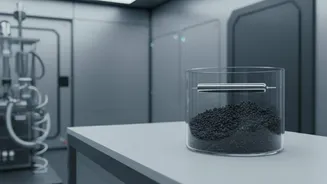
While the Moon has virtually no atmosphere to speak of, its surface is surprisingly rich in oxygen. It isn't free-floating, however. It's locked away inside regolith, the layer of fine dust and crushed rock that covers the lunar surface. This material is made of about 45% oxygen, chemically bound with elements like silicon, aluminum, iron, and magnesium in the form of metal oxides. This means that the very ground astronauts walk on is a massive, untapped reservoir of breathable air. The challenge lies in breaking the strong chemical bonds to release the oxygen atoms from the minerals they are trapped in. If harnessed, NASA estimates that a single cubic meter of lunar regolith contains enough oxygen to keep a person alive for about two years.
The High-Tech Extraction Process
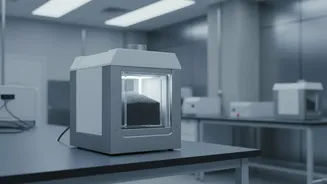
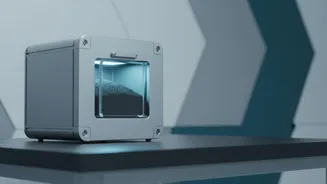
NASA is pioneering a method called Molten Regolith Electrolysis (MRE) to crack open these lunar rocks. The process works by heating the moon dust to extreme temperatures, around 1,700°C (about 3,100°F), until it melts into a molten liquid. An electric current is then passed through this molten material. Much like electrolysis on Earth is used to split water into hydrogen and oxygen, this current separates the elements in the regolith. Oxygen bubbles form at one electrode (the anode), where they can be collected. At the other electrode (the cathode), a mixture of molten metals like iron and silicon is produced as a byproduct. Recent tests using simulated lunar soil in vacuum chambers have successfully produced pure oxygen, proving the concept is viable.
Valuable Byproducts and Future Plans
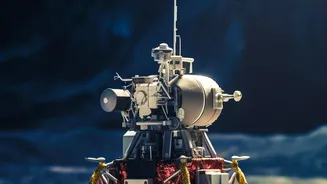
The Molten Regolith Electrolysis process doesn't just produce life-sustaining oxygen; it also yields a mixture of useful metals. These leftover materials could potentially be used for manufacturing and construction on the Moon. For example, the separated silicon could be purified to create solar cells, while the iron and aluminum could be used in 3D-printing to build structures, tools, and spare parts. This turns a waste product into another valuable local resource. NASA and its commercial partners are planning to send demonstration missions to the Moon to test this technology in the actual lunar environment. Projects like the Lunar Infrastructure Foundational Technologies (LIFT-1) demonstration aim to prove the technology can operate reliably on the lunar surface, paving the way for larger-scale production plants.