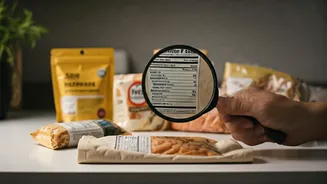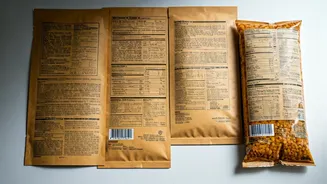



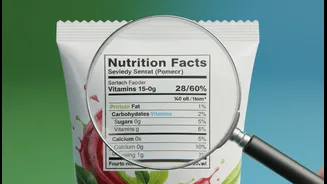


The Golden Rule: Ignore the Front, Read the Back
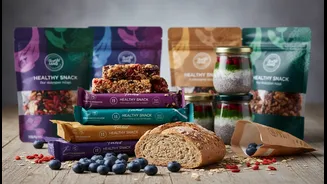
The front of the packet is marketing. It’s a billboard designed to catch your eye with appealing images and health buzzwords. The real story of what you're about to eat is on the back, in the nutrition information panel and the ingredient list. The Food
Safety and Standards Authority of India (FSSAI) mandates this information, and it's your most powerful tool. The first step to becoming a smarter snacker is simple but revolutionary: always flip the pack over. What you read there is fact; what's on the front is often just persuasion. Recent crackdowns by FSSAI on brands for misleading claims like 'healthy' or 'natural' show just how wide the gap between marketing and reality can be.
Decoding the Ingredient List
Ingredients are listed in descending order by weight. This is the most crucial secret to unlock. If the first three ingredients are maida (refined wheat flour), sugar, and palm oil, you are holding a product primarily made of refined flour, sugar, and fat, no matter what health claims are on the front. A biscuit might scream 'Made with Whole Grains', but if whole wheat flour is the fifth ingredient, its contribution is minor. Also, look for hidden sugars. Companies often use multiple types of sweeteners like corn syrup, fructose, sucrose, or maltose so that 'sugar' doesn't appear first on the list.
Serving Size Sorcery
This is a classic trick. A brand might list the calories per serving as a modest number, but the 'serving size' they define is often unrealistically small, like two biscuits or a handful of chips. Most people consume the whole packet, which could be four or five times the listed serving size. Before you check any other number, look at the serving size and how many servings are in the container. Then, do the maths. That '100-calorie' snack is actually a 400-calorie snack if the pack contains four servings and you eat it all. FSSAI requires nutritional values to be shown per 100g and per serving, which helps, but always check how your portion compares to their serving.
The 'No Added Sugar' Illusion
This claim is a minefield. According to regulations, 'No Added Sugar' simply means that no sucrose (table sugar) has been added during manufacturing. However, the product could still be loaded with naturally occurring sugars from fruit concentrates or contain other caloric sweeteners like honey or malt. A fruit juice that claims 'no added sugar' might be made from fruit concentrate that is, for all intents and purposes, a sugar syrup. Always check the 'Total Sugars' line in the nutrition panel to see the full picture.
Translating Common Buzzwords
Many popular claims are technically true but practically misleading. 'Baked, Not Fried' sounds healthier, and while it might reduce certain fats, these snacks are often high in sodium or refined carbohydrates to compensate for taste and texture. 'All-Natural' is another vague term; FSSAI has specific conditions for its use, but it doesn't automatically mean healthy. 'Multigrain' simply means more than one type of grain is used; it doesn't guarantee they are whole grains. 'Immunity-boosting' claims are also under scrutiny, as FSSAI states that such therapeutic claims are often not permissible for food products without significant scientific backing.
Your 10-Second Supermarket Scan
You don't need to spend ages deciphering labels. Create a quick mental checklist. First, check the top three ingredients. Are they whole foods or forms of sugar and refined flour? Second, glance at the 'per 100g' column. As a rough guide, more than 15g of sugar, 5g of saturated fat, or 600mg of sodium per 100g is generally considered high for a daily snack. Finally, ask yourself if the ingredient list is short and filled with things you recognise as food. The longer and more chemical-sounding the list, the more ultra-processed the product is likely to be.