



Embrace No-Cook Sauces
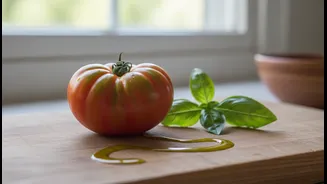
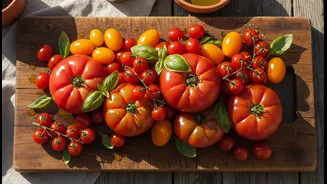
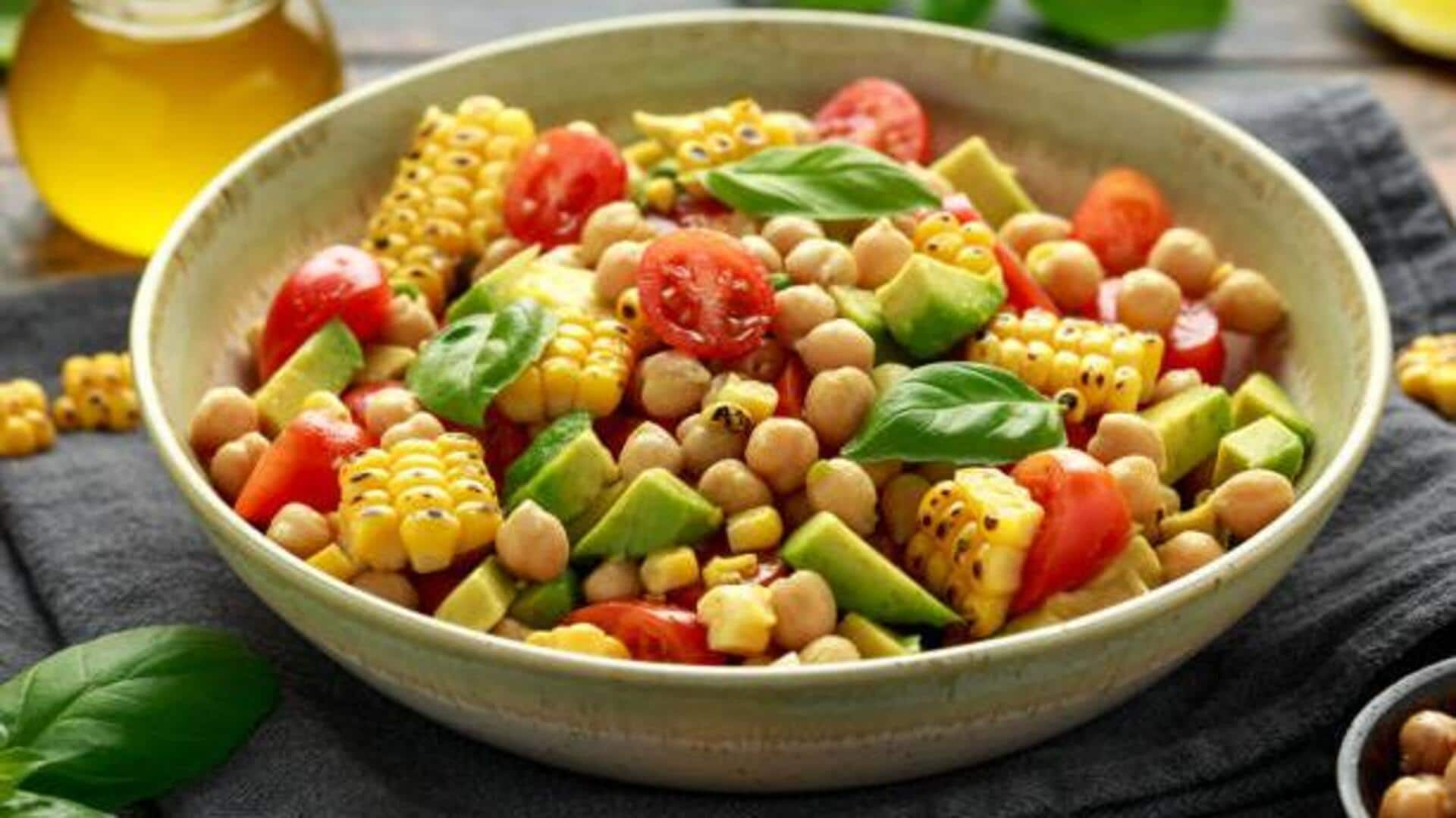
When tomatoes are at their peak, sometimes the best treatment is the simplest. A raw tomato sauce, or ‘pomodoro crudo’, is a perfect example. Finely chop ripe, juicy tomatoes, discarding most of the seeds. Mix them in a bowl with minced garlic, a generous
amount of extra-virgin olive oil, and a handful of fresh, torn basil. Season with salt and pepper and let the mixture sit for at least 30 minutes at room temperature to allow the flavours to meld. This creates a vibrant, fresh sauce that's incredible tossed with hot pasta, spooned over grilled bread for bruschetta, or served with fish. The heat from the pasta is just enough to warm the sauce, releasing the tomatoes' fragrant aroma without cooking them.
Slow-Roast for Intense Flavour
Slow-roasting is a game-changer for tomatoes, concentrating their sugars and transforming them into sweet, jammy jewels. This technique works especially well with cherry or grape tomatoes. Toss them on a baking sheet with olive oil, balsamic vinegar, minced garlic, a pinch of sugar, salt, and pepper. Roast them in a low oven, around 135°C (275°F), for about two hours until they are soft, shrivelled, and just starting to burst. These intensely flavoured morsels are incredibly versatile. Use them to top burrata or fresh mozzarella, toss them into salads, fold them into omelettes, or blend them into a rustic sauce. They can be stored in the fridge for several days or frozen for months, giving you a taste of summer long after the season ends.
Simmer a Versatile Base Sauce
Cooking a big batch of classic tomato sauce is a rite of passage for anyone with a tomato surplus. While plum or Roma tomatoes are often recommended for their lower water content, any ripe tomato will do. Start by sautéing diced onion and garlic in olive oil until soft. Add chopped fresh tomatoes (peeled and seeded if you prefer a smoother sauce) and let it all simmer gently for an hour or more. The key is to let the sauce cook down, uncovered, allowing the flavours to deepen and the sauce to thicken. Don't add fresh herbs like basil until the very end to preserve their flavour. This base sauce is a perfect foundation for pasta dishes, pizza toppings, or as an ingredient in soups and stews.
Preserve the Harvest by Freezing
Freezing is arguably the easiest way to preserve tomatoes for later use. One of the simplest methods requires no blanching or peeling. Simply wash and dry your tomatoes, cut away the stem area, and place them whole on a baking sheet. Freeze them until solid, then transfer them to freezer bags. This prevents them from clumping together. When you're ready to use them, the skins will often slip right off after a quick rinse under warm water. While frozen-then-thawed tomatoes will be too soft for fresh salads, they are perfect for cooked dishes like soups, stews, and sauces, where their texture change is unnoticeable. You can also freeze chopped tomatoes, purées, or finished sauces in portions for quick winter meals.
Get Creative with Tomato Jam
For a truly unique way to use tomatoes, try making tomato jam. This sweet and savoury condiment is a perfect balance of tangy, spicy, and sweet. It typically involves simmering chopped tomatoes with sugar, vinegar (like apple cider vinegar), and a variety of spices such as ginger, cinnamon, and cloves. Some recipes also include onions for a deeper savoury note. After a couple of hours of slow cooking, the mixture reduces into a thick, jammy consistency. Tomato jam is surprisingly versatile; spread it on toast with cheese, use it as a glaze for grilled meats, or add a dollop to a charcuterie board. It’s an unexpected but delightful way to capture the essence of peak-season tomatoes.