

The All-Encompassing ECLSS
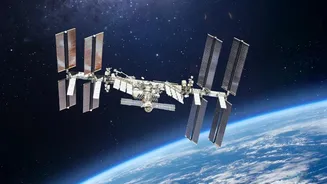
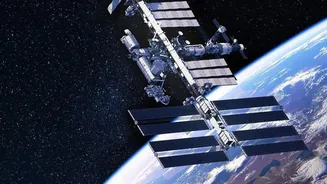
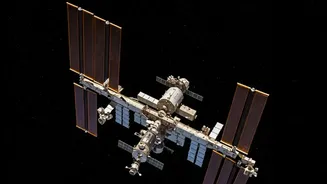
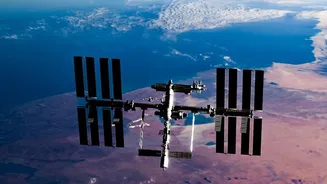
The unsung hero of the ISS is the Environmental Control and Life Support System, or ECLSS. This complex network of machines is responsible for maintaining a habitable environment, much like Earth's own atmosphere. It regulates pressure, controls temperature
and humidity, manages waste, and most critically, keeps the air breathable. Developed by NASA in partnership with various aerospace companies, the ECLSS is a marvel of regenerative engineering, designed to recycle as much as possible to sustain the crew on their long journeys in orbit. It's not one single filter, but a suite of interconnected technologies working in harmony.
Scrubbing Life-Threatening CO2
The most immediate danger to astronauts in a sealed environment is the buildup of carbon dioxide from their own breath. To combat this, the ISS primarily uses a system called the Carbon Dioxide Removal Assembly (CDRA). This unit uses beds of a porous mineral called zeolite, which acts as a molecular sieve. As station air is passed through, the zeolite crystals trap carbon dioxide molecules while letting oxygen and nitrogen pass. Once a filter bed is saturated, it is exposed to the vacuum of space, which purges the captured CO2, effectively cleaning and regenerating the zeolite for continuous reuse. This regenerative process is crucial for long-duration missions where carrying disposable filters would be impractical.
Capturing Invisible Contaminants
Beyond carbon dioxide, the air on the ISS can contain hundreds of other chemical contaminants. These come from the astronauts' own metabolic processes (like ammonia in sweat and methane) and from the off-gassing of electronic equipment and plastic materials. The Trace Contaminant Control System (TCCS) is designed to handle this. It works in stages, first using beds of activated charcoal to absorb larger odour-causing molecules. Then, a high-temperature catalytic oxidizer essentially burns off smaller, more stubborn molecules like methane and carbon monoxide, converting them into more manageable byproducts like water and carbon dioxide, which are then handled by other ECLSS systems.
Making Oxygen from Water
Scrubbing the air is only half the battle; the ECLSS must also replenish the oxygen that astronauts consume. The primary method for this is electrolysis. Both the American Oxygen Generation System (OGS) and the Russian Elektron system use electricity from the station's solar panels to split water molecules (H2O) into hydrogen and oxygen. The oxygen is released into the cabin atmosphere, while the hydrogen is either vented into space or fed into another device, the Sabatier system. The Sabatier reactor cleverly combines this waste hydrogen with the carbon dioxide captured by the CDRA to produce more water and methane. This process recycles elements that would otherwise be lost, creating a more closed-loop system.
Filtering Dust and Microbes
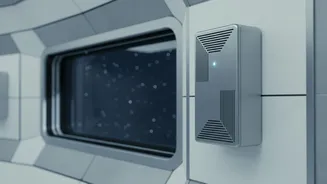
Finally, to control particles like dust, skin cells, and microbes, the ISS relies on a distributed network of High-Efficiency Particulate Air (HEPA) filters. These filters are integrated throughout the station's ventilation system, with air being recirculated and cleaned multiple times per hour. Some of these units, called Charcoal HEPA Integrated Particle Scrubbers (CHIPS), combine the particulate-trapping power of HEPA filters with activated charcoal for an extra layer of chemical scrubbing. This constant filtration is vital not just for health, but also to protect sensitive electronic equipment from dust buildup in the microgravity environment.