



A Franchise at a Critical Juncture
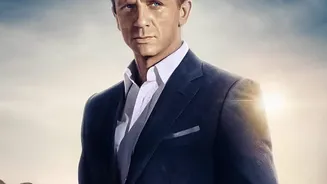
Before 'Skyfall', the James Bond series was in a strange place. Daniel Craig's debut in 'Casino Royale' (2006) was a massive success, praised for its gritty realism. However, its 2008 follow-up, 'Quantum of Solace', received a far more mixed reception.
As the franchise’s 50th anniversary approached, the pressure was on. The producers needed more than just another hit; they needed a film that could honour the legacy while proving Bond was still relevant in a world dominated by superheroes and different spy franchises. The result was a film that was both a nostalgic tribute and a bold step forward.
The Prestige Filmmaking Team
The masterstroke behind 'Skyfall' was the decision to hire an A-list creative team. Director Sam Mendes, an Academy Award winner known for character-driven dramas, was a surprising choice for a blockbuster. He brought with him legendary cinematographer Roger Deakins, who gave the film a visual elegance unparalleled in the series. Deakins, who had to be convinced to shoot a Bond film, ended up creating some of the franchise's most iconic images, from the neon-drenched Shanghai sequence to the fiery finale in the Scottish Highlands. This commitment to artistic excellence signalled that 'Skyfall' was aiming to be more than just an action movie; it was aiming for cinema history.
A Humanised Hero, A Personal Threat
What truly set 'Skyfall' apart was its story. The script, co-written by John Logan, Neal Purvis, and Robert Wade, delved into James Bond's psychology in an unprecedented way. We see a Bond who is older, physically and emotionally scarred, and failing his evaluations. The plot revolves around his loyalty to M (Judi Dench), who becomes the film's emotional core. The villain, Raoul Silva, played with chilling charisma by Javier Bardem, wasn't a megalomaniac bent on world domination. Instead, his motives were deeply personal: revenge against M, the woman he saw as a neglectful mother figure. This storyline culminated in the shocking death of M, a moment that gave the film real emotional stakes and consequences.
Smashing the Billion-Dollar Barrier
The combination of critical acclaim and audience anticipation translated into staggering commercial success. 'Skyfall' grossed over $1.1 billion worldwide, becoming the first and, to date, only James Bond film to pass the billion-dollar mark. It shattered records in the UK, becoming the country's highest-grossing film at the time. Worldwide, it was the second-highest-grossing film of 2012 and, for a time, the seventh-highest of all time. This wasn't just a win for the Bond franchise; it was a landmark achievement for the entire action genre, proving that a character-focused, stylish spy thriller could compete with any blockbuster.
The Legacy of a Modern Classic
The impact of 'Skyfall' extended beyond its box office haul. Adele's theme song of the same name was a global phenomenon, winning the Academy Award for Best Original Song—the first Bond theme ever to do so. The film masterfully reintroduced classic elements like Q (Ben Whishaw) and Miss Moneypenny (Naomie Harris) for a modern audience, completing the reboot arc that began with 'Casino Royale'. It proved that a 50-year-old spy could be both a relic of the past and a hero for the future, a man defined by his history but not trapped by it. The film's blend of spectacular action, emotional depth, and visual artistry set a new standard that future installments would be measured against.