



From Prototype to Production Line
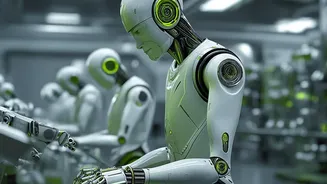
The transition from eye-catching demonstrations to practical, paid work is well underway. Companies are now deploying humanoid robots in pilot programs designed to prove their value in industrial settings. This shift is driven by a convergence of factors:
advancements in artificial intelligence are giving robots the ability to learn and adapt, while improved hardware makes them more capable. Simultaneously, industries like manufacturing and logistics are facing persistent labor shortages and are eager for new automation solutions. The goal is no longer just to build a robot that can walk, but one that can perform repetitive, physically demanding, or unsafe tasks reliably and efficiently alongside human workers.
Automakers Lead the Charge
The automotive industry has emerged as a key testing ground. In a landmark deal, Figure AI partnered with BMW to deploy its humanoid robots at the automaker's Spartanburg, South Carolina plant. These robots are being tested on tasks like handling sheet metal and sequencing parts for the assembly line in a real, high-volume production environment. Similarly, Mercedes-Benz entered an agreement with Apptronik to pilot its Apollo robot for logistics tasks, such as delivering parts and assembly kits to human workers on the production line. Meanwhile, Tesla has begun early production of its own Optimus robot, with the ultimate goal of using thousands of them in its own factories to handle tasks from materials handling to parts assembly.
The Humanoid Advantage: Flexibility
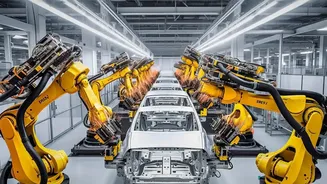
Factories already use millions of specialized robots for tasks like welding and painting. The key advantage of a humanoid robot is its versatility. Unlike a fixed robotic arm designed for a single function, a human-shaped robot can operate in spaces built for people. This means it can potentially walk through existing aisles, use workstations designed for humans, and switch between different tasks without requiring a complete facility redesign. For example, a single humanoid could, in theory, move boxes in a warehouse, deliver components to an assembly line, and then perform basic quality inspection, offering a level of flexibility that traditional automation often lacks.
Beyond the Automotive Sector
While carmakers are early adopters, explorations are happening across other industries. Agility Robotics has deployed its Digit robot in logistics and warehouse environments, including at facilities for GXO Logistics and Amazon, where it moves totes and handles materials. In Canada, Sanctuary AI conducted a pilot in a Mark's retail store, where its robot performed 110 tasks including picking, packing, and labeling merchandise. Sanctuary is also testing a hardware-agnostic approach, deploying its AI and robotic hands on existing industrial equipment for complex tasks at automotive suppliers, proving that the intelligence can be separated from the full humanoid body.
Hurdles on the Path to Mass Adoption
Despite the promising pilots, a future where humanoid robots are commonplace is not yet guaranteed. The technology is still in its early stages, and significant challenges remain. The cost of these advanced machines is high, and their reliability and safety in busy, unpredictable human environments must be proven over long periods. While they are becoming more capable, they are not yet as fast or dextrous as human workers for many complex tasks. Manufacturers must demonstrate a clear return on investment, proving that these robots can perform consistently and affordably enough to compete with both human labor and more established forms of automation.