








The Challenge in Construction
The global construction industry is a massive consumer of resources and a significant source of CO2 emissions. From manufacturing cement to firing bricks, creating traditional building materials is an energy-intensive process. The sector is responsible
for a substantial portion of the world's carbon emissions and waste generation. As urban populations grow, the demand for new buildings continues to rise, putting immense pressure on the environment. This has sent architects, engineers, and builders on a crucial search for sustainable alternatives that perform just as well as conventional materials without the heavy environmental cost.
A Solution From the Fields
The answer might be waiting in the farmlands. After a harvest, vast quantities of agricultural residue, such as wheat straw, rice husks, sugarcane bagasse, and corn stalks, are often left behind. In many places, this biomass is treated as waste and burned, contributing to air pollution. However, this “waste” is rich in cellulose and fibrous content, making it a perfect raw material for building materials. By redirecting these residues, we can create a value chain that supports a circular economy, turning a disposal problem into a sustainable resource for a completely different industry. These materials are not just renewable; they are part of an annual cycle of growth and harvest.
From Farm Waste to Building Block
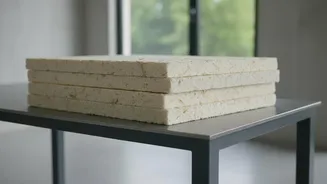
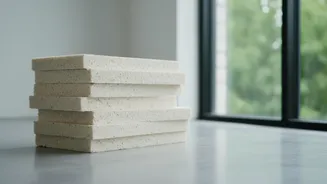
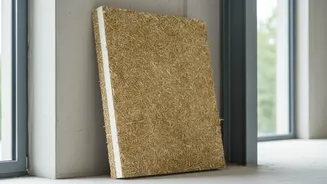
The process of creating bio-based thermal panels is a clever blend of nature and technology. The raw agricultural fibers are typically cleaned, dried, and then compressed into rigid boards or panels. A binder is often used to hold the fibers together. While some processes use conventional resins, the push is toward using natural, non-toxic adhesives to maintain the product's green credentials. The resulting panels are lightweight yet durable. The trapped air pockets within the compressed fibrous structure are what give these materials their excellent insulation properties. Companies and researchers are constantly refining these methods to create panels that are not only effective but also cost-competitive.
Impressive Green Credentials
Bio-based panels offer a compelling environmental advantage. First, they have low embodied carbon, meaning their production emits significantly less CO2 compared to materials like mineral wool or foam insulation. Second, they act as carbon sinks. The plants absorb carbon from the atmosphere as they grow, and when that biomass is locked into a building panel, the carbon is stored for the life of the building. Furthermore, these panels often have excellent thermal performance, reducing the energy needed to heat and cool buildings. They can also regulate humidity naturally, leading to healthier indoor air quality. Some panels even boast impressive fire resistance and acoustic insulation properties.
The Great Indian Opportunity
For India, this technology is particularly promising. The nation generates hundreds of millions of tonnes of agricultural residue every year. Finding a productive use for this biomass is a national priority, especially as a way to combat the air pollution caused by seasonal crop burning in states like Punjab and Haryana. Startups are already emerging to seize this opportunity. GreenJams, an Indian company, has developed 'Agrocrete', a carbon-negative building block made from crop residues and lime-based binders. By creating a market for agricultural leftovers, such innovations can provide farmers with an additional income stream while supplying the booming construction sector with a much-needed sustainable material.
Challenges on the Road Ahead
Despite the clear benefits, the path to widespread adoption has its hurdles. Scaling up production to compete with established industrial giants is a significant challenge. Ensuring consistent quality, meeting stringent building codes, and gaining the trust of a traditionally conservative construction industry takes time. Cost remains a factor, as new technologies can initially be more expensive. However, as carbon taxes, consumer demand for green buildings, and economies of scale grow, the financial viability of bio-based materials is rapidly improving. Continued research and government support for standardization will be crucial to helping these innovative products become mainstream.