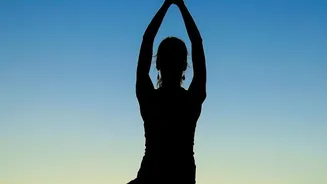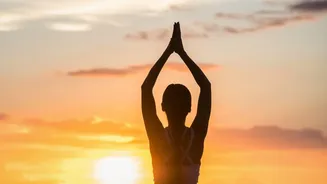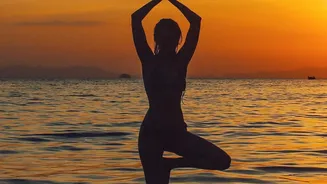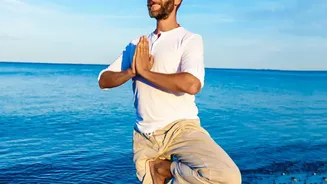



The Foundation: Tree Pose (Vrksasana)
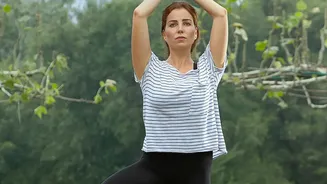
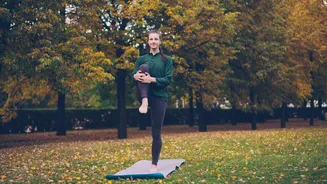
Tree Pose, or Vrksasana, is the quintessential standing balance posture that teaches us to be both rooted and light. It is a foundational pose for building physical balance, improving focus, and strengthening the muscles around the ankles, calves, and thighs.
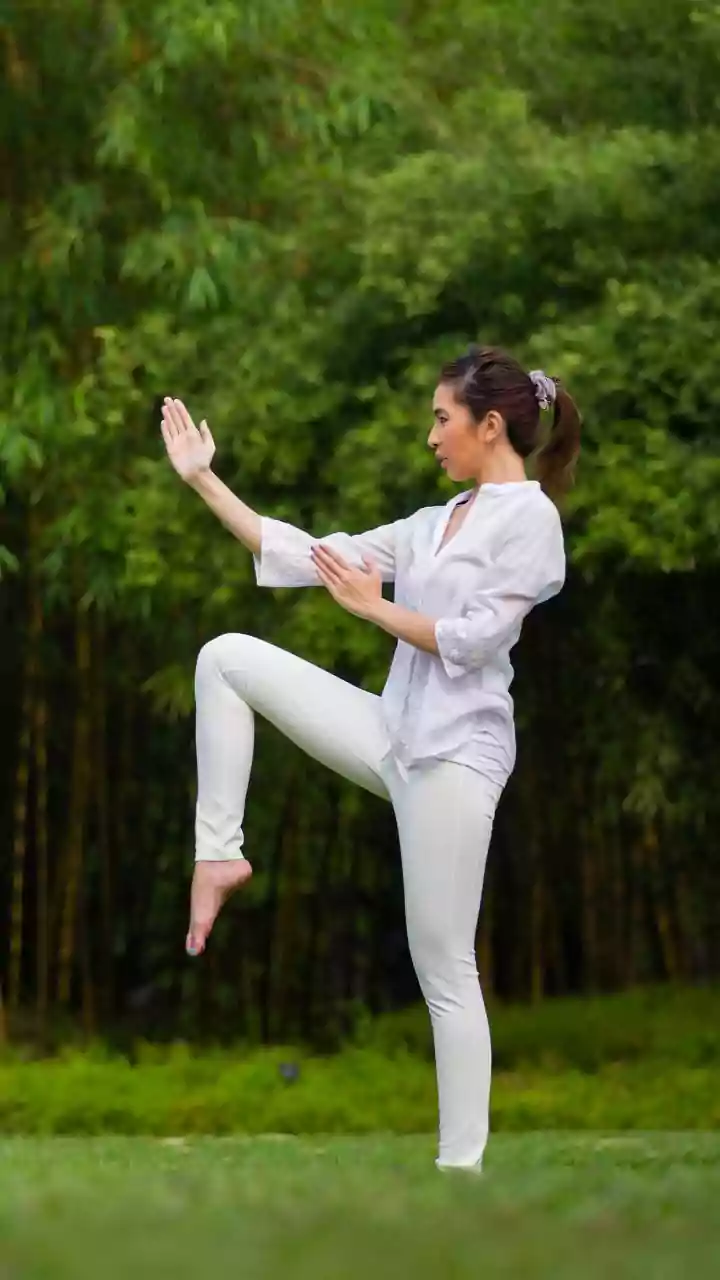
To practice, begin in Mountain Pose (Tadasana), feeling the ground beneath you. Shift your weight onto one foot, engaging the standing leg. Bend the other knee and place the sole of your foot on your inner ankle, calf, or high on the inner thigh—avoiding direct pressure on the knee joint. Press the foot into the thigh and the thigh back into the foot to create stability. Bring your palms together at your heart or extend them overhead like branches. Focus your gaze on a non-moving point in front of you to steady your mind and body.
The Challenge: Half-Moon Pose (Ardha Chandrasana)
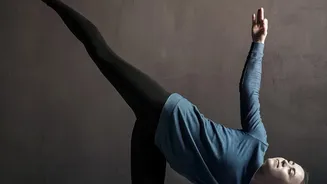
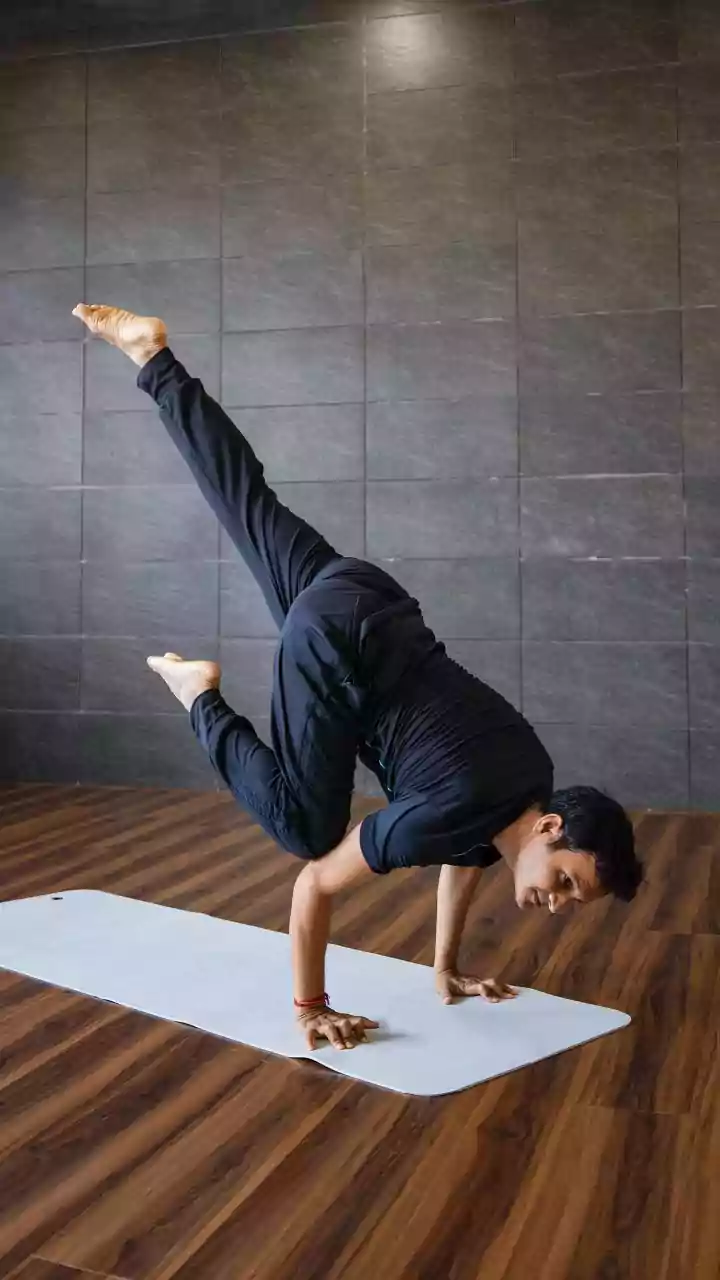
Half-Moon Pose, or Ardha Chandrasana, takes the challenge of balance to a new plane. It requires strength, flexibility, and a great deal of coordination. This pose strengthens the entire body, especially the legs, core, and glutes, while opening the chest and lengthening the spine. From a wide stance, hinge at your hips and place one hand on the floor or a block about a foot in front of your standing foot. Lift the back leg until it is parallel to the floor, flexing the foot and keeping the hips stacked and open. Extend the top arm towards the ceiling, creating a long line of energy. A common mistake is to let the lifted leg become passive; instead, keep it actively engaged as if pressing against a wall. If you feel unstable, practicing with your back against a wall provides excellent support.
The Bridge: Tree Pose with a Hinge
To start bridging the gap between the vertical stability of Tree and the horizontal challenge of Half-Moon, you can introduce a simple variation. Begin in a strong Tree Pose on your left leg. With your hands at your heart center, maintain the external rotation of your right hip. On an exhale, begin to slowly hinge forward from your hips, keeping your spine long. Lower your torso until it is nearly parallel with the floor, extending your arms forward for a counterbalance if needed. This movement mimics the foundational tilt required for Half-Moon Pose but with the stability of the bent knee. It trains your standing leg to support your body in a different alignment and prepares the core for the rotational aspect of Ardha Chandrasana. Hold for a few breaths before rising back up, then repeat on the other side.
The Opening: Sugarcane Pose (Ardha Chandra Chapasana)
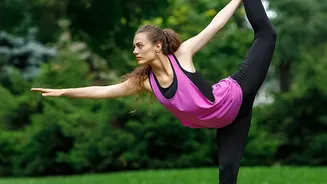
Sugarcane Pose is a beautiful and deep variation of Half-Moon that introduces a heart-opening backbend and a quadriceps stretch. From a stable Half-Moon Pose, begin to bend the knee of your lifted leg. Reach back with your top hand to catch the top of your foot or ankle. As you hold your foot, gently kick the foot into your hand. This action will create a bow-like shape with your back, opening your chest and shoulder. Keep the standing leg strong and the lower abdomen engaged to support your lower back. This pose combines the balance of Half-Moon with a new layer of flexibility, deepening the stretch across the hip flexors and chest. It's named for its shape, resembling a bow ('chapa' in Sanskrit).
Integrating Balance into Your Flow
The true test of balance is not in holding a static pose but in moving gracefully between them. You can practice transitioning from Tree Pose directly into Half-Moon. From Tree, hinge forward at the hips, release the lifted foot, and extend it straight back as you bring your hand to the floor or a block. To transition back, reverse the movement. You can also flow from Half-Moon into Sugarcane and back again. These transitions build muscle memory, enhance proprioception (your body's awareness in space), and cultivate a calm, focused mind that can adapt to change. Remember that wobbling is part of the process. Each time you adjust, you are strengthening the small stabilizing muscles and refining your balance.