






The Afternoon Slump Is Real
That familiar dip in energy and concentration experienced by many in the afternoon is a well-known phenomenon. It’s often linked to the body’s natural circadian rhythms, which signal a period of rest in the afternoon. Heavy lunches, dehydration, and poor
sleep can make it worse, leaving you feeling sluggish and unproductive. While it’s tempting to grab a sugary snack or a strong coffee for a quick fix, these often lead to a rapid spike in blood sugar followed by an even more pronounced crash, perpetuating the cycle of fatigue.
Why Cold-Steeping Changes the Game
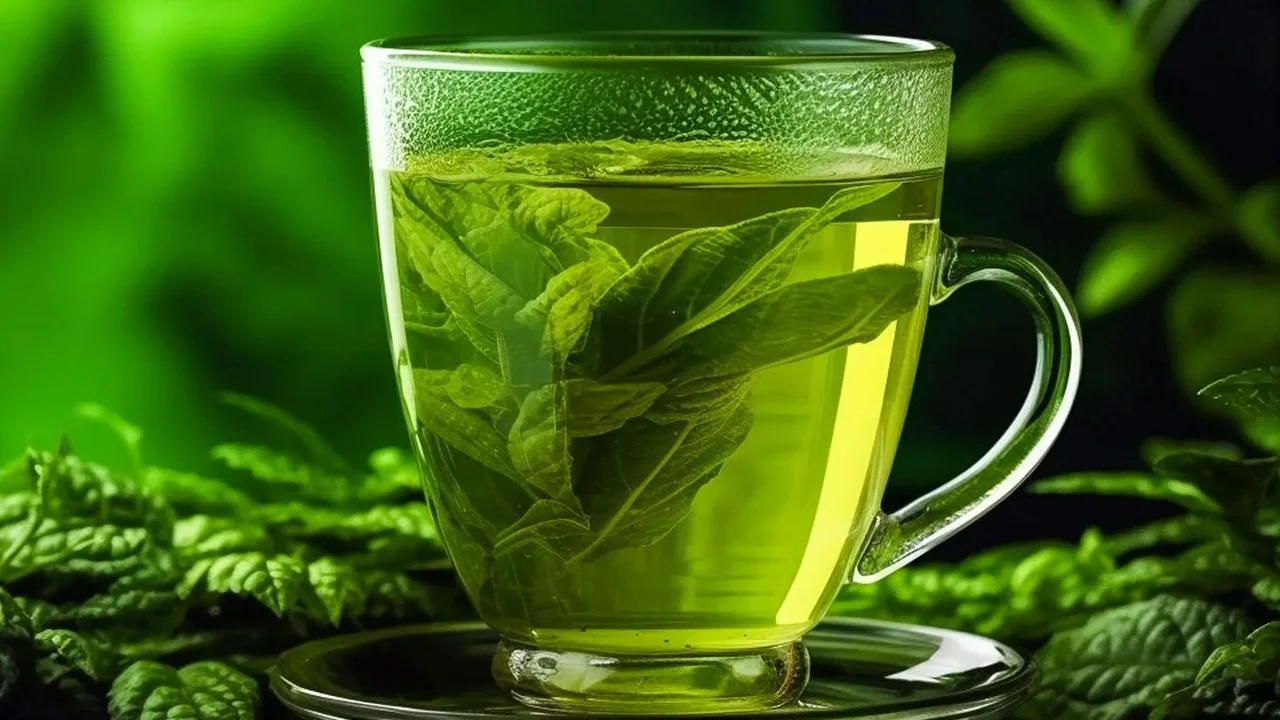
The way you brew your tea significantly alters its chemistry and its effect on your body. Unlike hot brewing, which uses high temperatures to quickly extract compounds, cold-steeping involves immersing tea leaves in cold water for an extended period, typically 8 to 24 hours. This gentle process extracts fewer tannins, the compounds responsible for bitterness and astringency. The result is a smoother, sweeter, and more refreshing beverage. Furthermore, cold brewing extracts caffeine more slowly, leading to a beverage that’s often lower in caffeine than its hot-brewed counterpart and provides a more sustained, gentle lift.
The Single-Estate Difference
Not all teas are created equal. The term 'single-estate' signifies that the tea leaves come from one specific garden, much like a single-vineyard wine. This is in contrast to most commercial teas, which are blended from various sources to achieve a consistent but often generic flavour profile. A single-estate tea reflects its unique 'terroir'—the specific soil, climate, and altitude of its origin. This meticulous sourcing ensures a higher-quality leaf with a more complex and nuanced flavour, providing a superior base for your energy-boosting brew.
Enter Tulsi, the Adaptogenic Powerhouse
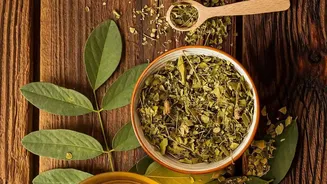
Tulsi, also known as Holy Basil, is a revered herb in Ayurvedic tradition, celebrated for its wide-ranging health benefits. It is classified as an adaptogen, which means it helps the body adapt to various forms of stress—physical, mental, and environmental—and promote balance, or homeostasis. Unlike a stimulant like caffeine, Tulsi works by supporting the body's natural functions. Studies have shown it can help normalize blood pressure, blood sugar, and lipid levels, and it possesses anti-depressant and anti-anxiety properties. It promotes a sense of calm focus and steady, natural energy without causing jitters or a subsequent crash.
The Synergy: Clean Energy Explained
When you combine cold-steeped, single-estate tea with Tulsi, you create a powerful synergy. The slow-release, lower dose of caffeine from the cold-brewed tea provides a gentle lift in alertness. Simultaneously, the adaptogenic properties of Tulsi help your body manage stress and prevent the overstimulation that can lead to anxiety or jitters. Tulsi promotes a state of calm focus and uplifts your mood, creating what many describe as 'relaxed alertness'. This combination delivers a clean, stable energy boost that enhances cognitive function and resilience, allowing you to power through your afternoon with clarity and composure.
Your New Afternoon Ritual: A Simple Guide
Making this refreshing beverage at home is simple. You'll need a large glass jar or pitcher, high-quality single-estate tea leaves (like a Darjeeling or an Assam), and dried Tulsi leaves or a Tulsi tea bag.
1. Combine your ingredients: For a 1-litre jar, use approximately 2 tablespoons of loose-leaf tea and 1 to 2 tablespoons of dried Tulsi (or 2-3 Tulsi tea bags).
2. Add water: Fill the jar with cold, filtered water.
3. Steep: Cover the jar and place it in the refrigerator. Let it steep for at least 8 hours, or overnight. The flavours will continue to develop, so you can steep for up to 24 hours for a stronger infusion.
4. Strain and serve: Once steeped to your liking, strain the leaves from the liquid. Pour over ice and enjoy. The brew will keep in the refrigerator for a few days.