



The Bizarre Celestial Math
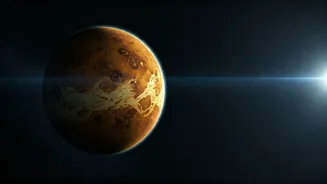
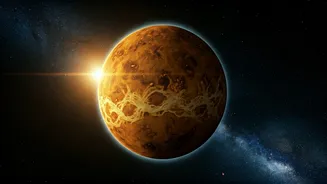
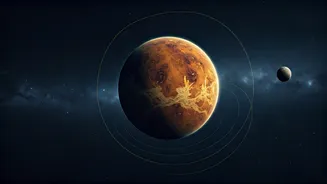
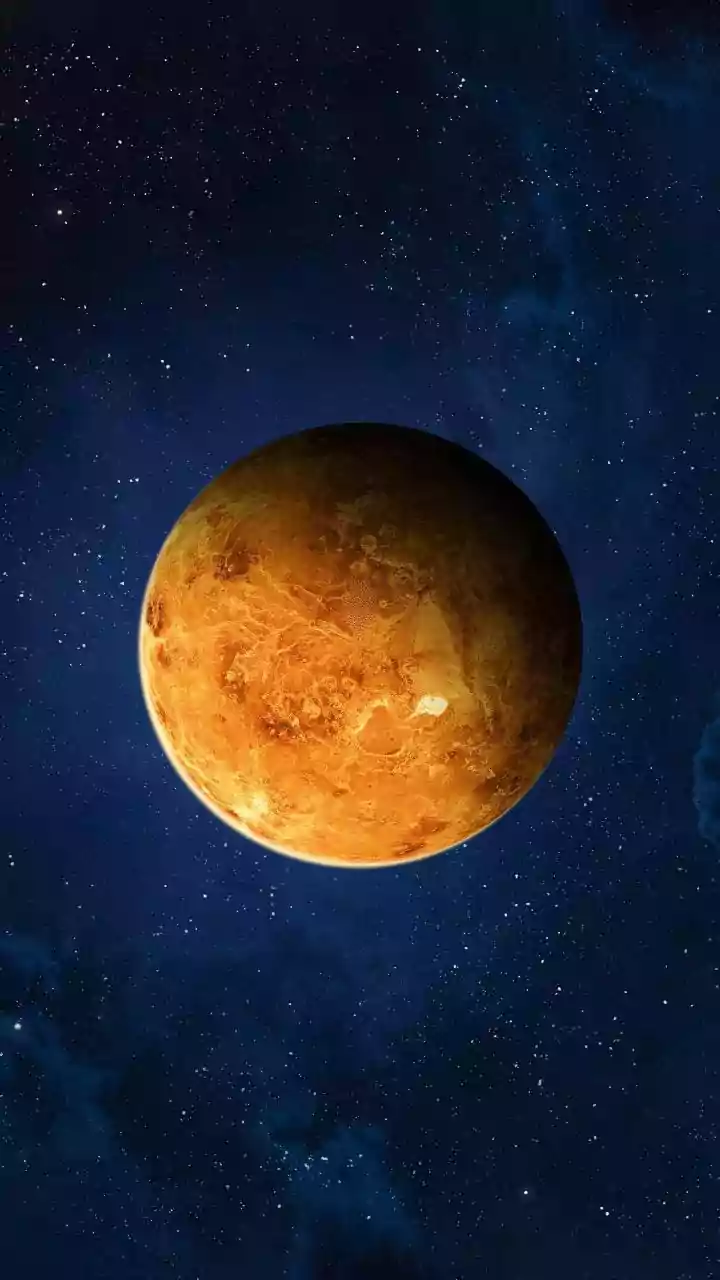
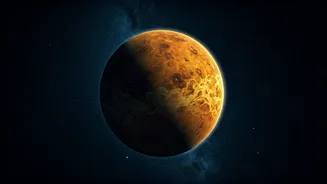
Let’s get the mind-bending numbers out of the way first. On Earth, we have a simple system: a day is 24 hours, and a year is about 365 of those days. Venus throws that entire concept out the window. An entire year on Venus—the time it takes to complete
one full orbit around the Sun—is roughly 225 Earth days. But a single day on Venus—the time it takes for the planet to rotate once on its axis—is a staggering 243 Earth days. That’s right: a Venusian day is about 18 Earth days longer than its year. If you were standing on Venus, you’d celebrate your first birthday before you even saw your second sunrise. This simple fact makes Venus one of the most peculiar places in our entire solar system.
Wait, Which 'Day' Are We Talking About?
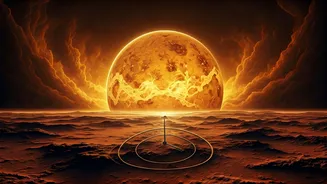
To be precise, astronomers have two ways of measuring a day. A ‘sidereal day’ is the time it takes for a planet to complete one full 360-degree rotation on its axis. This is the 243-Earth-day figure for Venus. However, what we experience as a day—the time from one sunrise to the next—is called a ‘solar day.’ Because Venus rotates backwards (more on that in a moment), its solar day is actually shorter than its sidereal day. A solar day on Venus is about 117 Earth days long. So while a full spin takes longer than a year, the sun will appear to rise and set roughly twice per Venusian year. It’s still an incredibly long time to wait for morning, but it’s a crucial distinction. Either way you measure it, time on Venus works in ways that are deeply alien to our Earthly experience.
Why the Slow, Backward Spin?
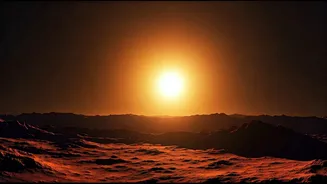
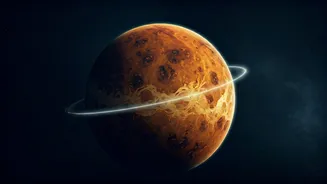
This leads to the next big question: why? Most planets in our solar system, including Earth, rotate on their axis in the same direction they orbit the Sun—counter-clockwise. Venus is the odd one out, spinning clockwise in what scientists call retrograde rotation. If you could stand on its surface, you would see the Sun rise in the west and set in the east. The leading theory for this backward spin is a colossal impact. Scientists speculate that early in its history, Venus was struck by a massive planet-sized object that was powerful enough to not only slow its rotation to a crawl but completely reverse its direction. Another contributing factor might be its incredibly thick, heavy atmosphere. The dense blanket of carbon dioxide, 90 times thicker than Earth's, may create so much friction and tidal drag against the surface that it has helped brake the planet’s rotation over billions of years.
A Hellish, Never-Ending Day
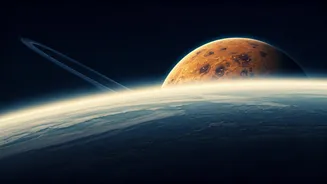
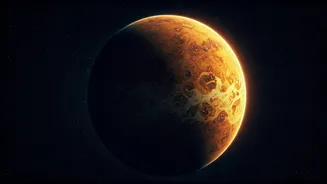
This strange rotation has profound consequences for the planet's environment. With a day that lasts for months, the sun-facing side of Venus bakes under relentless solar radiation, while the night side is plunged into an equally long period of darkness. You might expect the night side to cool down significantly, but Venus’s runaway greenhouse effect prevents this. The thick atmosphere traps heat so efficiently that the temperature is a uniform, lead-melting 465° Celsius across the entire planet, day and night. There is no relief. The slow rotation and thick atmosphere also mean that surface winds are surprisingly sluggish, moving at just a few kilometres per hour. High up in the cloud tops, however, it’s a different story, with winds whipping around the planet at hundreds of kilometres per hour.