




The Divine Aura of Temple Jewellery
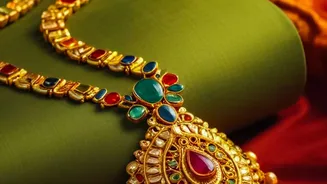
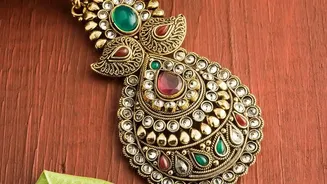
Hailing from the grand temples of South India, this style of jewellery was originally used to adorn idols of gods and goddesses. Crafted from gold and often embedded with precious gems, temple jewellery is characterized by intricate motifs of deities,
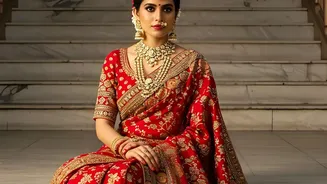
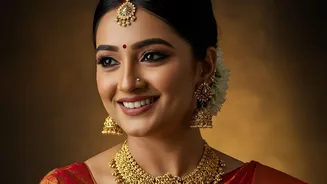
lotus flowers, and mythical creatures like peacocks. For the modern bride, it’s no longer confined to pairing with a traditional Kanjeevaram saree. A heavy temple necklace or layered haar can look stunning against a minimalist, solid-coloured lehenga or even an Indo-western gown with a deep neckline, creating a powerful fusion of divine art and contemporary fashion. For pre-wedding functions, a pair of statement temple jhumkas can add a touch of heritage without overwhelming the look.
The Royal Splendour of Polki and Kundan
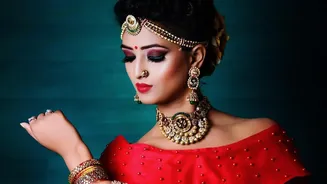
With a legacy rooted in the royal courts of Rajasthan, Gujarat, and the Mughal era, Polki and Kundan jewellery exude regal elegance. Polki uses uncut, unpolished diamonds in their natural form, giving the pieces a raw, vintage sparkle. Kundan involves setting glass or gemstones into a gold foil base. Both techniques result in elaborate, statement pieces. Modern brides are pairing heavy Polki chokers and multi-layered necklaces not just with traditional red lehengas, but also with pastel-hued gowns and velvet ensembles for their reception or sangeet. The key is balance; if the necklace is a showstopper, consider minimalist earrings or a simple maang tikka to let the craftsmanship truly shine.
The Vibrant Artistry of Meenakari
Meenakari is the art of colouring the surface of metals by fusing brilliant enamels. Originating in Jaipur under the patronage of Raja Man Singh, this technique allows for incredible creativity, with motifs of birds, flowers, and vines rendered in vibrant hues. While traditionally found on the reverse side of Kundan jewellery, Meenakari is now taking centre stage. For a modern bride, Meenakari pieces are perfect for adding a pop of colour to pre-wedding festivities like the Haldi or Mehendi ceremony. A colourful Meenakari choker or a pair of chandbalis can beautifully complement a simple sharara or a light, flowy lehenga, adding a joyful and artistic touch.
The Storytelling Charm of Thewa
One of the most unique and guarded crafts, Thewa jewellery comes from Pratapgarh in Rajasthan. It involves the meticulous process of fusing a sheet of intricately worked 23-karat gold onto coloured glass. The motifs often depict historical scenes, royal courts, or figures from mythology, making each piece a miniature narrative. Because of its distinctive and artistic nature, Thewa jewellery acts as a fantastic conversation starter. For a modern bride, a single Thewa pendant on a simple chain or a pair of elegant earrings can be a focal point, adding a touch of rare artistry to a cocktail gown or a minimalist reception outfit.
The Coastal Grace of Gutta Pusalu
Originating from the coastal regions of Andhra Pradesh, Gutta Pusalu translates to 'a shoal of small fish' and 'beads'. This style is defined by fringes of small pearls clustered along the base of a necklace, often adorned with rubies and emeralds. Traditionally a staple for South Indian brides, Gutta Pusalu has found favour across the country for its delicate movement and graceful look. A Gutta Pusalu haram (long necklace) can be layered beautifully over a silk saree for the main ceremony, but it also works wonders when paired with a contemporary blouse and lehenga, adding texture and a touch of coastal heritage to the ensemble.