



The Sun's Turbulent Weather
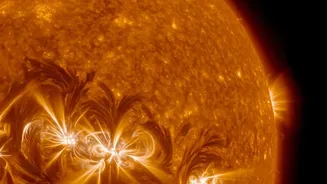
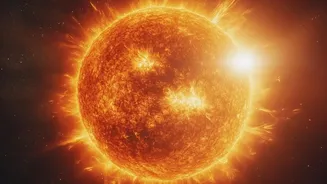
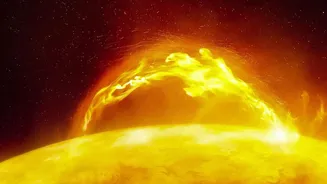
When we think of weather, we imagine rain or sunshine. But there's also space weather, which originates from the sun. The most dramatic events are solar flares and coronal mass ejections (CMEs). A solar flare is an enormous burst of radiation, like a giant
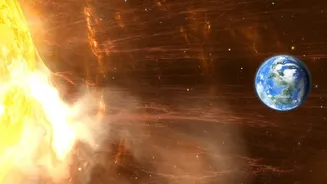
flash of light, that reaches Earth in about eight minutes. While flares can disrupt radio communications, the bigger threat often comes from CMEs, which are vast clouds of charged particles and magnetic fields that erupt from the sun. If a CME is aimed at Earth, it can take one to three days to arrive, acting like a cosmic cannonball headed our way.
Satellites in the Firing Line
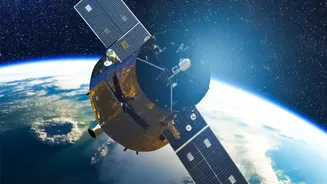
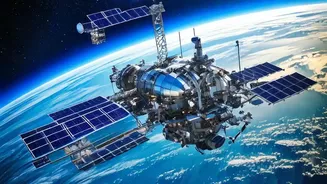
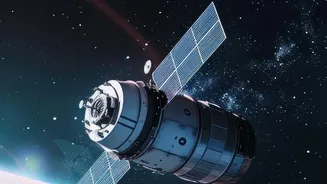
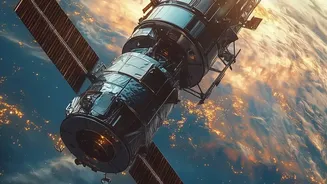
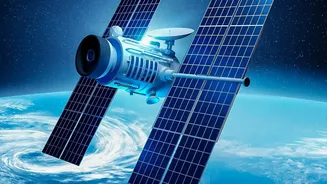
Satellites orbiting outside our protective atmosphere are highly vulnerable to space weather. The energetic particles from a solar storm can damage sensitive electronics, causing malfunctions or phantom commands. This could disrupt everything from television broadcasts to credit card transactions. Furthermore, a strong storm can heat and expand Earth's upper atmosphere. This increases atmospheric drag on satellites in low-Earth orbit, slowing them down and potentially causing them to lose altitude. For the thousands of satellites we rely on for GPS navigation, communication, and weather forecasting, these effects can be devastating.
A Shock to the Power Grid
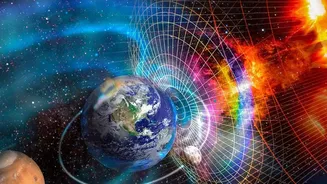
The danger doesn't stop in space. When a powerful CME slams into Earth's magnetic field, it triggers a geomagnetic storm. This storm can create powerful electrical currents on the ground, known as geomagnetically induced currents (GICs). These currents are a major problem for power grids, which are designed for alternating current (AC), not the quasi-direct current (DC) of GICs. These rogue currents can flow into long transmission lines and overwhelm high-voltage transformers, causing them to overheat, melt, or even explode. The result can be widespread, long-lasting blackouts, as happened in Quebec in 1989.
Our Cosmic Weather Forecasters
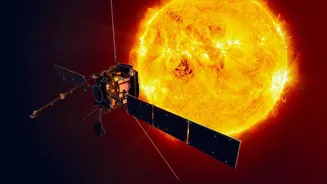
This is where continuous monitoring becomes our planet's shield. Agencies like NOAA's Space Weather Prediction Center (SWPC) in the U.S. and similar organisations globally act as our cosmic weather forecasters. Using a fleet of satellites like GOES and DSCOVR, they keep a constant watch on the sun. These instruments look for tell-tale signs of activity, such as the formation of complex sunspots, which are often precursors to flares and CMEs. By observing an eruption's size and direction, scientists can predict if a storm is heading for Earth and estimate its arrival time and intensity.
The Power of an Early Warning
An advance warning of a few hours or days is critical. It gives satellite operators time to protect their assets by shutting down non-essential systems or reorienting spacecraft to shield sensitive components. On the ground, power grid managers can take protective measures to reduce the load on the system, re-route power, or temporarily disconnect vulnerable transformers to prevent catastrophic damage. This proactive approach doesn't stop the storm, but it significantly mitigates the potential damage, preventing widespread blackouts and preserving the infrastructure that underpins our economy and daily lives. Without this constant vigilance, we would be flying blind, completely exposed to the sun's most powerful outbursts.