


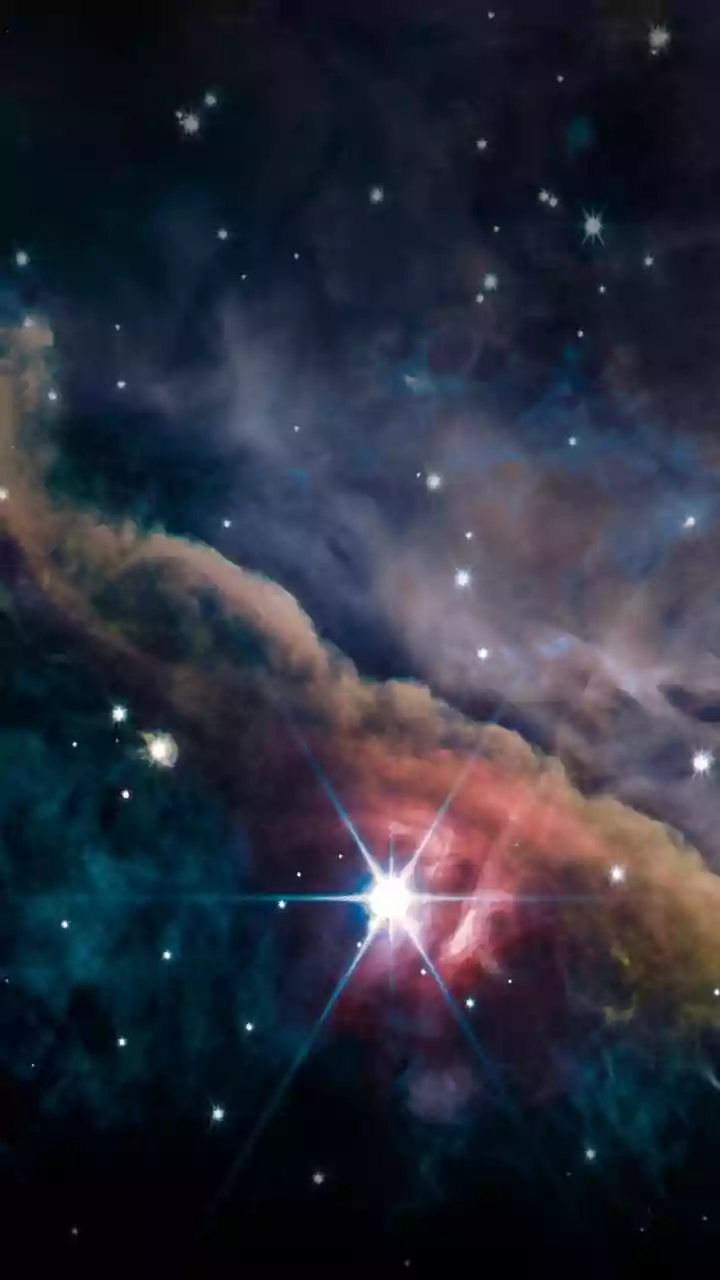





From Cosmic Sight to Sound
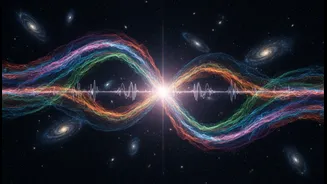
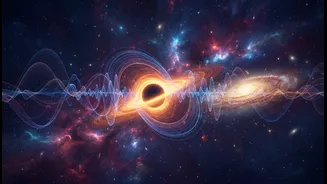
Scientists are translating the vast, silent beauty of space into a medium we can hear. This innovative process, known as data sonification, takes the digital data collected by telescopes and maps it to sound. Spearheaded by NASA's Chandra X-ray Center,
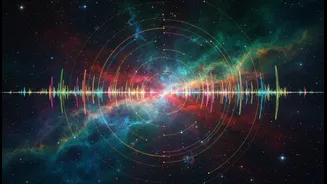
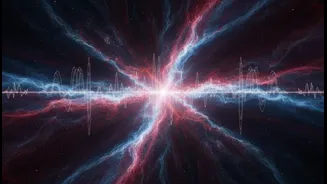
the project transforms visual information like color, brightness, and position from cosmic images into audio elements like pitch, volume, and rhythm. Instead of just seeing a galaxy, we can now listen to its structure. This fusion of science and art offers a completely new way to experience the wonders of the cosmos. The goal isn't to create a chart-topping hit, but to represent the scientific data as accurately as possible in an audible format.
Decoding the Red, White, and Blue
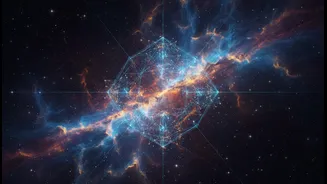
The "Red-White-Blue" concept refers to a specific series of sonifications where data from different telescopes are combined and assigned colors that are then mapped to sound. For instance, in a recent release celebrating the 250th anniversary of the United States, images were rendered using this patriotic palette. Often, high-energy data from the Chandra X-ray Observatory is represented by blue tones, while infrared data from telescopes like the Spitzer or James Webb Space Telescope is coded red. Optical light data, captured by the Hubble Space Telescope, might be assigned to white or green. Each telescope reveals different phenomena; Chandra spots gas heated to millions of degrees, while Hubble outlines regions of star birth. When sonified together, they create a multi-layered cosmic ensemble, where each 'color' plays a different instrument.
Composing the Cosmos
The process of creating these cosmic soundtracks is both methodical and creative. A visualization scientist, an astrophysicist, and a musician collaborate to set the rules for the translation. In many sonifications, a virtual bar or radar-like scan moves across the image, triggering sounds as it passes over different features. The vertical position of an object in an image often determines its pitch—light towards the top is translated into higher notes, and light at the bottom becomes lower notes. The brightness of a star or nebula dictates its volume, with brighter objects sounding louder. Stars and other compact sources can be converted into individual notes, like a piano or glockenspiel, while vast clouds of gas and dust might produce an evolving drone or a synthesizer pad.
More Than Just Music
While the results can be hauntingly beautiful, the primary purpose of data sonification is scientific. It serves as a powerful new tool for discovery, allowing researchers to perceive patterns and subtleties in the data that might be missed by visual inspection alone. For example, an unexpected change in pitch could alert a scientist to a previously unnoticed structure within a nebula. Furthermore, the project has a profound impact on accessibility. For individuals who are blind or have low vision, sonification opens a new window to the universe, allowing them to experience the spatial and structural qualities of cosmic objects through hearing. It breaks down barriers and makes the field of astronomy more inclusive for everyone.
The Future of Listening
The sonification of space data represents a significant shift in how we approach scientific communication. It moves beyond the traditional reliance on charts and graphs to embrace a multi-sensory experience. Projects like this demonstrate that complex information can be made more engaging and understandable when presented in multiple formats. The techniques being pioneered with astronomical images could be applied to other data-rich fields, from medical imaging to climate science. By turning data into sound, scientists are not just creating novel ways to analyze information; they are inviting a wider audience to participate in the journey of discovery. It’s a reminder that there is always more than one way to observe the universe around us.