
The Pre-Winter Sweet Spot
Sohra, also known as Cherrapunji, is famous for its staggering rainfall. But the magic truly unfolds in the autumn months of October and November. During this post-monsoon period, the landscape is intensely green, the air is crisp, and the waterfalls
are still thundering with monsoon water. The heavy rains have subsided, making treks safer and sightseeing more comfortable, with clearer skies revealing breathtaking valley views. This 'before winter' window offers the best of both worlds: the lushness of the rainy season and the pleasant, dry conditions of the peak tourist months.
A Symphony of Waterfalls
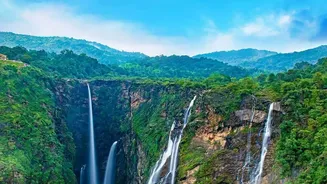
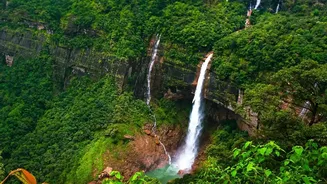
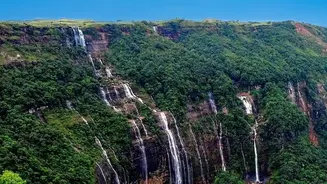
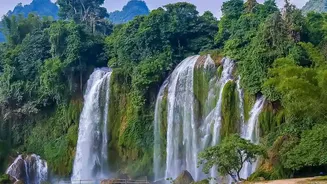
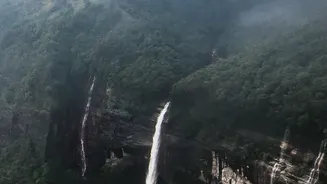
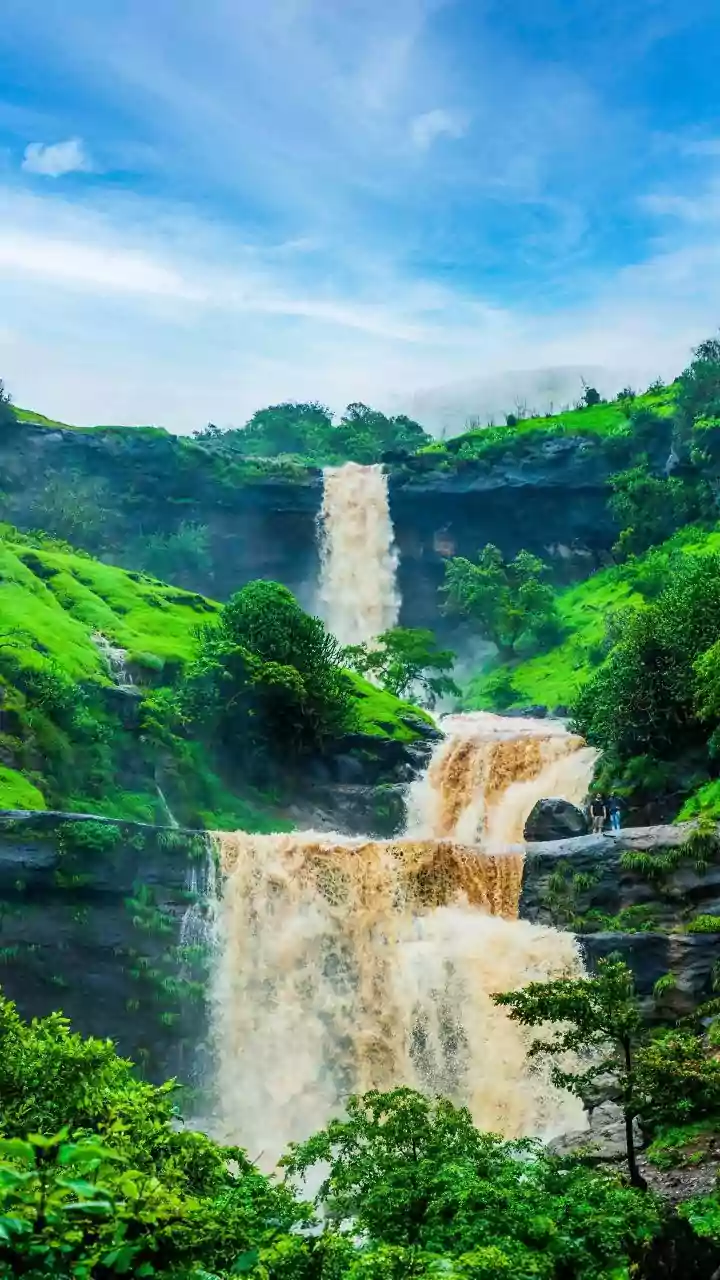
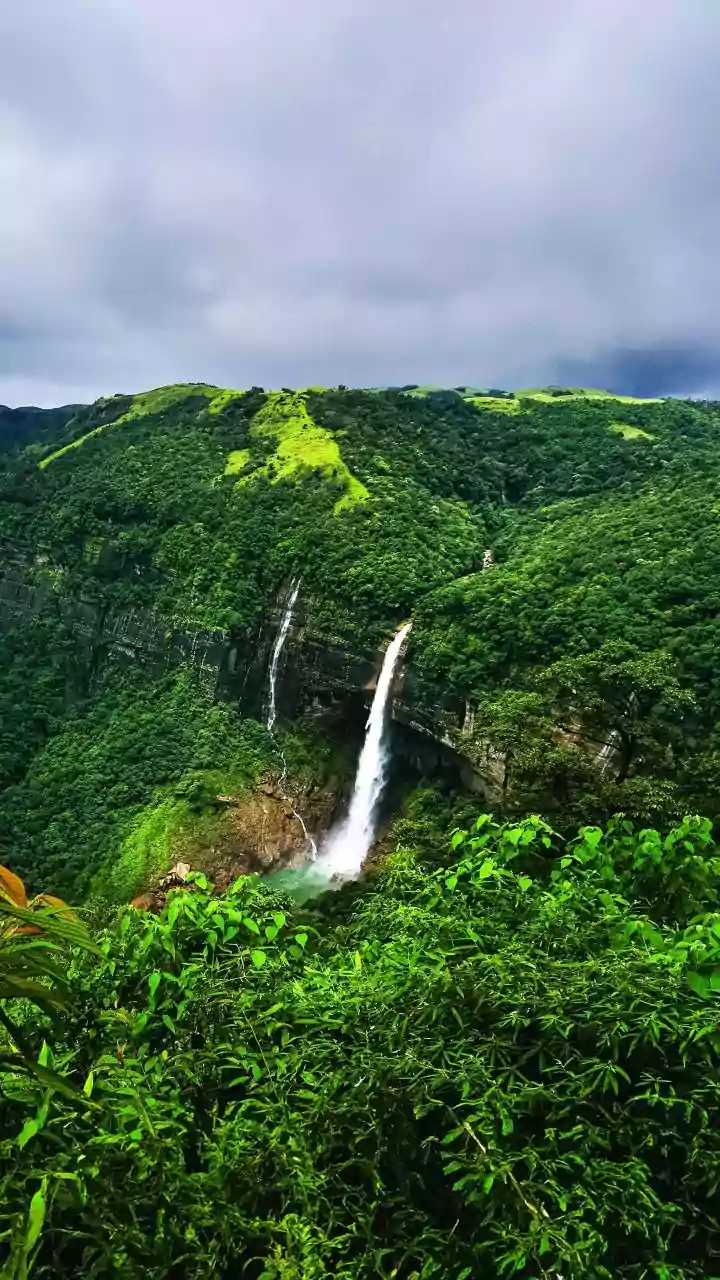
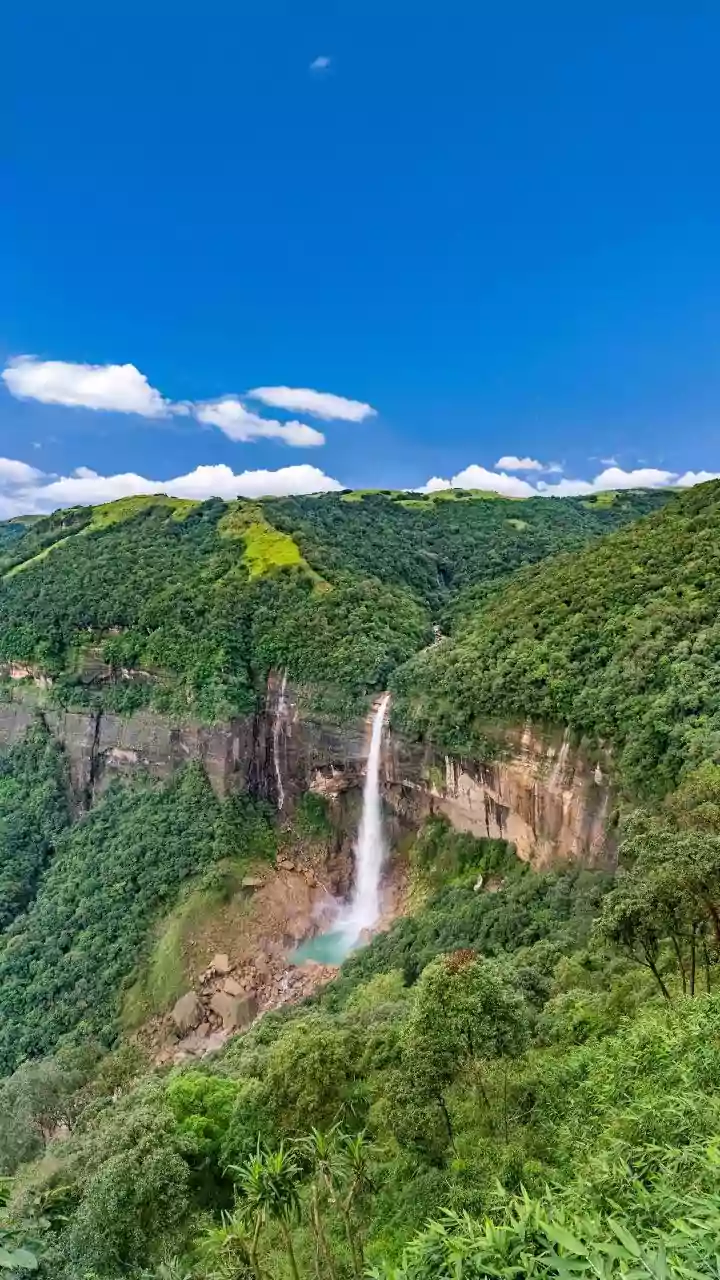
Sohra is a land of liquid legends, with waterfalls carving their way through its dramatic gorges. At 340 metres, Nohkalikai Falls is India's tallest plunge waterfall, a spectacular sight best viewed in the clear morning light. Then there are the Nohsngithiang Falls, famously known as the Seven Sisters Falls, where seven streams cascade side-by-side down limestone cliffs, creating one of Meghalaya’s most iconic views. For those seeking something a little different, the three-tiered Wei Sawdong falls offer a stunning view of turquoise pools, while the Kynrem Falls, cascading in three stages, is another magnificent sight, best seen after heavy rains.
Walking on Living Architecture
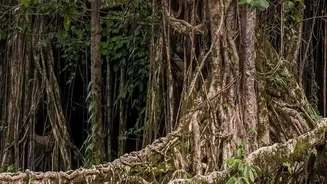
No trip to Meghalaya is complete without witnessing the marvel of its living root bridges. Grown over decades by the local Khasi tribes, these bridges are made by guiding the aerial roots of the Ficus elastica (rubber) tree across rivers and streams. The most famous of these is the Jingkieng Nongriat, or the Double-Decker Living Root Bridge, located in Nongriat village. Reaching it is an adventure in itself, involving a descent of around 3,500 steps from the village of Tyrna. The trek is demanding but incredibly rewarding, leading you through lush forests and across steel suspension bridges before you arrive at this masterpiece of natural engineering. For those with the energy, a further trek leads to the beautiful Rainbow Falls and its turquoise swimming pool.
Offbeat Sohra Experiences
Beyond the headline attractions, Sohra offers plenty for the curious traveller. Explore the ancient Mawsmai Cave, a well-lit and accessible limestone cave system that gives you a glimpse into the region's unique geology. For a more adventurous caving experience, the Arwah caves offer a more rugged exploration with visible fossils in the rock walls. Another worthy stop is the Eco Park, which provides panoramic views of the plains of Bangladesh on a clear day. For a truly offbeat journey, seek out lesser-known spots like the Umkar Root Bridge or Thangkharang Park, which offers sweeping views and a look at the impressive Khoh Ramhah rock formation.
Your Sohra Planning Guide
Reaching Sohra is most convenient by road. The nearest major airport and railway station are in Guwahati, Assam, about 163 km away. From Guwahati, you can hire a cab or take a shared taxi to Shillong (around 3 hours), the capital of Meghalaya. Sohra is a further 54 km from Shillong, a scenic drive of about two and a half hours. When packing, think in layers. While days can be pleasant, evenings and mornings can be cool. Comfortable trekking shoes with a good grip are non-negotiable, especially for the trek to the root bridges. Carry a light raincoat or umbrella, as unpredictable showers are always a possibility in the 'Abode of Clouds'.