






The Unseen Caffeine Creep
Most professionals are mindful of their morning cup of coffee or tea. But caffeine is a master of disguise, and it doesn't just live in mugs. It quietly accumulates from a variety of sources throughout a hectic day, a phenomenon we can call 'caffeine
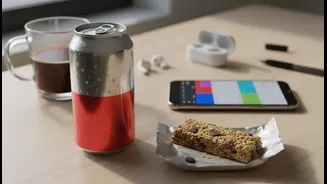
creep'. A can of soda with lunch, a square of dark chocolate during a 3 p.m. slump, and even some over-the-counter medications can each contribute to your daily total. While each source might seem insignificant on its own, their combined effect can easily push you over the edge without you ever realizing it, leading to anxiety, restlessness, and disrupted sleep.
Surprising Sips and Servings
Your morning coffee is the obvious starting point, but let's look at where else caffeine is lurking. That 'decaf' coffee you have in the afternoon isn't entirely innocent; it can still contain a few milligrams of caffeine. Many soft drinks, not just colas, have added caffeine for flavour or effect. Even some seemingly healthy choices like bottled iced teas, kombucha, and green tea-flavoured snacks contain the stimulant. An 8-ounce cup of black tea contains about 30 to 50 milligrams of caffeine, while a regular can of cola has around 30 to 40 milligrams. These smaller doses are easy to dismiss, but they add up.
Snacks, Sweets, and Supplements
The caffeine hunt extends into the pantry. Chocolate is a well-known but often underestimated source, with its caffeine coming from natural cacao beans. The darker the chocolate, the higher the caffeine content. A single ounce of dark chocolate can have as much caffeine as a half-cup of tea. Coffee-flavoured ice cream, yogurt, and other desserts also carry a caffeine kick. Beyond treats, many workout supplements, energy bars, and even some pain relievers contain caffeine to enhance their effects. Ingredients like guarana and yerba maté listed on labels are simply other natural sources of caffeine.
Understanding Your Daily Limit
For most healthy adults, the recommended daily caffeine limit is around 400 milligrams (mg). This is roughly equivalent to four cups of brewed coffee or ten cans of cola. However, this threshold is easy to breach when hidden sources are involved. One strong cup of coffee (95 mg), a black tea in a meeting (45 mg), a can of soda with your meal (40 mg), a small energy bar (50 mg), and a few squares of dark chocolate (20 mg) can push you toward 250 mg before you even finish your workday. An energy drink can add anywhere from 80 to over 300 mg in a single can, catapulting you past the daily guideline. Exceeding this limit regularly can lead to side effects like a rapid heartbeat, nervousness, and insomnia.
How to Take Back Control
Regaining control doesn't mean you have to eliminate caffeine entirely. The first step is awareness. Start by consciously tracking what you eat and drink for a few days to identify your personal caffeine patterns. When you need to cut back, do it gradually to avoid withdrawal symptoms like headaches and irritability. Try swapping one of your caffeinated drinks for a non-caffeinated herbal tea or water. Setting a caffeine curfew, such as no stimulating drinks after 2 p.m. or at least six hours before bedtime, can significantly improve sleep quality. Finally, read labels on snacks, supplements, and even medicines to stay informed and make mindful choices.