



First, Prep Your Play Zone
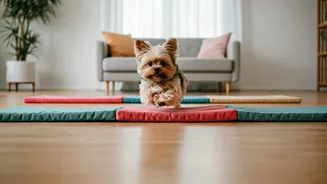
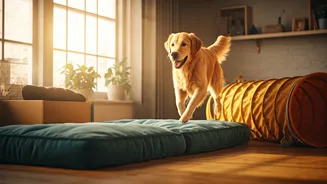
Before you start building, safety is key. Choose a room with enough open space for your dog to move comfortably. Hardwood or tile floors can be slippery, so lay down yoga mats, non-slip rugs, or runners to provide traction and cushion any tumbles. Move
fragile items and sharp-cornered furniture out of the way. Close off any areas you don’t want your dog zooming into. Finally, have a bowl of fresh water nearby for hydration breaks, and prepare a handful of small, high-value treats to use as rewards. The goal is positive reinforcement and fun, not stress.
Obstacle 1: The Cushion Cavalcade
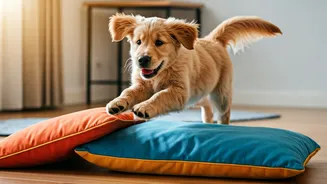
This is a great starting obstacle that helps build your dog’s confidence and body awareness. Gather pillows, sofa cushions, and sturdy blankets, and arrange them on the floor to create a varied, slightly unstable path. Your dog will have to think about where they place their feet. At first, you can create a simple, low-to-the-ground line. Lure your dog across with a treat, praising them as they successfully navigate the lumpy terrain. As they get more confident, you can make the path slightly higher or more winding. This gentle exercise is surprisingly effective at tiring out a brainy pup.
Obstacle 2: The Cardboard Box Tunnel
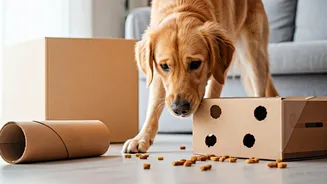
Many dogs are hesitant about confined spaces, so a DIY tunnel is a fantastic way to build their courage. Find a large cardboard box—from an appliance or a recent online order—and open up both ends to create a simple passage. Place it in your play area and let your dog sniff and investigate it on their own terms. To encourage them, get down on their level and toss a treat just inside one end. Once they are comfortable taking it, toss one a little further in, and eventually, all the way to the other side. You can also peek through the other end and call them with an excited voice. Never force them through; let their curiosity lead the way.
Obstacle 3: Weave Pole Wonders
Weave poles are a classic agility element that you can easily replicate. You don't need official poles; you can use household items like shoes, plastic water bottles (partially filled for stability), or even a line of your kids' stuffed animals. Place them in a straight line, leaving enough space between each item for your dog to walk through. Using a treat or a favourite toy as a lure, guide your dog in a gentle 'S' pattern through the poles. Start slowly, rewarding each successful 'weave.' This activity is brilliant for improving your dog's focus and ability to follow directions.
Obstacle 4: The Simple Hurdle
A small jump adds a bit of physical challenge. Safety is paramount here, so always keep hurdles very low to avoid any strain on your dog's joints. A broomstick or mop handle laid across two stacks of books is a perfect DIY hurdle. Start with it flat on the ground and simply have your dog step over it. As they understand the game, you can raise it just a few inches. Alternatively, an empty laundry basket on its side can serve as a low, wide hurdle to step over. Always encourage a gentle hop or step, not a massive leap, especially on an indoor surface.
Obstacle 5: The Muffin Tin Puzzle
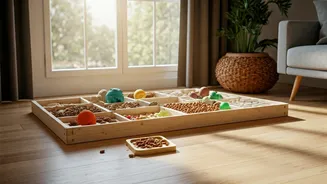
An agility course isn't just about physical activity; it’s also about mental stimulation. End your course at a 'brain games' station. Take a standard muffin tin and place a single treat in a few of the cups. Cover all the cups with tennis balls or other dog-safe toys. Your pup will have to use their nose and paws to move the balls and find their hidden reward. This 'scent work' is a powerful way to engage a dog's natural instincts and provides a calming, satisfying end to their workout.