

A Visitor From Beyond Our Solar System
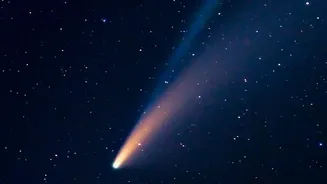
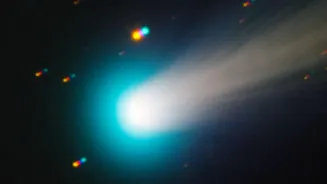
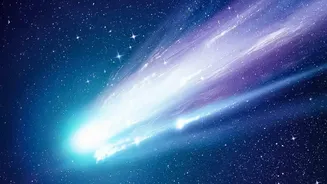
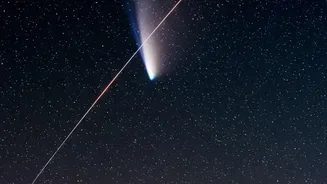
First spotted in July 2025, 3I/ATLAS was quickly identified as no ordinary comet. Its name tells its story: the '3I' designates it as the third interstellar object ever confirmed, while 'ATLAS' credits the NASA-funded alert system that discovered it.
Unlike the planets and comets native to our cosmic neighbourhood, which are gravitationally bound to the Sun, 3I/ATLAS is just passing through. It arrived on a hyperbolic trajectory, moving so fast that the Sun’s gravity couldn’t capture it into a stable orbit. This trajectory is the celestial equivalent of a passport stamp, proving its origin from beyond our solar system. After making its closest approach to the Sun in late October 2025, it began its long journey back into the interstellar void.
A Priceless Sample From Another Star
The discovery of an interstellar object is a landmark event because it offers a rare opportunity to study a piece of another planetary system up close. These objects are essentially free samples delivered to our doorstep. While we can observe distant stars and planets through telescopes, we cannot physically touch them or analyze their raw materials. 3I/ATLAS, however, is a tangible piece of its home system, carrying a chemical fingerprint of the environment in which it was born billions of years ago. By studying its composition, scientists can gain direct insight into the building blocks of planets around other stars, helping to answer fundamental questions about whether our solar system is common or an exception in the galaxy.
A Very Different Chemical Recipe
What makes 3I/ATLAS particularly fascinating is that its chemical makeup is unlike that of most comets from our own solar system. Observations revealed that its coma—the cloud of gas and dust surrounding the nucleus—contains a surprisingly large amount of carbon dioxide and an unusually high ratio of methanol compared to hydrogen cyanide. Comets in our system are typically rich in water ice. The distinct chemical balance in 3I/ATLAS suggests it formed in a very different environment, one that was perhaps much colder or exposed to different types of radiation, which favored the preservation of certain compounds over others. This alien recipe provides a direct glimpse into the chemistry of a distant planet-forming disk.
Rewriting the Rules of Planet Formation
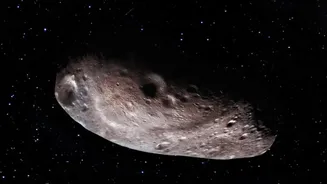
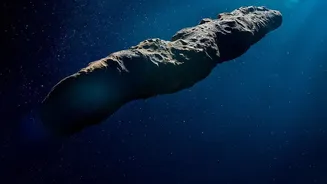
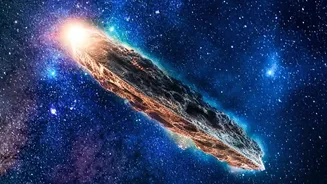
The unique properties of 3I/ATLAS, along with its predecessors 1I/ʻOumuamua and 2I/Borisov, are transforming our understanding of planetary formation. Each visitor has been surprisingly different. ʻOumuamua was rocky and asteroid-like, while Borisov was more of a classic but still chemically distinct comet. The unusual composition of 3I/ATLAS reinforces the idea that there is no single, universal template for how solar systems are built. The diversity of these interstellar guests suggests that the raw ingredients and conditions for planet formation can vary significantly from one star system to another. This knowledge helps scientists create more accurate models of how planets, including Earth-like worlds, might form across the cosmos.