

Your Pocket Guide to the Cosmos
Gazing up at a vast, dark sky can be both awe-inspiring and a little intimidating. Which star is which? Is that a planet or just a bright star? For centuries, stargazers relied on paper charts and years of practice. Today, you have a powerful guide right in your
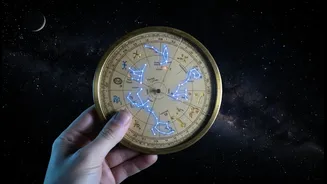
pocket. Modern astronomy apps use your phone’s GPS and motion sensors to create a real-time map of the sky. By simply pointing your device upwards, you can activate an augmented reality (AR) view that overlays names and outlines onto the stars and planets you’re seeing. This transforms a confusing canopy of lights into a familiar, navigable landscape, helping you spot constellations, identify passing satellites, and understand exactly where to look for celestial events like meteor showers.
The Best All-Rounder: Stellarium Mobile
Often hailed as the gold standard by amateur astronomers, Stellarium Mobile offers a stunningly accurate and realistic simulation of the night sky. Based on a long-trusted desktop program, its mobile version brings that same power to your fingertips with a clean, minimalist interface that’s great for beginners and seasoned sky-watchers alike. The free version is incredibly robust, allowing you to identify a massive catalogue of stars, planets, nebulae, and more. For an event like a meteor shower, you can use Stellarium to identify the radiant point — the area in the sky where the meteors appear to originate — such as the constellation Perseus for the Perseids. Its night mode, which casts the screen in red, is essential for preserving your night vision while you observe.
The Most Beautiful Guide: Star Walk 2
If you’re looking for an app that combines education with breathtaking visuals, Star Walk 2 is a top contender. It’s particularly fantastic for beginners and families. The app is famous for its beautiful, artistic renderings of constellations, overlaying mythological figures onto the star patterns to bring them to life. Its point-and-identify functionality is seamless, and the “Time Machine” feature is a standout, allowing you to scroll forward and backward in time to see how the sky will look on a future night or how it appeared in the past. This is perfect for planning your meteor shower viewing session. The app provides notifications for upcoming astronomical events, ensuring you won’t miss the peak of the Perseids. While there is a free, ad-supported version, many find the feature-rich paid version a worthwhile upgrade.
The Quick and Simple Choice: SkyView Lite
Sometimes you just want a quick, simple answer to the question, “What’s that bright light?” For that, SkyView Lite is hard to beat. This app is designed for effortless, immediate identification. There’s no complex interface; you just open it and point it at the sky. Its AR overlay is clear and works well for pinpointing planets, bright stars, and constellations. While the paid version offers a larger database of objects, many users prefer the free 'Lite' version because it’s less cluttered and perfectly serves the needs of a casual stargazer. It's the ideal tool to have on hand for a spontaneous moment of curiosity under the stars or for quickly getting your bearings before settling in to watch for shooting stars.
Tips for the Perseid Meteor Shower
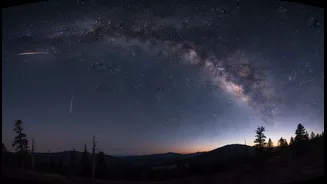
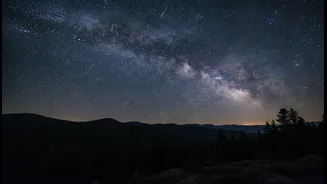
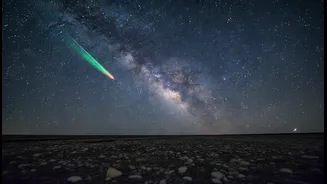
This year’s Perseid meteor shower, which peaks on the nights of August 12 and 13, 2026, promises to be one of the best in years. The peak coincides with a new moon, meaning the sky will be perfectly dark, allowing even faint meteors to shine. To make the most of it, find a location away from city lights. Give your eyes at least 20-30 minutes to fully adapt to the darkness — this is where your app’s red-light mode comes in handy. While the meteors radiate from the constellation Perseus, they can appear anywhere in the sky, so the best approach is to lie back and take in as wide a view as possible. Use your chosen app to locate Perseus for reference, then put your phone away and enjoy the natural fireworks.