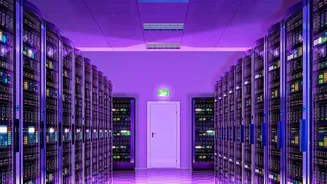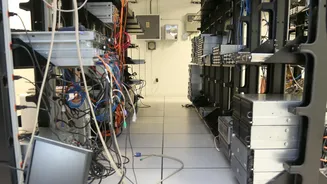







India's digital economy is booming, and behind the curtain, a massive infrastructure build-out is underway. A recent Crisil Ratings report highlights this surge, forecasting a five-fold expansion in data centre capacity by March 2030.
The Scale of the Digital Gold Rush
The numbers behind
India's data centre expansion are staggering. According to Crisil, the country's total capacity is set to jump from around 1.5 gigawatts (GW) in 2025 to 7.5 GW by March 2030. To make this happen, the industry is expected to attract investments of more than ₹3 lakh crore over the next four financial years. This isn't just speculative building; demand is already sky-high. Existing data centres are operating at about 90% utilisation, and a remarkable 95% of the capacity currently under construction is already pre-leased on long-term contracts, many spanning 15-20 years. This provides strong revenue visibility for developers and signals intense, sustained demand from major clients.
The Triple Engine of Unprecedented Growth
Three powerful forces are driving this unprecedented demand. The first and most significant is the rise of generative artificial intelligence (GenAI). AI workloads require immense computational power and data storage, pushing developers to build larger, high-density facilities. The second driver is the ongoing enterprise digitalisation across every sector, from banking to manufacturing. As companies move their operations to the cloud, the need for reliable, scalable data infrastructure grows. Finally, surging data consumption from over a billion internet users and the rollout of 5G technology are creating a constant stream of data that needs to be stored and processed. Government policies promoting data localisation, which require certain data to be stored within India, further amplify this need.
The Power Challenge and a Green Shift
This explosive growth comes with a significant challenge: power. The planned expansion is placing enormous pressure on the electricity grids of key data centre hubs. Crisil notes that in cities like Mumbai, Visakhapatnam, and Hyderabad, data centres could consume up to 60-80% of their current peak power demand by 2030. This makes timely grid connectivity a critical factor for success. In response to this and growing environmental concerns about energy and water consumption, the industry is making a concerted push toward sustainability. Developers are increasingly building large campuses powered by renewable energy, which aligns with the sustainability goals of global hyperscalers—the large cloud computing companies that are the primary tenants. India's cost advantages in land, labour, and lower power tariffs already make it 30-35% cheaper than competing Asian markets, and a focus on green energy further strengthens its appeal.
Who is Building India’s Digital Future?
A mix of domestic and international players are at the forefront of this construction boom. Major operators include Nxtra by Airtel, Yotta Data Services (a Hiranandani Group company), CtrlS Datacenters, Sify Technologies, and AdaniConneX. Global giants like NTT, Equinix, Digital Realty, and STT GDC are also investing heavily, either directly or through joint ventures. These companies are building massive, hyperscale data centre parks, primarily concentrated in Mumbai and Chennai, which benefit from their landing stations for undersea cables. However, new hubs are rapidly emerging in Hyderabad, Pune, and Visakhapatnam to meet distributed demand and mitigate geographic risk.