


Peering Through an Alien Sky
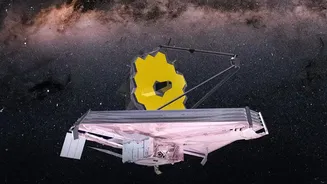
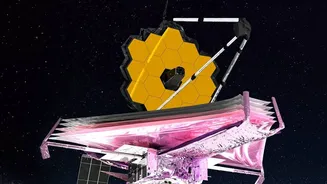
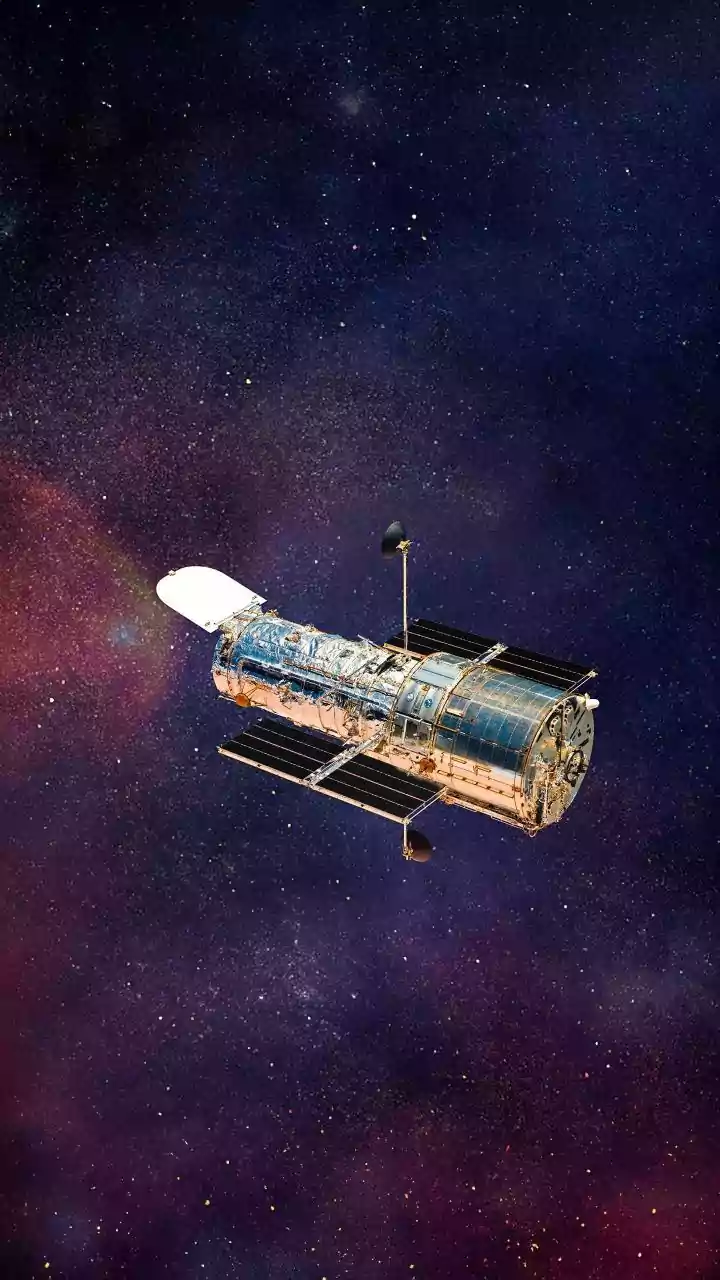
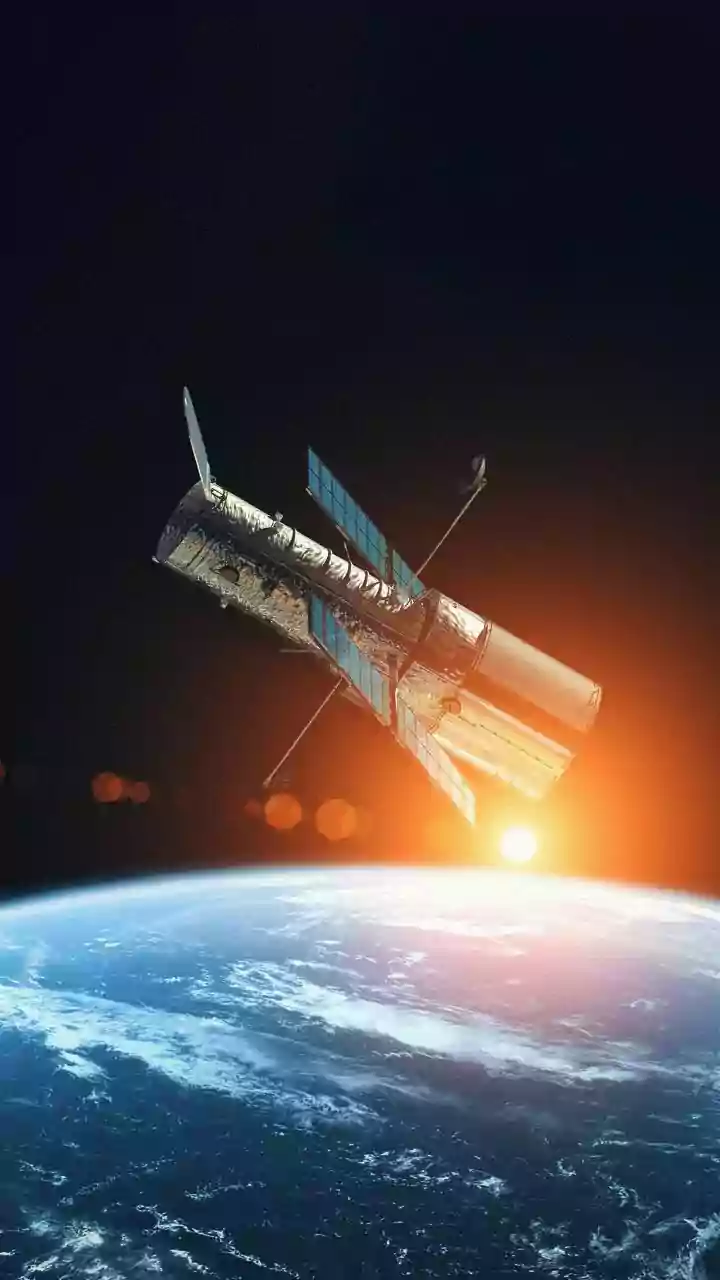
The James Webb Space Telescope doesn't just take stunning pictures of the cosmos; its primary mission includes something far more subtle and profound: exoplanet atmospheric analysis. It does this using a technique called transmission spectroscopy. When
an exoplanet passes in front of its host star from our point of view, a tiny fraction of the starlight filters through the planet's atmosphere. By capturing this light with its powerful infrared instruments, JWST can see which wavelengths have been absorbed. Different gas molecules absorb light at specific, known signatures. Think of it like a barcode; the missing bands of light tell scientists precisely what chemicals are present in that alien sky, including the one most crucial for life as we know it: water.
The Challenge of Finding Water
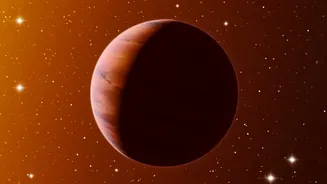
JWST has successfully detected the chemical signature of water vapour in the atmospheres of several exoplanets. For instance, on the hot gas giant WASP-96 b, located 1,150 light-years away, Webb made a clear and detailed detection of water, along with evidence of clouds and hazes. On another world, the ultra-hot WASP-18 b, the telescope found water signatures despite temperatures of nearly 2,700 degrees Celsius, a feat that showcases its extraordinary sensitivity. More recently, analysis of another hot Jupiter, WASP-94A b, revealed a clear water vapour signature on the planet's hotter, cloudless evening side. These initial findings on inhospitable gas giants have been crucial in proving the technology works, paving the way for the study of smaller, potentially rocky worlds.
Not All Water Is a Sign of Life
Finding water vapour is a monumental step, but it's not the same as finding a habitable world with liquid oceans. Context is everything. Most of the initial detections have been on 'hot Jupiters'—massive gas giants orbiting perilously close to their stars, where life is impossible. The more intriguing candidates are 'sub-Neptunes' or 'super-Earths' in the habitable zone, the region where temperatures could allow liquid water to exist. Yet even here, recent studies suggest a note of caution. On some warm sub-Neptunes, like the much-studied TOI-270 d, scientists believe much of the planet's water might be hidden deep beneath a thick hydrogen atmosphere, invisible to JWST's atmospheric scans. This means the water Webb does see might only be the tip of the iceberg, or it could be part of a steamy, high-pressure environment not at all like Earth.
The Search for the Bigger Picture
What scientists are truly looking for is not just water, but a whole cocktail of chemicals that could point towards a habitable environment. This includes gases like methane and carbon dioxide. The detection of water vapour is just one clue in a much larger detective story. For example, in the planet-forming disk around the young star PDS 70, Webb detected water vapour in the very region where rocky, Earth-like planets might be assembling. This suggests that planets like ours could be born with water readily available. Furthermore, the telescope's ability to detect different variants of water, like 'semi-heavy water' on WASP-39b, can offer invaluable clues about how a planet formed and evolved. The goal is to piece together a complete chemical inventory to distinguish a barren world with a steamy atmosphere from one with the potential for life.