




Capitalising on the 'Chandrayaan Effect'
The success of India's lunar missions has had a tangible impact in classrooms across the country, with a surge of students expressing newfound interest in space science. The Indian Space Research Organisation (ISRO) is actively working to capture this
enthusiasm through a variety of outreach programmes designed to 'catch them young'. A flagship initiative is the YUva VIgyani KAryakram (YUVIKA), or Young Scientist Programme, a two-week residential course that immerses school students in the world of space technology and applications, with a special preference for those from rural areas. This programme, along with others like workshops, exhibitions, and online courses, aims to move beyond textbook learning and provide an early glimpse into the exciting reality of a career in space. In 2026, the YUVIKA programme saw over 100,000 applicants for just a few hundred spots, demonstrating the immense appetite for this kind of engagement.
A Critical Moment for India's Space Ambitions
This push for student engagement comes at a pivotal time. As India sets its sights on ambitious goals like the Gaganyaan human spaceflight mission, a permanent space station, and sending an astronaut to the Moon by 2040, the need for a skilled workforce has never been greater. However, recent reports indicate that ISRO is facing a significant manpower shortage, with a high number of vacancies at a time of rapid expansion. Compounding this pressure is the explosive growth of India's private space sector. The emergence of startups in satellite manufacturing and launch services creates both competition for talent and a massive opportunity for a broader national space ecosystem. This dual reality makes it imperative to cultivate a deep pool of engineers, scientists, and technicians who can power both public missions and private innovation.
The Power of 'Seeing is Believing'
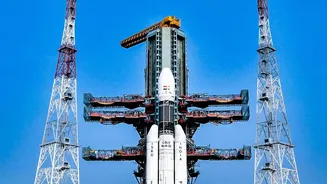
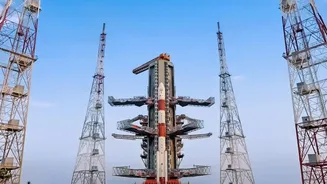
While documentaries and news reports are inspiring, nothing compares to the visceral experience of seeing space technology up close. This is the core principle behind encouraging student visits to ISRO facilities. Being able to walk through a space museum, see full-scale models of rockets like the PSLV and GSLV, or witness a live launch from the viewing gallery at Sriharikota transforms abstract concepts into tangible reality. ISRO organises interactions where students can directly ask questions to senior scientists and even astronaut-designates, breaking down barriers and making a career in space feel attainable. Some programmes, like NE-SPARKS for students from the North-Eastern states, provide curated tours of critical facilities like the UR Rao Satellite Centre (URSC) and the ISRO Telemetry, Tracking and Command Network (ISTRAC), offering a behind-the-scenes look at how missions are run. These are not passive field trips; they are formative experiences designed to ignite a lifelong passion.
Building a Nationwide Movement
The challenge lies in scaling these opportunities to reach every corner of the country. To address this, ISRO and its partners are diversifying their approach. The 'Space on Wheels' initiative uses a mobile exhibition bus to bring the wonders of space science to remote schools that cannot easily travel to ISRO centres. Furthermore, the government is fostering an environment where academia and industry can collaborate more effectively. The Indian National Space Promotion and Authorization Center (IN-SPACe) is tasked with nurturing this ecosystem, encouraging universities to develop space-related curricula and supporting student-led projects like building small satellites. Private organisations like Space Kidz India are also playing a vital role, giving students hands-on experience in building and launching payloads, effectively democratising access to space. This distributed network of public outreach, academic partnership, and private enterprise is crucial for creating a truly national talent pipeline.