







From State-Led Race to Commercial Marketplace
For decades, space exploration was defined by the Cold War rivalry between nations, with agencies like NASA leading the charge. [7, 9] This model produced monumental achievements, but it was also expensive and slow. [11] Today, the centre of gravity has
shifted dramatically from governments to entrepreneurs, investors, and corporations. [22] Companies like SpaceX, Blue Origin, and Virgin Galactic have become household names, but they are just the tip of the iceberg. [9] This new era is driven by agile business models and innovations like reusable rockets, which have slashed launch costs and made space more accessible than ever before. [7, 18]
An Entire Ecosystem Beyond the Launchpad
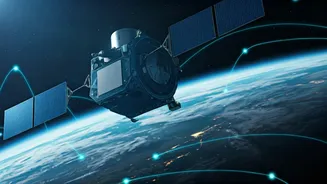
The transformation extends far beyond just launching rockets. Private enterprise is building a complex ecosystem of services and industries in orbit. [4, 19] Satellite constellations developed by companies like SpaceX (Starlink) and Amazon (Project Kuiper) are aiming to provide global internet coverage. [7] Meanwhile, a host of startups are focused on ambitious new markets, including in-orbit manufacturing, satellite servicing, asteroid mining, and even private space stations to potentially replace the aging International Space Station (ISS). [7, 13, 15] This shift is creating new recurring revenue streams, with companies competing to deliver outcomes like connectivity and data rather than just selling hardware. [20]
A New Era of Public-Private Partnership
Rather than making government agencies obsolete, the commercial boom has fostered a new era of collaboration. [23] National agencies like NASA are increasingly relying on private partners for transport, infrastructure, and innovation. [5, 23] For instance, NASA's Commercial Crew Program uses SpaceX spacecraft to ferry astronauts to the ISS. In a recent development in June 2026, NASA announced it would partner with Relativity Space to build and launch a Mars orbiter in 2028, with NASA providing the scientific instruments and the private company handling the spacecraft, launch, and operations. [5, 6, 16] This model allows NASA to focus its resources on core scientific discovery while leveraging commercial investment to accelerate the pace of exploration and data gathering. [6, 11]
Fueling a Multi-Trillion Dollar Global Economy
The economic impact of this growing industry is staggering. Projections suggest the global space economy could grow from over $600 billion in 2025 to as much as $1.8 trillion by 2035. [24, 31] This growth isn't just in space; it creates a ripple effect on Earth, demanding a wide array of skilled professionals from engineers to technicians and boosting local economies around manufacturing and launch sites. [4] This trend is global, with countries like India rapidly opening their space sectors to private enterprise, aiming to significantly increase their share of the global market. [8, 26] India has seen its number of space startups grow from just a handful to over 400 in recent years, with the government actively transferring technology to private firms to accelerate growth. [14, 29]