


What Exactly Is Nordic Walking?
At first glance, it might look like hiking with poles, but Nordic walking is a specific fitness technique with its own unique origin and purpose. Developed in Finland in the 1930s as a summer training method for elite cross-country skiers, it uses specially
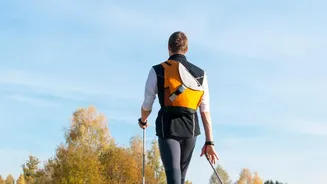
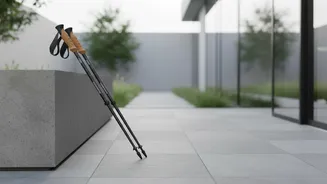
designed poles to transform walking into a comprehensive workout. Unlike trekking poles, which are primarily for stability on uneven terrain, Nordic poles are used to propel you forward. The technique involves an opposite arm-and-leg motion, similar to skiing, where you press the poles into the ground behind you to engage your upper body and core with every step. This coordinated movement is the key to unlocking its full-body benefits.
A True Full-Body Workout
The fundamental difference between a regular walk and a Nordic walk lies in muscle engagement. While a standard stroll primarily works your legs and glutes, engaging around 50% of your body's muscles, Nordic walking brings the upper body to the party. By actively pushing off with the poles, you recruit muscles in your arms, shoulders, chest, and back. This comprehensive activation turns your walk into a session that works up to 90% of your muscles simultaneously. Studies have shown that this technique not only builds upper-body strength and endurance but also significantly improves core stability and posture, creating a more well-rounded fitness outcome compared to conventional walking alone.
The Calorie-Burning Advantage
Engaging more muscles requires more energy, which translates to a higher calorie burn. Research consistently shows that Nordic walking is metabolically more demanding than regular walking at the same pace. Studies have found that it can increase calorie expenditure by anywhere from 20% to over 45%, depending on the intensity and the individual's technique. This means you can get a more effective cardiovascular workout without necessarily feeling like you're working drastically harder. For those looking to manage weight or improve their cardiovascular health, this makes Nordic walking an efficient and low-impact alternative to jogging. The poles also help distribute the load across the whole body, reducing stress on joints like the knees and hips.
Why the Sudden Revival?
While Nordic walking has been around for decades, it is enjoying a modern resurgence for several reasons. The activity is accessible to people of all ages and fitness levels, from athletes to those with mobility concerns. Its low-impact nature makes it an ideal exercise for individuals with joint pain or those recovering from injuries. Furthermore, there is a growing interest in outdoor activities that offer both physical and mental health benefits. Clubs and social groups are forming, introducing new and younger audiences to the sport through social events like night walks and themed outings. What was once seen as an activity for older adults is now attracting a diverse crowd seeking an effective, enjoyable, and social way to stay fit.
Getting Started: Technique is Key
Starting with Nordic walking is simple, but proper technique is crucial to reap the full benefits. It's more than just carrying poles. The basic movement involves maintaining an upright posture and walking with a natural arm swing, allowing the poles to drag behind you initially to get the rhythm. The key is the push-off: as your arm swings forward, you plant the pole tip angled backward, roughly in line with the heel of your opposite foot. You then push through the pole's strap to propel yourself forward, opening your hand at the end of the motion. This diagonal arm-and-leg coordination (right arm forward with left leg, and vice versa) is what activates the upper body and core, making it a truly distinct and powerful form of walking.