






A Bird's-Eye View of Earth
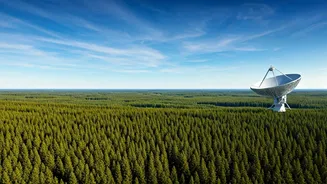
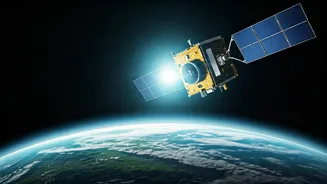
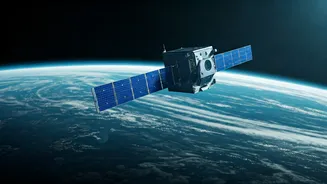
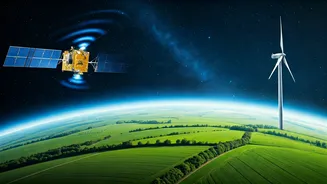
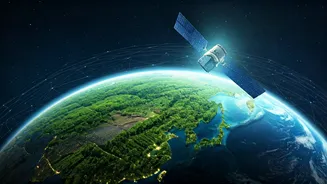
The most direct contribution of space tech comes from Earth Observation (EO) satellites. These are our planet's health monitors, tracking deforestation, polar ice melt, and urban pollution with incredible precision. In India, ISRO’s satellites (like the
Resourcesat series) are vital for managing water, forests, and planning sustainable cities. This constant stream of data provides undeniable evidence of climate change and helps governments make informed decisions. By seeing the big picture, we can pinpoint problems and measure if our solutions are working.
Revolutionising the Farm
The same GPS that guides you through traffic is creating a more sustainable form of agriculture. "Precision agriculture" combines satellite imagery with GPS data, allowing farmers to apply water, fertilisers, and pesticides only where needed and in exact amounts. This dramatically reduces chemical runoff into rivers, saves water, and lowers fuel consumption. For an agricultural nation like India, these technologies promise a more productive and eco-friendly food system, benefiting both the farmer and the environment.
Tech Trickling Down from Space
Solving problems for survival in space often leads to brilliant solutions on Earth. Life support systems on the International Space Station required advanced water filtration that could turn wastewater into drinking water. This technology is now being adapted for use in remote areas on Earth lacking clean water. Similarly, the need for lightweight, ultra-strong materials for spacecraft has led to innovations in composites now used in cars and aeroplanes, making them lighter and more fuel-efficient. Even space-grade insulation is now in our homes, reducing energy use.
The Ultimate Green Energy Dream
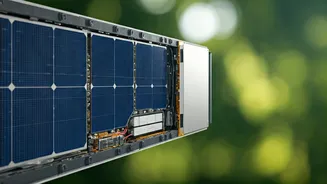
This one sounds like science fiction, but it’s a concept scientists are seriously exploring: Space-Based Solar Power (SBSP). The idea involves placing huge solar panels in orbit, where they collect sunlight 24/7, unhindered by weather. This energy would be beamed wirelessly to receiving stations on Earth and converted into electricity. The potential is a clean, constant, and nearly limitless power source. While the cost and technical challenges are immense, it represents the kind of ambitious, long-term thinking that space exploration inspires to solve our biggest problems.
Acknowledging the Footprint
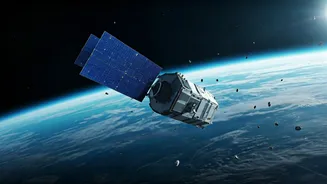
It's also important to acknowledge the environmental footprint of space exploration. Rocket launches burn fossil fuels and release pollutants. The growing number of satellites creates "space junk," posing a risk to active missions. The industry is aware of this. Companies are developing reusable rockets to cut down on waste, and there's a push for technologies to de-orbit old satellites safely. For space tech to be a net positive for the planet, it must continue to clean up its own act.