






For many living with asthma, exploring complementary therapies is a natural step. Breathing exercises are a popular, effective tool for managing symptoms, but how do they fit with prescribed inhalers and medications? Let's take a closer look.
The Golden Rule: Never Replace Your Prescription
Let's be
clear from the start: breathing exercises are a supplement to, not a replacement for, your prescribed asthma medication. Inhalers, whether for rescue or prevention, are scientifically proven, life-saving treatments that work by relaxing airway muscles or reducing inflammation. No breathing technique can do this. While some studies show that consistent practice can reduce the need for reliever inhalers, this is a potential outcome, not a goal to be pursued by abandoning your treatment plan. Think of breathing practices as a valuable member of your support team, with your doctor and prescribed medications as the team captains. Always consult your doctor before making any changes to your asthma management routine.
How Breathing Exercises Help Manage Symptoms
So, if they don't replace medicine, what do they do? Breathing exercises work by retraining your breathing patterns to be more efficient, strengthening respiratory muscles, and promoting relaxation. Many people with asthma tend to take shallow, rapid breaths from the chest, especially when feeling anxious or breathless. This can sometimes worsen symptoms. Specific techniques encourage slower, deeper breathing, which helps keep airways open longer, improves oxygen intake, and can calm the nervous system to reduce stress, a common asthma trigger. Over time, this can lead to better overall breathing control, improved quality of life, and fewer symptoms like wheezing and breathlessness.
Mastering the Form: Key Techniques Explained
The 'form' of your breathing practice is crucial. Three of the most well-regarded techniques are Diaphragmatic Breathing, Pursed-Lip Breathing, and the Buteyko Method. Each serves a slightly different purpose. Pursed-lip breathing is excellent for moments of breathlessness, as it slows your breathing rate and helps empty your lungs more completely. Diaphragmatic or 'belly' breathing focuses on strengthening the diaphragm, the main muscle used for breathing, to make each breath deeper and more effective. The Buteyko method is a form of breath retraining that involves a series of exercises, including breath holds, designed to help you breathe more slowly and lightly through your nose.
A Simple Practice: Diaphragmatic (Belly) Breathing
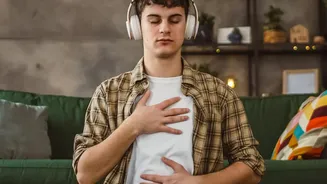
You can try this basic exercise right now. Sit comfortably in a chair or lie on your back with your knees bent. Place one hand on your upper chest and the other on your belly, just below your rib cage. Inhale slowly through your nose, focusing on letting your stomach expand and push your hand up. The hand on your chest should remain as still as possible. Then, exhale slowly through pursed lips, as if you're gently blowing out a candle, and feel your belly fall. Aim to make your exhale about twice as long as your inhale. Practising this for 5-10 minutes a day can help make this efficient breathing pattern more natural and automatic.
Getting Started Safely and Effectively
The best way to start is by speaking with your pulmonologist or a respiratory physiotherapist. They can recommend which techniques are best suited for your specific condition and ensure you're performing them correctly. Some methods, like the Papworth and Buteyko techniques, are best learned under the guidance of a trained practitioner to ensure they are done safely and effectively. It's helpful to practice these exercises when you are feeling well and not in the middle of a flare-up. This way, the techniques become second nature, and you can more easily apply them when you start to feel breathless or anxious.