





The Core of the Conflict
On the surface, the standoff is simple. The United States, a global agricultural powerhouse, wants India to lower its steep import tariffs on farm products, opening one of the world's largest consumer markets to American goods. On the other side, India's
government faces immense pressure to protect its massive agricultural sector, where millions of small and marginal farmers fear they cannot compete with heavily subsidised American imports. This fundamental disagreement has stalled trade talks for months, turning agriculture into the primary sticking point in an otherwise promising bilateral agreement.
America's Push for Market Access
For US agriculture exporters, India represents a vast, untapped opportunity. With a population of over 1.4 billion and a growing middle class, the demand for a wider variety of food products is increasing. American farm lobbies are pushing hard for access, specifically targeting products like almonds, apples, walnuts, poultry, and dairy. They argue that India's high tariffs—sometimes exceeding 100% on certain items—are unfair trade barriers. The US is also looking to export products like soybean oil and Distiller's Dried Grains with Solubles (DDGS), a high-protein animal feed byproduct from ethanol production, which they believe can support India's growing livestock industry. For Washington, securing these concessions is a major goal of the trade negotiations.
India's Defensive Stand
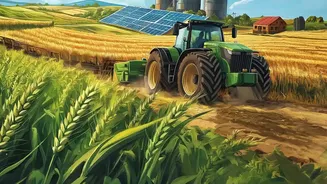
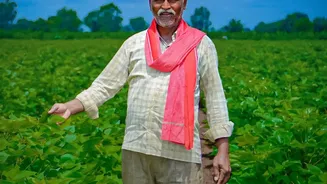
Agriculture in India is not just an industry; it's a lifeline for nearly half the country's population and a politically sensitive issue. Farmer unions like the Samyukt Kisan Morcha (SKM) and the All India Kisan Sabha (AIKS) have warned that any deal opening the gates to cheap US imports would be a 'death warrant' for farmers. The core fear is that small-hold Indian farmers, with an average farm size of just over one hectare, cannot compete with large-scale, highly mechanised, and heavily subsidised US agriculture, where the average farm is nearly 187 hectares. This disparity could lead to a crash in domestic crop prices, devastating rural incomes and threatening the livelihoods of over 80 million households dependent on dairy alone.
The Most Sensitive Sectors
While the dispute covers a range of products, dairy and poultry are particularly contentious. The Indian dairy sector is a cornerstone of the rural economy, involving millions of small, often landless, families. Farmer groups argue that allowing subsidised US dairy imports could undercut domestic procurement prices and destroy this fragile ecosystem. Similarly, there are concerns that opening the market to US poultry and other products like maize, wheat, and soybean could leave Indian producers vulnerable. Farmer organisations have pointed to recent government decisions to cut import duties on edible oils as a worrying precedent, claiming it depressed domestic soybean prices just as farmers began their harvest.
A Deal on the Horizon?
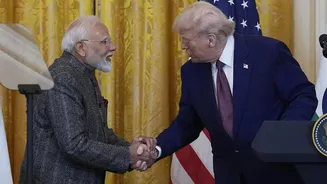
Despite the standoff, both sides have recently signalled that a deal is imminent. US President Donald Trump and Secretary of State Marco Rubio have stated that negotiations are 'very, very close' to a conclusion. Indian officials, including Commerce Minister Piyush Goyal, have also expressed optimism that the first phase of an agreement is being finalised. However, farmer organisations remain deeply sceptical, accusing the government of negotiating behind closed doors and yielding to US pressure. They have called for protests, including a march in Delhi, demanding transparency and the scrapping of any agreement that harms agricultural interests.