




Why Bodyweight Training Is Perfect for Beginners
Bodyweight training is an incredibly effective way to build a strong, functional foundation. Because these exercises often mimic everyday movements like pushing, pulling, and squatting, they build practical strength that helps in real-life activities.
The biggest advantage is convenience; you can do these workouts anywhere, anytime, making it easier to stay consistent. They are a safe way to learn proper form before adding weights, and they engage multiple muscle groups at once, giving you an efficient, full-body workout. This method is not only cost-free but also easily adaptable to any fitness level.
The Foundational Full-Body Exercises
To get started, focus on mastering a few key movements that work your entire body. Proper form is more important than the number of repetitions. Performing these exercises correctly ensures you're working the right muscles and reduces the risk of injury.
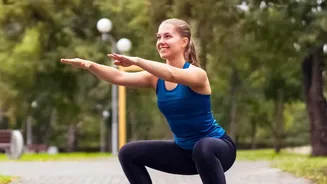
Bodyweight Squats: Build Your Lower Body
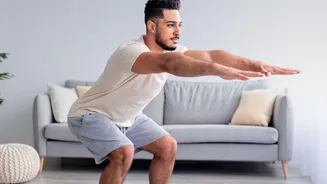
Squats are a powerhouse exercise, targeting your thighs, glutes, and hamstrings. To perform one, stand with your feet shoulder-width apart, toes pointing slightly outward. Keeping your chest up and your back straight, push your hips back as if you're sitting in a chair. Lower yourself until your thighs are parallel to the floor, ensuring your knees track in line with your toes but do not extend past them. Push through your heels to return to the starting position, squeezing your glutes at the top.
Push-Ups: Upper Body and Core Strength
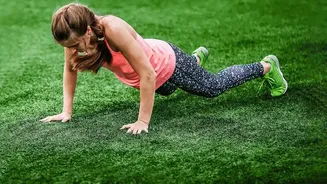
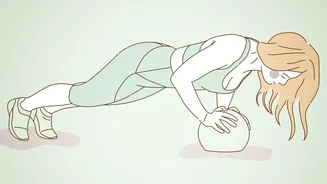
Push-ups are fundamental for building strength in the chest, shoulders, and triceps, while also engaging your core. Place your hands slightly wider than your shoulders. Extend your legs back so your body forms a straight line from your head to your heels. Lower your body until your chest nearly touches the floor, keeping your elbows from flaring out too wide. Push back up to the starting position. For beginners, a modification can be done by performing the push-up on your knees.
Lunges: For Balance and Leg Toning
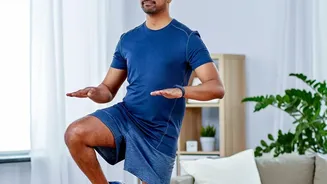
Lunges are excellent for targeting the quads and glutes of your front leg while improving balance and stability. Step one foot forward, keeping your feet about hip-width apart. Lower your hips until both knees are bent at approximately a 90-degree angle. Your front knee should be directly above your ankle, and your back knee should hover just above the ground. Keep your torso upright. Push off your front foot to return to the start, then alternate legs.
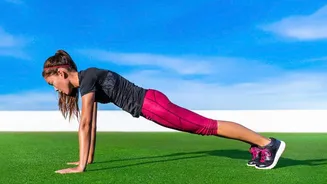
Plank: The Ultimate Core Stabilizer
The plank is a static exercise that strengthens your entire core, including your abs, back, and hips. Position yourself on your forearms with your elbows directly under your shoulders. Extend your legs back and lift your hips so your body forms a straight, rigid line. Engage your abdominal muscles and glutes to prevent your hips from sagging or rising too high. Gaze at the floor to keep your neck in a neutral position and hold.
Your Beginner Workout Schedule
Consistency is the most important factor for seeing results. Aim to perform this workout two to three times per week on non-consecutive days to allow your muscles time to recover and rebuild. A simple routine could be: - Bodyweight Squats: 3 sets of 10-12 repetitions - Push-Ups (or Knee Push-Ups): 3 sets of as many reps as you can manage with good form - Lunges: 3 sets of 10 repetitions per leg - Plank: 3 sets, holding for 20-30 seconds each time Rest for 60 to 90 seconds between sets. As you get stronger, you can increase the reps, add more sets, or decrease your rest time.