







A Global Dialogue in India's Space City
Bengaluru recently hosted the BRICS Heads of Space Agencies meeting, bringing together representatives from Brazil, Russia, India, China, South Africa, and newer member countries. Supported by the Indian Space Research Organisation (ISRO), the summit
focused on deepening collaboration in space exploration and satellite technology. A key topic was the BRICS Remote Sensing Satellite Constellation, an agreement aimed at sharing data to address global challenges. Discussions included amending the agreement to bring in new partners and establishing a BRICS Space Council, signaling a move towards a more formal and robust framework for space cooperation.
The View From Above: Why Satellites Are Crucial
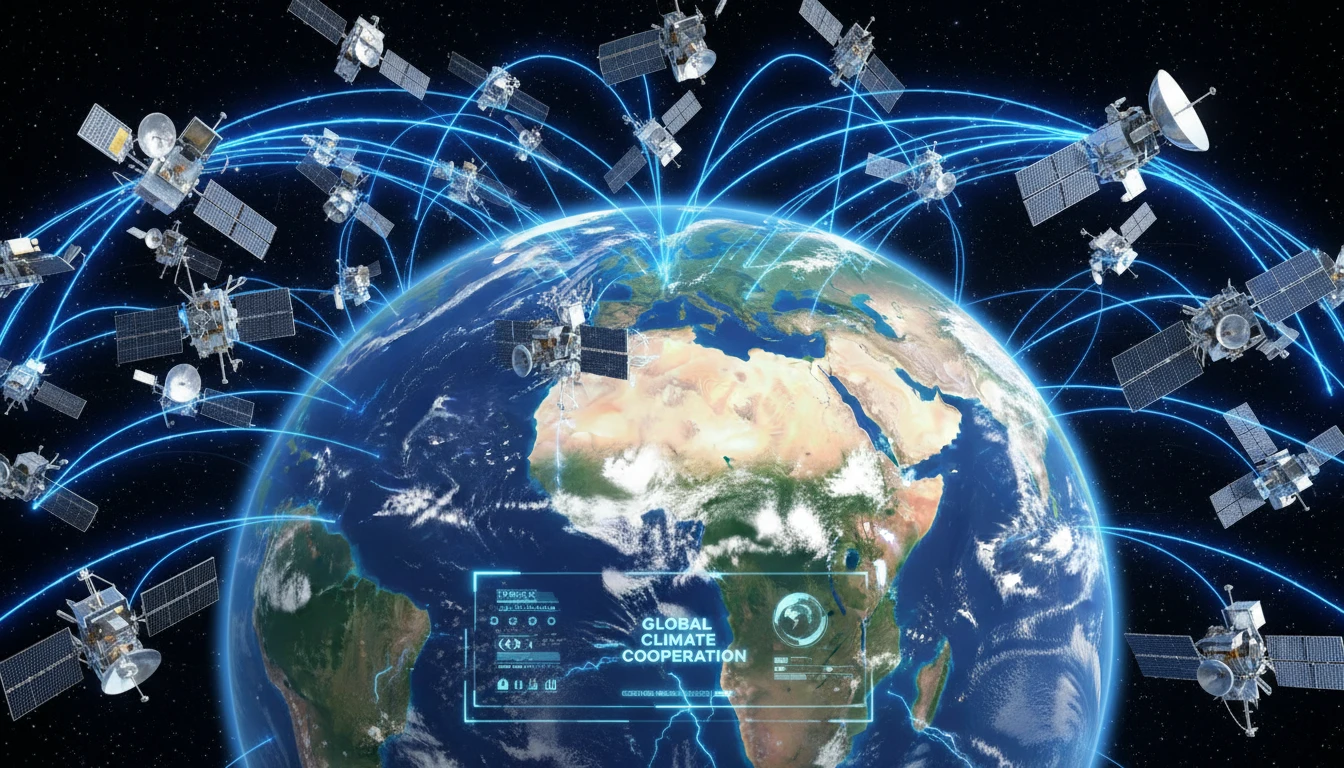
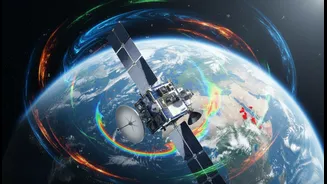
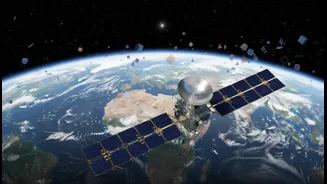
Earth observation satellites provide the unbiased, large-scale data essential for effective climate action. From tracking deforestation in the Amazon to monitoring the retreat of Himalayan glaciers and analysing monsoon patterns, these orbital platforms offer a perspective that ground-based sensors cannot match. They measure everything from atmospheric carbon and sea-level rise to air and water quality. Advanced technologies like Synthetic Aperture Radar (SAR) can even see through clouds and smoke, enabling continuous, all-weather monitoring of disaster events like floods and wildfires. This data is the bedrock of modern climate science, guiding policy decisions and helping nations prepare for environmental changes.
Why No Single Nation Can Go It Alone
Monitoring a planet is a colossal task. No single country possesses the resources or geographic positioning to build and operate a satellite network that can provide comprehensive, real-time global coverage. International cooperation is not just beneficial; it's a necessity. By combining resources, space agencies can launch more specialised satellites and share the immense costs. Collaborations like the one between NASA, the European Space Agency (ESA), and the Japan Aerospace Exploration Agency (JAXA) have already created powerful data-sharing platforms like the Earth Observing Dashboard. Sharing data from different satellites also allows for cross-calibration, which improves the accuracy of climate models and our overall understanding of the Earth's systems.
India's Growing Role as a Collaborative Hub
India is increasingly positioning itself as a key player in global space diplomacy. Prime Minister Narendra Modi has previously proposed a G20 Satellite Mission for Environment and Climate Observation, aimed specifically at helping countries in the Global South. This ethos is reflected in ongoing projects, such as the TRISHNA mission, a joint effort between ISRO and France's CNES to monitor the impacts of climate change on water resources and agriculture. Furthermore, India is a key partner in the BRICS satellite project, where ISRO is responsible for designing instruments to analyse monsoons and track glaciers. The summit in Bengaluru, which also provided a platform for private Indian space-tech companies, underscores the nation's commitment to fostering both South-South cooperation and broader international partnerships.