







The Final Frontier of FDI
The government has officially liberalised its Foreign Direct Investment (FDI) policy for the space sector, a landmark move designed to attract global capital and technology. Previously, any foreign investment in satellite-related activities required case-by-case
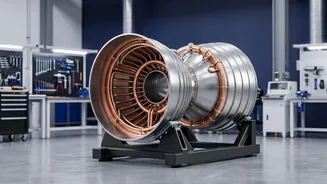
government approval, a process that could be slow and deter investors. The new rules create a much clearer, tiered system. Now, up to 100% FDI is allowed in the manufacturing of space components and sub-systems via the 'automatic route'—meaning no prior government sign-off is needed. This is the most liberal part of the policy and aims to make India a global hub for space hardware manufacturing.
A Graded Approach to the Galaxy
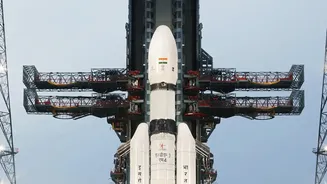
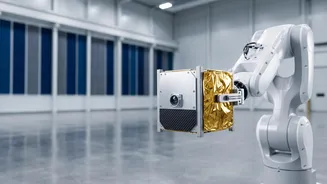
The policy isn't a complete free-for-all; it strategically balances openness with national security. For more sensitive areas, the automatic route is capped. Foreign firms can invest up to 74% automatically in satellite manufacturing and operations, data products, and related ground segments. For the most strategic area—launch vehicles (rockets) and spaceports—the automatic cap is set at 49%. Any investment beyond these automatic limits requires government approval, ensuring a degree of domestic control over critical infrastructure and technology. This tiered structure provides clarity that was previously missing, defining specific rules for different parts of the space value chain.
Why the Change, and Why Now?
This policy shift is a core component of the Indian Space Policy 2023, which aims to transition ISRO from being the primary operator to a research and development powerhouse, while the private sector handles more commercial activities. The goal is ambitious: to grow India's share of the global space economy from its current 2% to over 9% by 2030. The global space economy is projected to be worth hundreds of billions of dollars, and India wants a much larger piece of the pie. With over 400 space startups now active in the country, the government recognises that domestic capital alone is not enough to fuel this rapid growth. This reform is designed to attract the large-scale international funding needed for these companies to scale up.
A Lifeline for Local Innovators
For India’s burgeoning space startups—companies like Skyroot Aerospace, Agnikul Cosmos, and Pixxel—this is a game-changer. Building and launching rockets and satellites is incredibly capital-intensive. The easier access to foreign funding means these companies can accelerate development, expand manufacturing, and compete on the global stage. It moves them beyond being just vendors for ISRO to becoming independent commercial entities. Furthermore, the influx of foreign capital is expected to bring advanced technology and new expertise, helping Indian firms and their MSME suppliers meet international standards and integrate into the global aerospace supply chain.
Navigating the New Cosmos
While the new rules create immense opportunities, they also present challenges. Increased foreign investment will likely lead to greater competition for homegrown startups. The regulatory framework, managed by the single-window agency IN-SPACe, will be crucial in ensuring a level playing playing field and streamlining approvals. IN-SPACe's role is to balance commercial ease with national security, a delicate act given the dual-use nature of some space technologies. For Indian founders, the new landscape means that while funding may be easier to secure, they will also need to build robust business models to compete with potentially larger, foreign-backed players entering the market.