

Propulsion Without Propellant
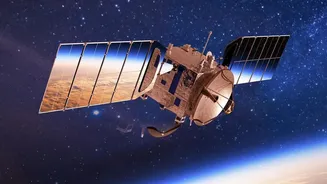
A solar sail works much like a sailboat using wind, but its driving force is the subtle pressure of sunlight itself. Light is made of particles called photons, which have momentum but no mass. As countless photons from the sun bounce off a large, reflective
sail, they transfer their momentum, giving the spacecraft a gentle but continuous push. While this thrust is incredibly slight—about the weight of a paperclip on a football field-sized sail—it is constant and limitless. Unlike a chemical rocket that burns through its fuel in minutes, a solar sail can accelerate for months or years, achieving high speeds over time without carrying a single drop of heavy propellant.
The Game-Changing Breakthrough
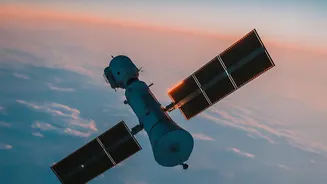
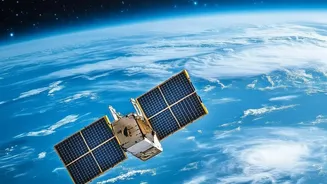
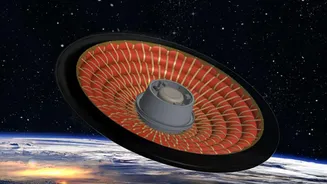
The key challenge for solar sails has been making them large enough to catch sufficient sunlight without being too heavy or difficult to deploy. The latest breakthrough comes from NASA's Advanced Composite Solar Sail System (ACS3) mission, which launched in April 2024. This mission is testing new sail booms—the masts that support the sail—made from innovative composite materials of flexible polymer and carbon fiber. These booms are not only 75% lighter than previous designs but are also stiffer and can be rolled up as tightly as a tape measure. This innovation allows for much larger sails to be packed into tiny spacecraft, like the toaster-oven-sized CubeSat used for ACS3. It paves the way for future sails that could be the size of a basketball court or even larger, all deploying from a small, low-cost satellite.
The Economics of Weightlessness
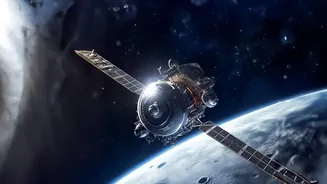
The single biggest driver of mission cost in space exploration is launch weight. A conventional spacecraft must carry massive amounts of fuel, which makes the vehicle heavy and requires a large, expensive rocket to escape Earth's gravity. By eliminating the need for propellant, solar sails slash the overall mass of the spacecraft. This allows them to be launched on smaller, cheaper rockets, or even hitch a ride as a secondary payload on a larger mission, drastically reducing launch expenses. The NASA NEA Scout mission, though it ultimately failed to make contact, was designed around this principle: a small CubeSat intended to fly to an asteroid propelled solely by a solar sail, demonstrating a low-cost method for reconnaissance. This model—small satellite, no fuel, cheap launch—is the core of the cost reduction.
Why Near-Earth Asteroids are Perfect Targets
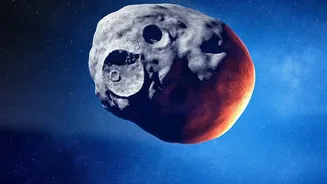
Near-Earth Asteroids (NEAs) are ideal destinations for this technology. These small bodies have very low gravity, so a spacecraft doesn't need a powerful chemical rocket to enter orbit. The slow, continuous thrust of a solar sail is perfect for the delicate, long-term maneuvers required to approach and match an asteroid's trajectory. Exploring NEAs is a high priority for both science and planetary defense, as some of these objects pose a potential impact threat to Earth. Using low-cost solar sail probes, scientists can imagine deploying entire fleets of small spacecraft to survey dozens of asteroids, gathering crucial data on their size, shape, and composition far more affordably than ever before. This data helps us characterize potential threats and identify resources for future in-space utilization.
A New Era of Exploration
This breakthrough isn't just about one mission; it's about enabling a new paradigm of space exploration. Freed from the constraints of fuel, missions can have longer durations and visit destinations previously considered too costly or complex. Beyond asteroids, solar sails could be used for missions to monitor space weather, providing earlier warnings of solar storms that can disrupt power grids and satellites. The technology demonstrated by ACS3 and pioneered by missions like The Planetary Society's LightSail 2 is creating a future where smaller, more affordable probes can be sent across the solar system. This opens the door for more frequent science missions, better planetary defense, and a more accessible frontier for all.