

A 'New Star' in the Heavens
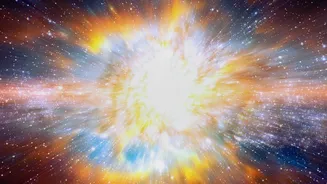
For 18 months, skywatchers across Europe, China, and Korea tracked the mysterious object in the constellation Ophiuchus. It was bright enough to be seen during the day for over three weeks. German astronomer Johannes Kepler, though not the first to see it,
conducted such a thorough study that the event was named after him: Kepler's Supernova. Without a telescope, he meticulously recorded its brightness and position, proving it had no discernible parallax, meaning it was incredibly far away, among the 'fixed' stars. In his book 'De Stella Nova' ('On the New Star'), he documented a phenomenon that helped dismantle the ancient idea of a perfect, unchanging universe.
A Tale of Two Explosive Endings
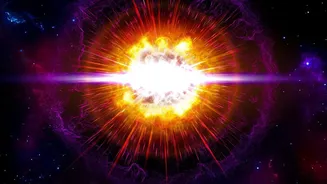
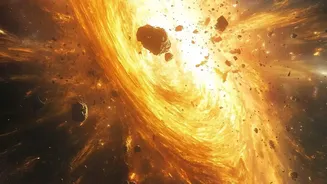
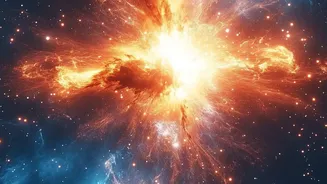
What Kepler observed was not a star's birth, but its violent death. Specifically, SN 1604 was a Type Ia supernova. This kind doesn't come from a single, massive star collapsing. Instead, it happens in a binary star system where a small, dense remnant called a white dwarf pulls material from a companion star. When the white dwarf's mass hits a critical limit—about 1.4 times that of our Sun—it triggers a runaway thermonuclear explosion that completely obliterates the star. This is distinct from a Type II supernova, which is the fate of a truly massive star, one at least eight times the mass of our Sun. These giants die when their core runs out of fuel and collapses under its own immense gravity, creating a titanic explosion.
The Ghostly Remnant of SN 1604
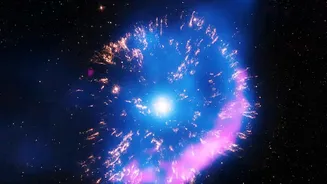
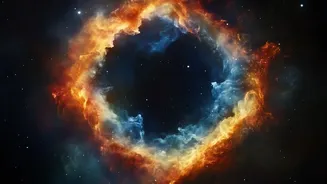
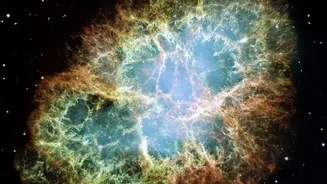
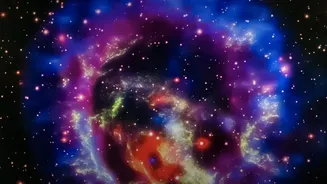
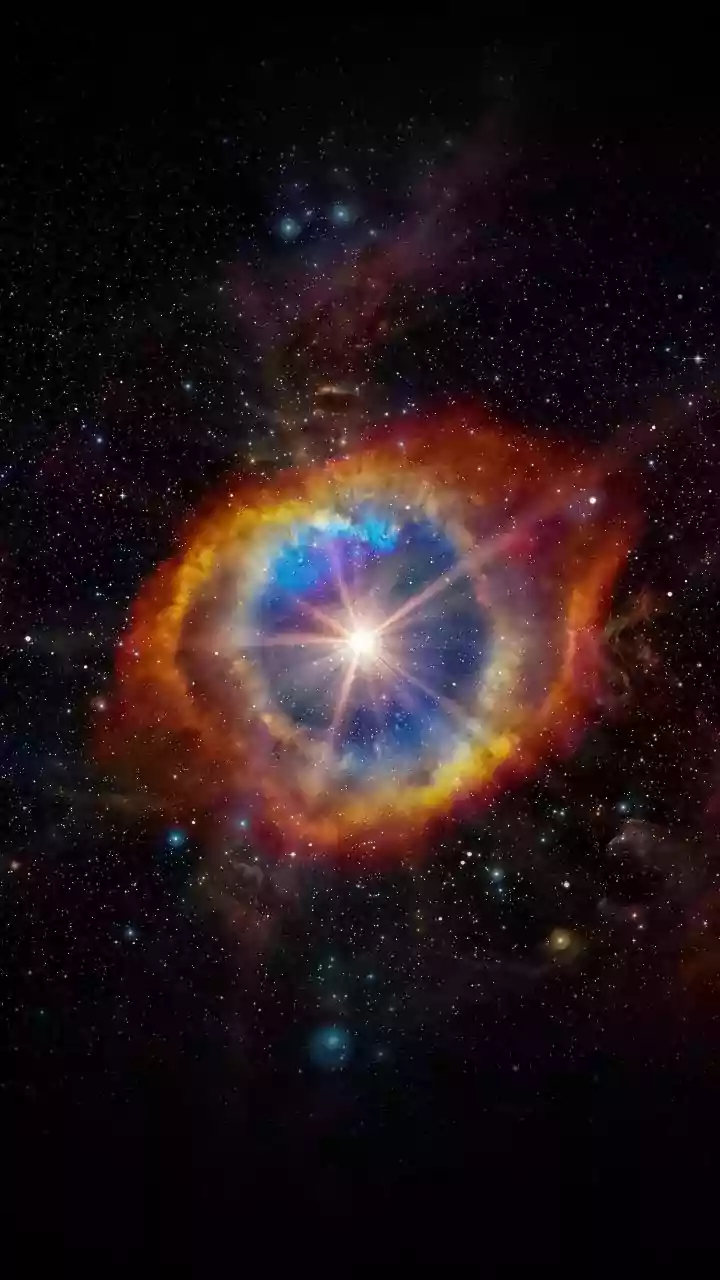
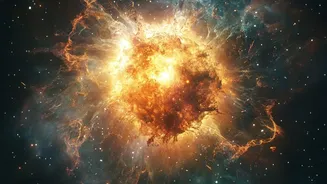
A Type Ia supernova like Kepler's leaves no central object behind—no neutron star or black hole. The entire white dwarf is consumed in the blast. What remains is a spectacular, expanding cloud of ejecta. Today, over 400 years later, powerful telescopes like the Hubble Space Telescope and the Chandra X-ray Observatory can see the remnant of SN 1604: a knotty, glowing shell of gas and dust about 20,000 light-years away. This shell is rich in iron and other elements forged in the heart of the explosion. As it expands, it collides with interstellar gas, creating shockwaves that we can study in X-ray and radio light while enriching the galaxy with heavy elements.
What Massive Stars Truly Leave Behind
So what of the massive stars mentioned in our headline? Their demise is even more dramatic. When a star more than eight times the Sun's mass undergoes a core-collapse (Type II) supernova, the explosion is powerful enough to blow its outer layers into space, but the core itself remains. What it becomes depends on its mass. If the core is between about 1.4 and 3 times the Sun's mass, gravity crushes it into an object so dense that a teaspoonful would weigh billions of tons: a neutron star. If the core is more massive than that, gravity wins completely, and nothing can stop its collapse into a black hole—an object with gravity so strong that not even light can escape.
Factories for a Universe of Life
Whether it's a white dwarf detonation or a massive star's collapse, supernovae are not just endings; they are cosmic creation events. They are the primary forges for most of the heavy elements in the universe. The iron in your blood was likely created in a Type Ia supernova. The gold in jewellery and the uranium used for nuclear power were forged in the cataclysm of massive star collisions or their supernova explosions. These explosions are the universe's distribution mechanism, scattering the raw materials for new stars, planets, and, eventually, life across the cosmos. The expanding remnants, like the one Kepler saw, are the seeds of future worlds.