







ISRO's Groundbreaking Lunar Thermometer
At the heart of this discovery is an instrument called the Chandra’s Surface Thermophysical Experiment, or ChaSTE. Developed by teams at the Physical Research Laboratory (PRL) and Vikram Sarabhai Space Centre (VSSC), ChaSTE is essentially a high-tech
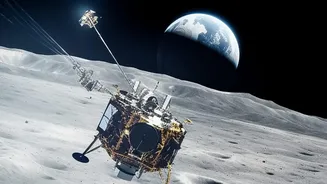
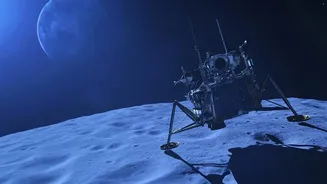
thermometer designed for the Moon. After the Vikram lander's historic touchdown at the south polar region in August 2023, the instrument deployed a slender probe that pushed 10 centimetres into the lunar soil, known as regolith. This probe contains ten highly sensitive temperature sensors, allowing ISRO scientists to build the first-ever detailed, in-place thermal profile of the lunar south pole's topsoil.
A 'Cake-Like' Structure Under the Dust
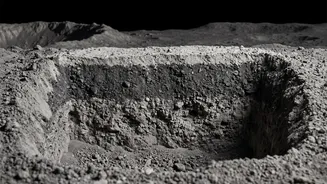
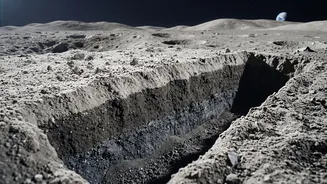
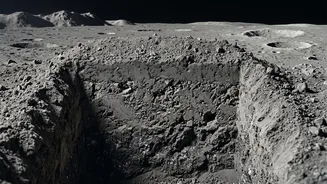
For a long time, scientists expected the lunar topsoil to be relatively uniform, churned into a homogenous mix by billions of years of micrometeorite impacts. However, ChaSTE's measurements have turned that assumption on its head. An analysis published in November 2026 reveals a distinct three-layer structure within that shallow 10 cm depth. The uppermost layer, down to about 3 cm, is an extremely fluffy, porous material. Below that, from 3 to 6 cm, is a middle layer with different properties, followed by a denser bottom layer from 6 to 10 cm. ISRO scientists have described the structure as 'cake-like', with each layer possessing different densities and thermal conductivities.
A Tale of Two Measurements
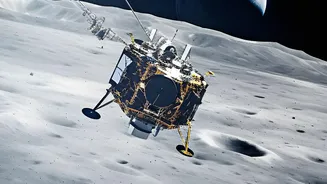
This discovery builds on earlier findings from a unique event in the mission: the 'hop' experiment. Towards the end of its mission, the Vikram lander fired its engines and lifted off, moving about 50 cm to a new spot. This manoeuvre blew away the top 2-3 cm of loose dust, giving ChaSTE a second chance to probe what lay beneath. The data from this 'post-hop' location first revealed a two-layer structure. The newer, more comprehensive analysis from the original, undisturbed landing site has now provided the complete three-layer picture, confirming that the soil's properties, like its density and cohesiveness, change significantly with just a few centimetres of depth.
Why These Hidden Layers Matter
This fine-scale layering has major implications. Firstly, it changes our understanding of how heat travels through the lunar soil. ChaSTE recorded a massive temperature difference of about 73 degrees between the surface and a depth of 10 cm at local noon, with the different layers responding differently to the sun's heat. This top layer of highly insulating, fluffy dust acts like a thermal blanket. Understanding this is crucial for future missions. Any plan to build habitats, extract resources like water ice, or operate equipment on the Moon must account for these surprisingly varied soil conditions. For an astronaut, walking on the surface might feel like stepping on dry flour, but just inches deeper, the soil could behave more like dense, damp clay.
Chandrayaan-3's Enduring Scientific Legacy
The Chandrayaan-3 mission was a monumental success for India, marking the first-ever landing in the Moon's south polar region. While the landing itself was the headline achievement, the scientific data returned by instruments like ChaSTE continues to provide invaluable insights. These findings from the Shiv Shakti Point landing site are not just a feather in ISRO's cap; they are fundamental to the next chapter of lunar exploration for all spacefaring nations. By uncovering the hidden complexity just beneath our feet, Vikram has shown that even after decades of study, the Moon still has plenty of secrets to reveal, and that Indian science is at the forefront of discovering them.