




The New Sonic Frontier
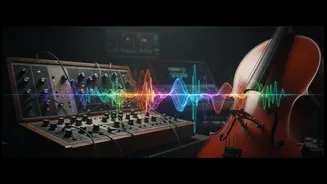
In bedrooms and home studios across India and the world, a creative revolution is underway. A new generation of digital artists is pioneering a hybrid sound that blurs the lines between organic and artificial. They are crafting experimental soundscapes
by taking AI-generated music and layering it with the raw, unpredictable energy of live instruments. The result is a genre-bending fusion that feels both futuristic and deeply human. This isn't about letting a machine make all the music; it's a dynamic dialogue where technology provides a spark and the artist fans it into a flame.
Meet Your AI Co-Producer: Suno
At the heart of this movement is Suno, an AI music generator that can create impressively complete songs—including vocals, lyrics, and full production—from simple text prompts. An artist can type in a description like “moody, cinematic soundscape with a tanpura drone and gentle rain” and, within minutes, have a foundational track to work with. Unlike earlier AI tools that produced short, looping beats, Suno can generate more complex arrangements, making it an ideal starting point for further experimentation. It acts less like a vending machine for music and more like a tireless creative partner, ready to generate endless ideas.
From Prompt to Performance
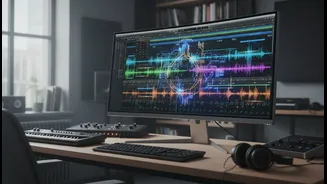
The co-creation process is where the real magic happens. An artist might begin by prompting Suno to create a base layer, perhaps an ambient drone or a complex rhythmic pattern. Once they have a compelling AI-generated stem, they export it into a Digital Audio Workstation (DAW) like Ableton Live or Logic Pro. From there, the human element takes over. A guitarist might lay down a melancholic solo over an AI-generated synth pad, a vocalist might add their own harmonies, or a percussionist might replace an AI drum track with a live tabla rhythm. This process is iterative; the artist might take that newly recorded guitar part, feed it back into Suno, and ask the AI to build a new bassline around it, creating a feedback loop of creativity.
The Human in the Machine
For these emerging artists, the goal isn't to create a flawless, entirely AI-produced track. Instead, they are drawn to the imperfections and emotional weight that only live instruments can provide. A producer with decades of experience noted that while Suno's output is "shockingly good," the moment they began overdubbing with real instruments, the music gained a sense of presence and joy that the AI alone couldn't capture. The process becomes a way to overcome creative blocks or flesh out a song idea that might have otherwise been abandoned. It's seen as an evolution of using a drum machine or a synthesizer—a tool to augment, not replace, human artistry.
An Indian and Global Scene
This trend is gaining particular traction in India, where artists are blending AI with the subcontinent's rich musical traditions. Prompts incorporating instruments like the sitar, bansuri, or tabla are producing fascinating fusion tracks. For instance, India's first AI rock band, Trilok, has partnered with Suno to blend devotional themes and traditional melodies with contemporary AI-generated sounds, aiming to bring heritage to a global stage. This highlights how AI can act as a bridge between ancient forms and modern production, creating something entirely new. The tool’s name, the Hindi word for “listen,” even seems to nod to this cross-cultural potential.
The Future of Co-Creation
While the technology raises valid questions about copyright and the future of creative professions, for this growing community of artists, it represents a new frontier of possibility. They aren't simply 'pressing a button'; they are curating, editing, and augmenting the AI's output, infusing it with their own unique taste and skill. Professional songwriters are already using Suno to create high-quality demos without the expense of hiring a full band, accelerating their creative workflow. The line between composer and curator is blurring, giving rise to a new type of musician who is part-producer, part-prompt artist, and part-performer.