


The Galactic Graveyard
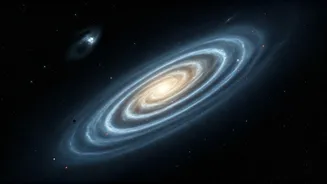
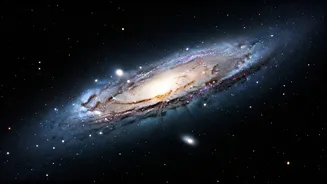
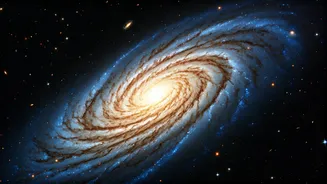
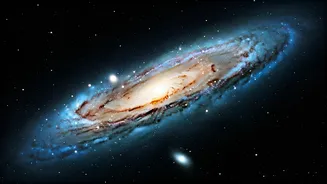
For decades, one of the biggest puzzles in astronomy has been the existence of 'quenched' galaxies. These are massive, ancient systems that have effectively stopped forming new stars, earning them the nickname 'red and dead'. Unlike our own vibrant Milky
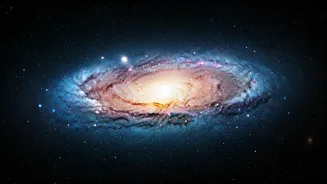
Way, which continues to churn out stars, these galaxies are filled with older, redder stars and lack the cool gas needed to create new ones. Scientists have long debated the cause. Was it a slow, gentle decline as they used up their fuel? Or did a more violent, dramatic event shut them down? The evidence was murky, pointing to various possibilities from environmental factors to internal processes. This fundamental question cuts to the heart of how the universe and its largest structures evolve over billions of years.
An Internal Timer Revealed
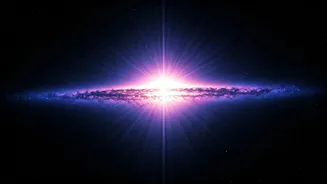
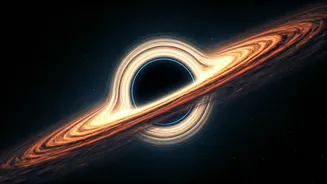
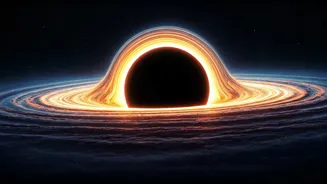
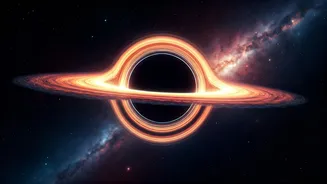
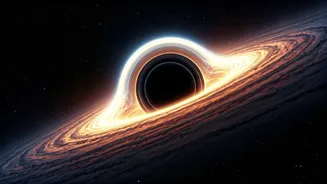
The headline-making phrase 'cosmic alarm clock' isn't about a mystical force but is a powerful metaphor for a newly understood internal mechanism. Recent breakthroughs, particularly from powerful instruments like the James Webb Space Telescope (JWST), are pointing to a primary culprit: the supermassive black holes that lurk at the centres of these massive galaxies. The idea is that these black holes don't just passively sit there; they actively regulate the life of their host galaxy. When a galaxy reaches a certain critical mass, its central black hole can 'switch on' in a ferociously energetic way. This isn't a random occurrence but a predictable stage in the galaxy's life, much like an alarm set to go off at a specific time.
How the Alarm Silences a Galaxy
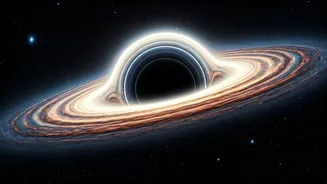
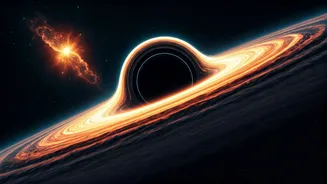
So, how does this alarm work? As the supermassive black hole gobbles up surrounding gas and dust, it creates an incredibly energetic region known as an active galactic nucleus (AGN). This AGN can unleash powerful winds and jets of material that blast through the galaxy at tremendous speeds. These outflows act in two devastating ways. First, they can physically blow the essential cold gas needed for star formation completely out of the galaxy. Second, the energy released heats up any remaining gas in and around the galaxy, preventing it from cooling and collapsing to form new stars. In effect, the black hole starves its own galaxy, cutting off the fuel supply and ensuring no new stars can be born. This process is known as 'feedback', and it's the key to quenching.
Rewriting Cosmic History
This new understanding is transforming models of galaxy evolution. It suggests that for massive galaxies, the path to becoming 'red and dead' isn't accidental but a built-in feature of their development. Once a galaxy grows massive enough, its internal alarm clock is destined to go off. This helps explain a nagging inconsistency for astronomers: why simulations often failed to produce the number of dead galaxies we observe in the real universe. By incorporating this powerful and rapid black hole feedback, the models are becoming much more accurate. It also provides clues about the future of our own galaxy. While the Milky Way is still active, understanding this quenching mechanism allows us to better predict its ultimate, and much more tranquil, fate billions of years from now.