





The Heartbreak of a Cloudy Night
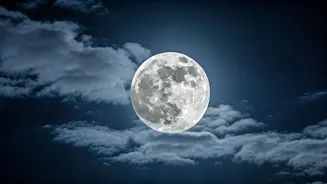
For India’s growing community of amateur astronomers and casual skygazers, this is an all-too-familiar story. You see the headlines, perhaps for an event like the Strawberry Moon on June 29, 2026, which was visible across the country. You mark your calendar,
tell your family, and maybe even dust off the binoculars. The excitement builds all day, but as dusk settles, so does disappointment. The culprit, almost always, is the weather. Weather is the single most unpredictable factor in stargazing. In a country with weather patterns as dynamic and diverse as India's—from the sweeping monsoon to coastal humidity and urban haze—simply hoping for a clear sky is a strategy doomed to fail. This shared national experience of being 'clouded out' is precisely why a simple change in habit can transform your celestial pursuits from a game of chance into a rewarding hobby.
Why 'Clear Sky' Isn't So Simple
The main obstacle for most of the country is, of course, the monsoon. The season, roughly from June to September, brings heavy cloud cover that can make astronomy almost impossible. Even outside monsoon season, India’s varied climate presents unique challenges. High humidity, even without visible clouds, can create atmospheric haze that dims faint stars and washes out the magnificent Milky Way. For those in and around major cities, light pollution is a constant battle, but even that is made worse by atmospheric conditions. Dust and pollutants, trapped by temperature inversions common in winter, scatter the excess city light, brightening the night sky and obscuring all but the brightest objects like the Moon and planets. A standard weather forecast that predicts 'no rain' is not enough for an astronomer. You need to know about cloud cover percentage, transparency (clarity of the air), and seeing (atmospheric stability). A forecast of 30% cloud cover could mean scattered, puffy clouds with big gaps of clear sky, or it could mean a thin, uniform haze that ruins any chance of seeing deep-sky objects.
Your New Forecast Habit: Tools of the Trade
Developing a forecast habit means going beyond your phone’s default weather app. For stargazers, specialized tools are essential. Many amateur astronomers in India and abroad rely on a combination of apps to get a comprehensive picture. Apps like Astrospheric, Clear Outside, and Meteoblue are popular choices because they provide astronomy-specific data. They offer hourly predictions for total cloud cover, breaking it down by low, medium, and high-altitude clouds. This is crucial, as thin, high cirrus clouds might be invisible to a casual glance but can scatter light and ruin detailed views or photographs. Many of these apps also forecast 'transparency' and 'seeing'. Transparency tells you how clear the air is from haze, dust, and moisture, while 'seeing' predicts atmospheric turbulence—the very thing that makes stars twinkle and blurs details on planets. For an Indian context, it's also worth using a reliable local forecaster like Skymet Weather, which leverages a large network of automated weather stations across India and can provide more localised predictions. The key is to check these forecasts not just once, but multiple times in the lead-up to your observing night, as conditions can change rapidly.
From Planning to Viewing
Once you have your forecast, you can plan accordingly. If the forecast is perfect, great! If it’s mixed, with clouds clearing later in the night, you can decide whether it's worth waiting up. If your location looks like a washout, a good forecast might give you enough time to consider driving to a nearby area with a better outlook. This is especially true for major events like meteor showers or eclipses. For example, during the lunar eclipse of March 3, 2026, visibility varied significantly across India, with northeastern states getting a better view. Knowing the weather in advance helps you make an informed decision. The best time for stargazing in much of India is typically the dry winter and pre-summer months from October to May. Use this period to your advantage. Plan trips to dark-sky locations during the new moon phase, when the sky is at its darkest. Even during the monsoon, there can be opportunities. Rain-shadow regions like Spiti Valley or high-altitude areas can offer clear skies, and elsewhere, a fresh downpour can sometimes temporarily clear the air, providing a stunning, crisp view for a few hours.