



The Twin Dangers: Darkness and Downpours
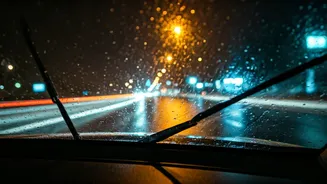
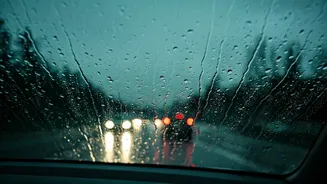
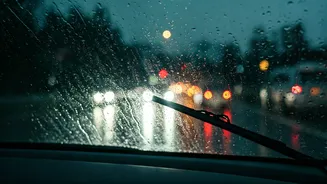
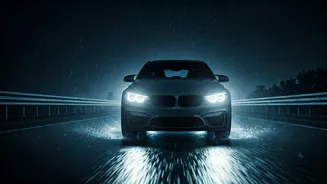
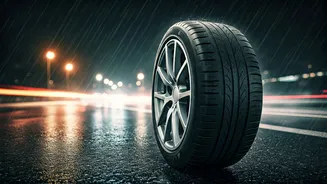
Driving at night is already a challenge due to naturally reduced visibility. Add rain to the mix, and the situation becomes significantly more hazardous. Rain scatters the light from your headlights, creating glare and reducing how far you can see. [16]
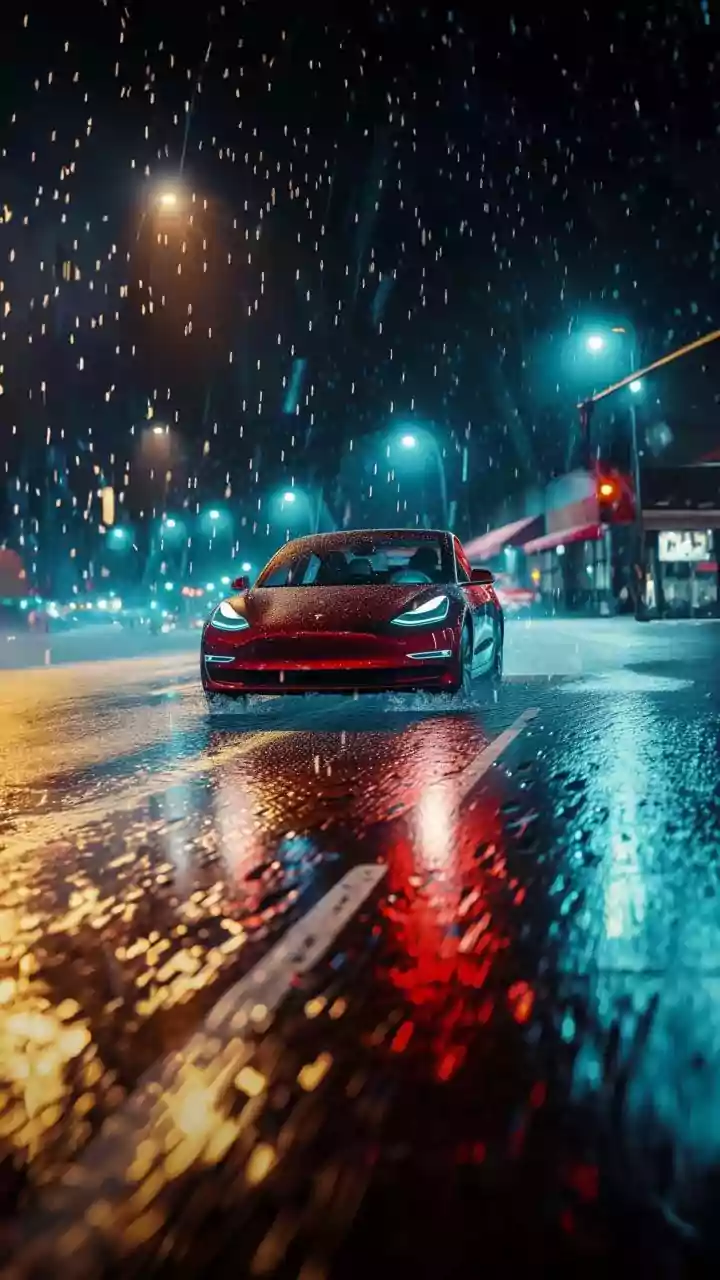
This effect is worsened by reflections off wet road surfaces, which can obscure lane markings and other crucial visual cues. [1] It’s not just about what you can't see; it’s also about how your brain processes the limited information. The combination of darkness and falling rain creates a low-contrast environment, making it harder for your eyes and brain to distinguish objects, judge distances, and perceive speed accurately. [16] This sensory overload increases your cognitive load, which can slow your reaction time even before you need to hit the brakes. [18]
When Tarmac Turns Treacherous
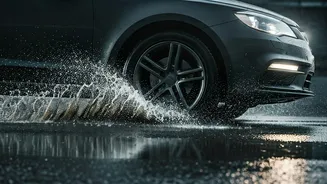
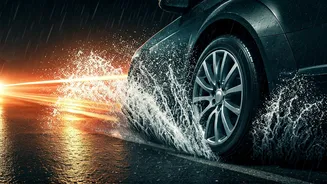
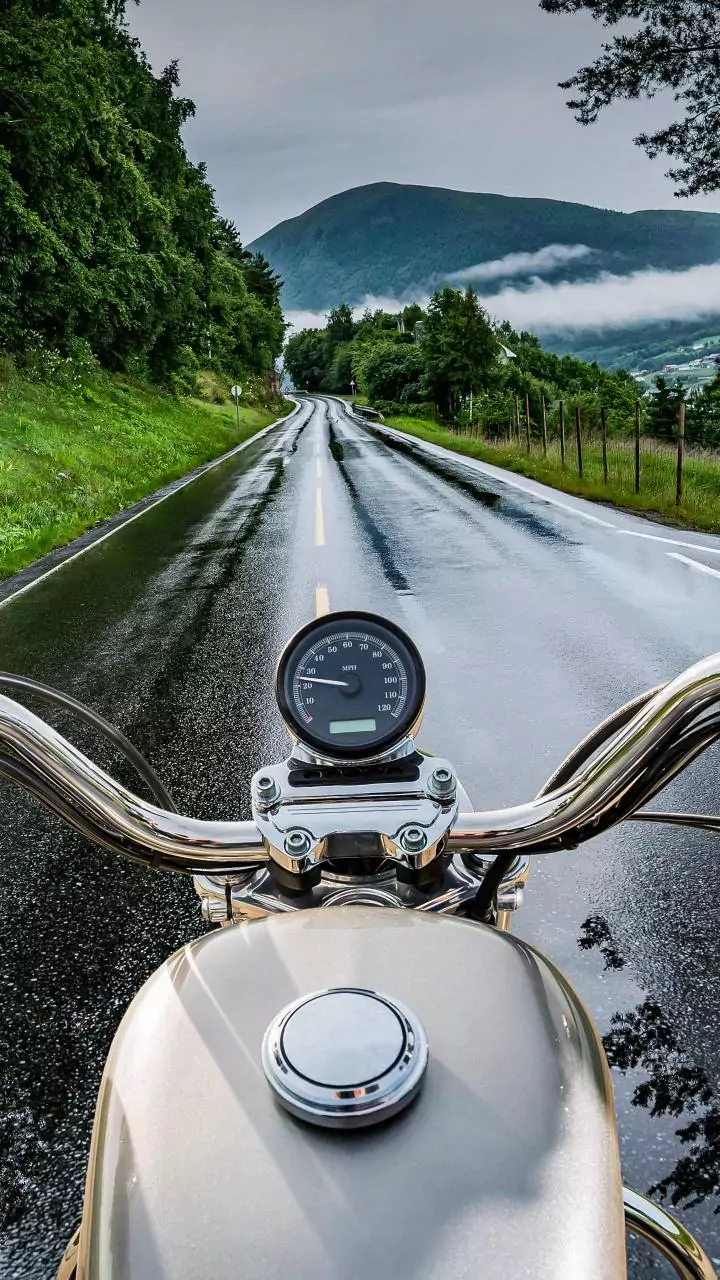
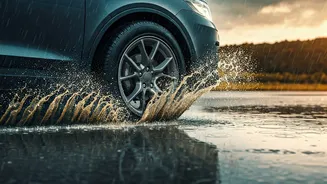
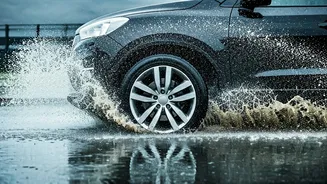
A vehicle's grip on the road is everything, and water is its worst enemy. Wet pavement is a factor in a staggering 70% of all weather-related crashes. [7] Stopping distances can nearly double on wet roads compared to dry conditions. [14] The first few minutes of a downpour are often the most dangerous, as the fresh rain mixes with oil and dust on the road, creating an exceptionally slick film. [2] The most severe risk is hydroplaning. This occurs when your tyres can't channel water away fast enough, causing them to lose contact with the road and ride on a thin layer of water. [3] It can happen at speeds as low as 55 km/h with as little as a twelfth of an inch of water. [8] When hydroplaning, a driver can lose all ability to steer, brake, or accelerate. [4]
Your Pre-Drive Safety Checklist
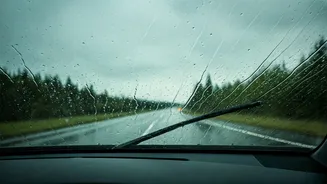
The best way to handle a dangerous situation is to be prepared for it. Before you head out into the rain, especially at night, a few simple checks can make all the difference. * **Tyres are Key:** Your tyres are your single point of contact with the road. Ensure they have adequate tread depth and are properly inflated. [6] Worn-out tyres cannot effectively channel water and dramatically increase the risk of hydroplaning. [3] * **Wipers and Lights:** Visibility is paramount. Check that your windshield wipers are in good condition and don't leave streaks. [8] Test your headlights, taillights, and turn signals to ensure you can see and, just as importantly, be seen by other drivers. [9] * **Plan Ahead:** If possible, check your route for any known flooding or severe weather warnings. [9] Sometimes the safest decision is to delay your journey until conditions improve.
How to Drive Smarter and Safer
Adjusting your driving style is non-negotiable in wet, dark conditions. The core principles are to be smooth, slow, and observant. * **Slow Down:** This is the single most important adjustment you can make. Reducing your speed by at least a third gives you more time to react, increases your tyres' ability to grip the road, and significantly lowers the risk of hydroplaning. [9, 10] * **Increase Following Distance:** Double the space between you and the car ahead to at least four or five seconds. This compensates for longer braking distances on wet surfaces. [1] * **Avoid Cruise Control:** Keep your foot on the pedal and your mind engaged. Cruise control can prevent you from feeling a loss of traction and may hinder your ability to react quickly. [11] * **Steer and Brake Gently:** Sudden, jerky movements can cause you to lose traction. Apply pressure to the brakes and turn the steering wheel smoothly and gradually. [5] If you feel the car begin to hydroplane, ease off the accelerator and steer gently in the direction you want to go until you feel the tyres regain grip. Do not slam on the brakes. [4]