




The Problem with Prolonged Sitting
Our bodies are designed for movement. When you spend the majority of your day seated, your hip flexors—the muscles at the front of your hips—remain in a shortened, contracted position for extended periods. Over time, this causes them to become tight and
stiff. Simultaneously, the opposing muscles, your glutes, become inactive and weak from lack of use, a condition sometimes called 'glute inhibition'. This muscular imbalance is a common side effect of a modern desk-bound lifestyle and the primary culprit behind decreased hip mobility. Reduced blood flow and joint lubrication from inactivity further compound the stiffness you might feel when you finally stand up after a long day.
The Chain Reaction of Poor Posture
Stiff hips rarely cause problems in isolation. Think of your body as an interconnected system. When the highly mobile hip joints become restricted, your body compensates by seeking movement from other areas, primarily the lower back. Your lumbar spine, which is designed for stability rather than extensive motion, is forced to move in ways it shouldn't, leading to strain, fatigue, and chronic lower back pain. This compensation creates a domino effect. Tight hip flexors can pull the pelvis forward into an 'anterior pelvic tilt'. This tilt exaggerates the curve in your lower back, forcing your upper back to round forward and your head to push out to maintain balance, resulting in the classic 'slouched' posture many office workers develop.
Long-Term Consequences of Inaction
Ignoring hip stiffness and poor posture can lead to more than just daily aches. Over years, these issues can contribute to chronic conditions like sciatica, increased pressure on spinal discs, and even sacroiliac joint dysfunction. Furthermore, poor posture isn't just a musculoskeletal issue; it can impact other bodily functions. Slouching can compress your internal organs, potentially leading to digestive problems like acid reflux and constipation. It can also limit your diaphragm's movement, resulting in shallower breathing, which in turn can cause fatigue and reduced energy levels.
The Simple Solution: Daily Mobility
The good news is that you can counteract these effects and protect your long-term health without needing a gym membership or hours of free time. The key is consistency. Dedicating just 10 to 15 minutes each day to targeted hip mobility exercises can make a significant difference. A consistent routine helps to lengthen tight hip flexors, activate weak glutes, and restore your natural range of motion. This not only alleviates current stiffness but also retrains your body for better alignment, taking the pressure off your lower back and improving your posture from the ground up.
Five Essential Hip Mobility Exercises
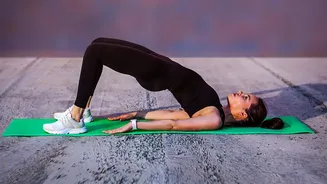
Integrating simple movements into your day is the most effective strategy. Try these exercises in the morning to start your day, or as a break from sitting. 1. Kneeling Hip Flexor Stretch: Kneel on one knee, with the other foot flat on the floor in front of you. Gently push your hips forward while keeping your back straight until you feel a stretch in the front of the kneeling leg's hip. Hold for 30 seconds and switch sides. 2. Seated Figure-Four Stretch: While sitting in a chair, cross one ankle over the opposite knee. Gently lean your torso forward until you feel a stretch in the glute of the crossed leg. Hold for 30 seconds, then repeat on the other side. 3. Glute Bridge: Lie on your back with your knees bent and feet flat on the floor. Squeeze your glutes and lift your hips off the floor until your body forms a straight line from your shoulders to your knees. Hold for a moment, then lower back down. Repeat 10-15 times. 4. Leg Swings: Standing, hold onto a wall or desk for support. Swing one leg forward and backward 10-15 times, then side-to-side 10-15 times. This dynamic stretch improves circulation and mobility. Switch legs. 5. Cat-Cow Stretch: Start on your hands and knees. Inhale as you drop your belly and look up (Cow). Exhale as you round your spine, tucking your chin to your chest (Cat). Repeat for 10 cycles to improve spinal flexibility.