



An Ambitious 13-Year Journey
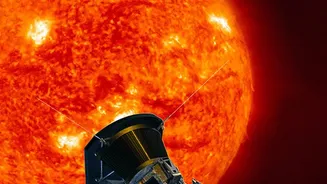
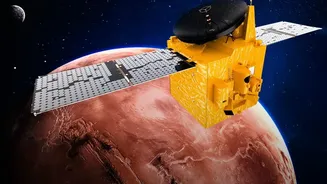
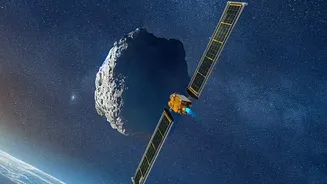
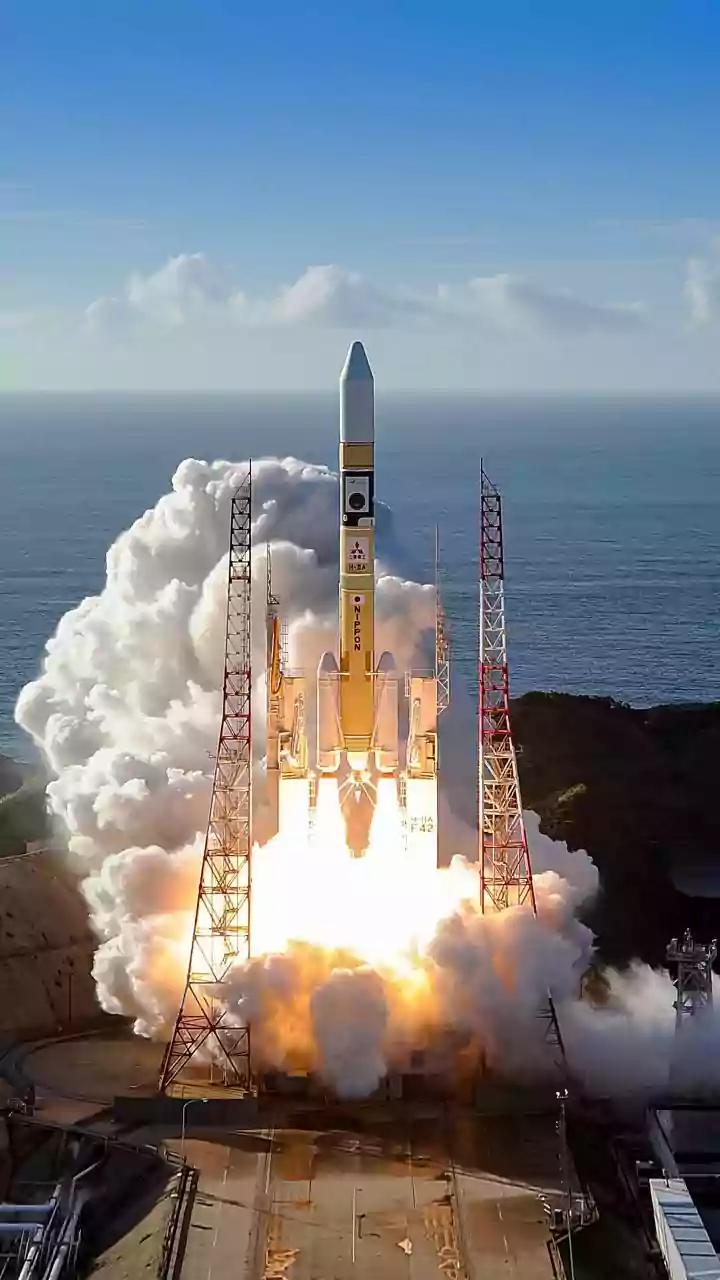
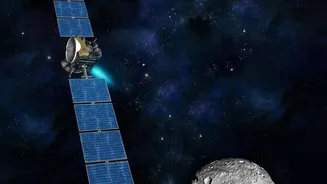
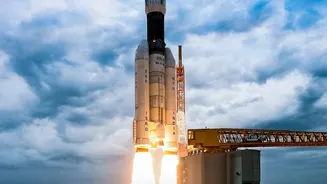
The Emirates Mission to the Asteroid Belt (EMA) is a monumental undertaking for the UAE Space Agency. Scheduled to launch in a narrow three-week window in March 2028, the mission's spacecraft, named the MBR Explorer, will travel five billion kilometres
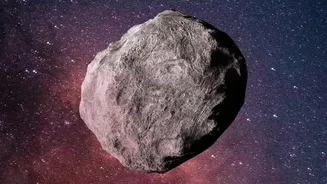
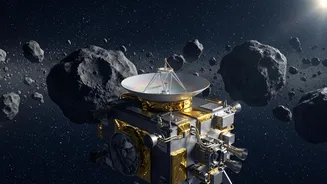
through the solar system. The plan involves a complex series of gravity-assist manoeuvres, using the gravitational pull of Venus, Earth, and Mars to slingshot the spacecraft towards the main asteroid belt located between Mars and Jupiter. Over its long journey, the MBR Explorer will conduct fly-bys of six different asteroids before its grand finale: a rendezvous with a seventh asteroid, 269 Justitia, in 2034.
The Indian Connection: HEX20
A crucial part of this mission is being developed by HEX20, a space-technology startup based in Technopark, Thiruvananthapuram, making it the first private Indian company to be selected for a deep-space mission by the UAE. With operations also in the UAE's Masdar City, HEX20 was chosen by the UAE Space Agency and the Technology Innovation Institute (TII) to provide critical hardware and software for a probe that will land on asteroid Justitia. This partnership highlights a growing trend of international collaboration in space exploration and showcases the capabilities of India's burgeoning private space sector.
The Brains and Bones of the Lander
HEX20's contribution is fundamental to the mission's success. The company developed the spacecraft 'bus'—the core structure that houses and supports all the vital systems and scientific payloads of the lander. They also created the onboard computer, power systems, and the sophisticated software required for the probe to operate autonomously in the harsh environment of deep space. This is especially important as the lander will separate from the main MBR Explorer spacecraft and must make its own decisions during its descent to Justitia's surface. The systems were developed and delivered in just 15 months, a testament to the team's efficiency and expertise.
Why Asteroid Justitia?
The ultimate destination, 269 Justitia, is a particularly fascinating object. It is one of only a few known 'red' asteroids in the main belt, a colouring that suggests the presence of organic compounds called tholins. These compounds are more commonly found in the far reaches of the solar system, like the Kuiper Belt. Scientists believe Justitia may have originally formed in this distant region before migrating inward, and studying it could provide clues about the origin of water and the building blocks of life on Earth. The lander built by HEX20 and TII will provide the first-ever close-up data from its surface, transmitting images and insights as it makes contact.
A Milestone for Global Space Exploration
The Emirates Mission to the Asteroid Belt is more than just a scientific expedition; it is a strategic initiative to advance the UAE's technological capabilities and foster a local space industry. By partnering with international entities like HEX20 and academic institutions like the University of Colorado, the UAE is building on the success of its Hope Mars Mission and positioning itself as a key player in the future of space exploration. The selection of an Indian startup for such a critical component underscores a new era of collaboration, where expertise from around the globe converges to push the boundaries of human knowledge and exploration.