





Start with a Strong Foundation
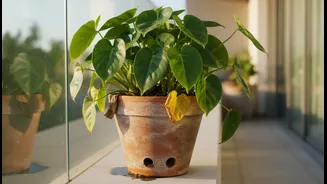
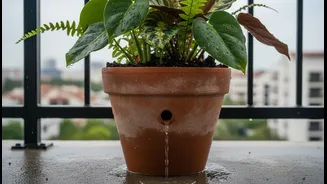
The first line of defence against rot is ensuring your plants aren't sitting in water. This starts with the pot and soil. Every container must have drainage holes—not just one, but multiple if possible, to prevent clogging. Using a well-draining potting
mix is non-negotiable. Avoid heavy garden soil which compacts and holds too much water. Instead, opt for a mix that includes perlite, coarse sand, or orchid bark. These materials create air pockets, allowing excess water to escape and oxygen to reach the roots, which is crucial for their health.
Elevate and Drain
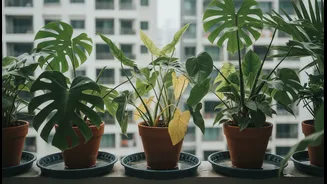
Even with the right soil and holes, pots sitting flat on the balcony floor or in a deep saucer can become waterlogged. Elevating your planters, even slightly, makes a significant difference. Use pot feet, bricks, or small risers to lift them, allowing water to flow out freely and air to circulate underneath. If you use saucers to protect your floor, make it a rule to empty them within 30 minutes of a downpour. Standing water can be reabsorbed surprisingly quickly, recreating the soggy conditions you want to avoid.
Rethink Your Watering Schedule
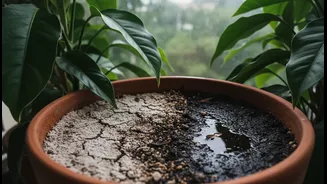
One of the most common mistakes during a rainy spell is sticking to a regular watering routine. With high humidity and frequent showers, your plants need far less water from you. Before you even think about picking up the watering can, check the soil. The classic finger test works well: stick your finger about an inch into the soil. If it feels damp, wait. Water only when the top layer of soil has started to dry out. Overwatering is the leading cause of root rot, and during the monsoon, the rain is already doing most of the work.
Provide Physical Shelter
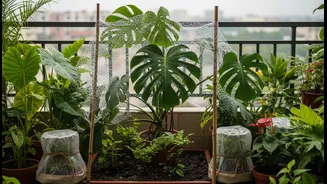
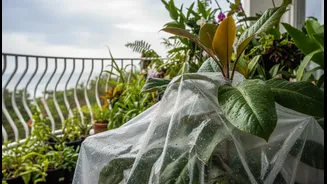
For particularly delicate or flood-prone plants, physical protection may be necessary. If possible, move smaller pots to a more sheltered part of your balcony, against a wall, or under an overhang before a heavy storm. For larger pots that are too heavy to move, you can use temporary covers. An overturned bucket or even a waterproof tarpaulin can shield plants from the most intense downpours. Grouping several pots together can also create more stability against wind and rain.
Watch for Signs of Distress
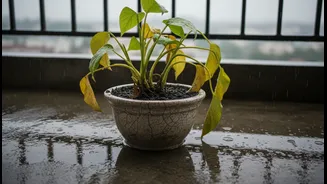
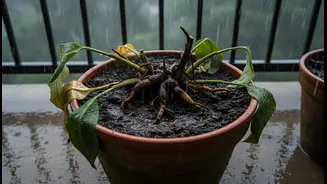
Your plants will tell you when they are unhappy. Key signs of overwatering and potential root rot include yellowing leaves that feel soft or limp, rather than dry and crispy. You might also see wilting despite the soil being wet, which indicates the roots are already damaged and can no longer absorb water. Other red flags are mould growing on the soil surface, a foul or rotten smell from the pot, and a mushy-feeling plant base. Catching these signs early gives you a better chance to save your plant.
Emergency Rot Treatment
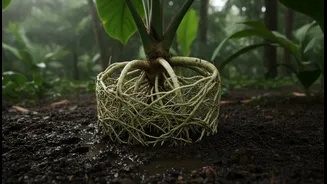
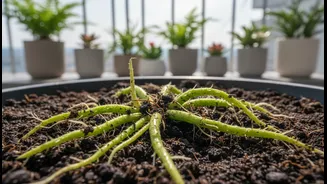
If you suspect root rot has already set in, you need to act fast. Gently remove the plant from its pot and inspect the roots. Healthy roots are typically firm and white or light-coloured, while rotten roots will be brown or black, mushy, and may fall apart easily. Using a clean, sterilized pair of scissors, carefully trim away all the soft, dead roots. Repot the plant in a clean container with fresh, well-draining potting mix. After this 'surgery', water it sparingly until it shows signs of recovery.