







The Monsoon Cleaning Challenge
The defining feature of the Indian monsoon is humidity. When the air is consistently damp, it creates the perfect breeding ground for mould, mildew, and bacteria. This high moisture content makes dust stickier, prevents floors and laundry from drying
properly, and can lead to a persistent musty smell that seems to cling to everything. Furthermore, the rainy season sees a spike in respiratory issues, as the damp air traps allergens, viruses, and pollutants indoors. Shut windows reduce ventilation, concentrating these irritants right where we live and breathe.
When Chemicals Meet Humidity
Faced with mould and grime, the first instinct is often to reach for a powerful chemical cleaner. However, there's a growing awareness of the potential downsides. Many conventional cleaning products release volatile organic compounds (VOCs). In a well-ventilated space, these might disperse, but in a closed-up, humid home, these chemicals can linger in the air. This can lead to headaches, and irritation of the eyes, nose, and throat, and can potentially worsen respiratory conditions like asthma. The strong fragrances used to mask odours can also be a source of indoor air pollution, adding another layer of chemicals to the air we breathe.
A Shift Towards Healthier Homes
The move towards low-chemical cleaning isn't just about avoiding potential harm; it's part of a larger shift towards conscious wellness. Families are increasingly prioritising a healthy immediate environment, especially for children and pets who spend more time on floors and surfaces. This trend is about finding effective, safe, and often more affordable ways to maintain hygiene. It's a return to simpler methods, many of which have been used for generations, but are now being rediscovered for their potent cleaning power without the harsh side effects.
Nature's Cleaning Arsenal
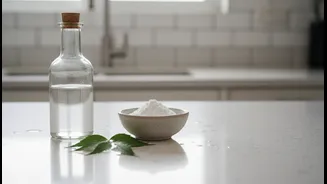
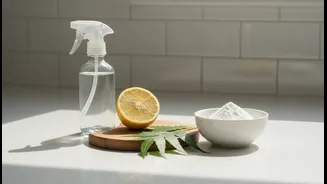
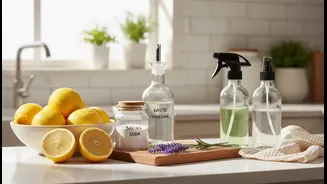
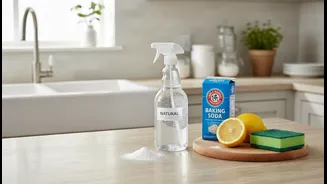
The stars of the low-chemical cleaning world are likely already in your kitchen. White vinegar is a powerhouse, with its acidic properties making it effective against some types of mould. Baking soda is a gentle abrasive perfect for scrubbing and a fantastic deodoriser that absorbs moisture and neutralises smells in closets or on carpets. Lemon provides natural degreasing power and a fresh scent. For more targeted issues, essential oils like tea tree, eucalyptus, and neem have natural antifungal properties that are perfect for tackling monsoon-related problems like mould and pests.
Simple Swaps for Common Problems
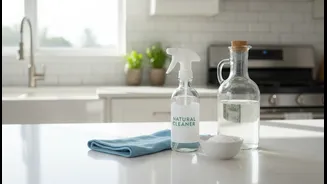
Making the switch is easy. For an all-purpose surface spray, mix equal parts white vinegar and water in a spray bottle. Use this on countertops, sinks, and tiles, but avoid natural stone like marble. To fight mould on walls or in the bathroom, spray the vinegar solution directly, let it sit for about an hour, and then wipe it clean. To deodorise a musty carpet, sprinkle baking soda liberally, let it sit for 15-20 minutes to absorb odours, and then vacuum it up thoroughly. For a natural floor cleaner, add a small amount of vinegar to your mopping water for a streak-free, disinfected finish.