







The Perishable Problem
The Kashmir Valley's horticulture sector is the backbone of its rural economy, supporting over seven lakh families. Yet, for years, a silent crisis has plagued its farmers: post-harvest losses. A NITI Aayog report highlighted the staggering scale of this
issue, with annual losses for apples and vegetables estimated at around ₹1,500 crore and ₹1,560 crore respectively. Perishable fruits like cherries suffer the most, with spoilage rates as high as 40-49%. This loss occurs between the farm and the consumer due to inadequate storage, transportation, and frequent disruptions on national highways, forcing farmers to sell their produce quickly at depressed prices to avoid total financial ruin.
An Unbroken Chain of Cool
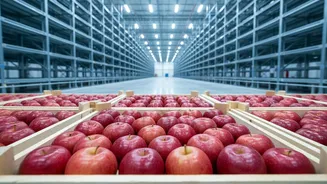
The game-changing solution is the 'cold chain'—an uninterrupted, temperature-controlled supply line. This system involves everything from on-farm pre-cooling units and refrigerated 'reefer' vans to large-scale Controlled Atmosphere (CA) storage facilities. The goal is to keep produce like apples, plums, and cherries chilled from the moment they are picked until they reach the consumer. This technology drastically slows down ripening and decay, extending shelf life from a few days to several months. As a result, fruits that once had to be sold locally can now endure long journeys to markets across India and even abroad, arriving in pristine condition.
Cooperatives and FPOs Take the Lead
While individual farmers often find the cost of cold-chain infrastructure prohibitive, cooperatives and Farmer Producer Organisations (FPOs) are proving to be a powerful force for change. By pooling their resources and organising collectively, small-scale growers can access the capital and technology needed to build and utilise this critical infrastructure. These groups are instrumental in bridging the gap between individual orchardists and the broader market. Government initiatives like the Pradhan Mantri Kisan Sampada Yojana (PMKSY) and the Mission for Integrated Development of Horticulture (MIDH) are providing crucial financial assistance, offering subsidies and grants to encourage the establishment of integrated cold-chain projects, empowering these farmer collectives.
From Farm to Market, Fresher and Fairer
The impact of this growing network is profound. Farmers are no longer at the mercy of market gluts during harvest season or highway closures. With access to cold storage, they can hold their produce and sell it during the off-season when prices are higher, significantly boosting their income and financial stability. For example, plum and cherry growers, once limited to nearby markets due to the fruit's short shelf life, are now successfully shipping their produce to distant cities like Kolkata. This enhanced logistical capability not only reduces waste but also improves the reputation and marketability of Kashmiri produce nationwide, ensuring consumers get higher-quality fruit.
The Road Ahead
The progress is promising, but the work is far from over. As of late 2025, Jammu and Kashmir had 92 cold storage facilities, but experts and officials agree that capacity needs to expand further to meet the needs of the region's vast horticultural output. The next frontier includes integrating rail transport, with proposals for air-conditioned cargo trains to move produce even more efficiently. Furthermore, there is a push to strengthen the entire ecosystem, including modern packhouses, quality testing labs, and better market linkages through FPOs. The goal is to create a seamless, resilient, and profitable system that secures the future of Kashmir's agricultural heritage.