


The Gentle Power of Cat-Cow
Known in Sanskrit as Marjaryasana-Bitilasana, Cat-Cow is a dynamic sequence that moves the spine through its full range of flexion and extension. The benefits are extensive: it improves spinal flexibility, relieves tension in the back, neck, and shoulders,
and gently massages the abdominal organs. By linking the movement with your breath—inhaling into the arch of Cow Pose and exhaling into the rounding of Cat Pose—it also becomes a calming, meditative practice that can reduce stress and improve body awareness. Its gentle nature makes it an ideal warm-up for a more vigorous practice or a standalone stretch to combat the stiffness from prolonged sitting.
Setting Your Foundation: Proper Form
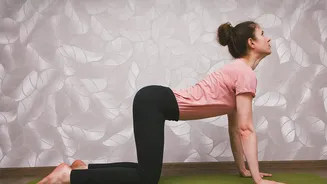
A pain-free Cat-Cow begins before you even start moving. Start on all fours in a 'tabletop' position. Your wrists should be stacked directly under your shoulders, and your knees should be directly under your hips, about hip-width apart. Spread your fingers wide to distribute your weight evenly across your palms. Your back should be flat, creating a neutral spine, with your gaze directed toward the floor to keep your neck long. To begin the Cow pose (Bitilasana), inhale as you drop your belly, lift your tailbone, and draw your chest forward, gazing slightly ahead. For the Cat pose (Marjaryasana), exhale as you press the mat away, round your spine toward the ceiling, tuck your chin to your chest, and tuck your tailbone under. The key is a slow, fluid motion guided by your breath.
Common Mistake: Crunching the Neck
One of the most frequent errors is overextending the neck. In Cow pose, there is a tendency to fling the head back to look up at the ceiling, which can compress the cervical spine and cause strain. In Cat pose, some people forget to release the head, holding tension in the neck. To fix this, think of your head and neck as a natural extension of your spine. In Cow, keep the back of your neck long as you lift your gaze forward, not up. In Cat, let your head hang heavy, gently tucking your chin toward your chest without force. The movement should originate from your spine, not from cranking your head.
Common Mistake: Forgetting the Core
While Cat-Cow is a spinal movement, the core plays a crucial supporting role. Without gentle abdominal engagement, it's easy to collapse into the lower back during Cow pose, which can lead to pinching or discomfort. To avoid this, lightly draw your navel toward your spine throughout the entire sequence. This provides stability and ensures the stretch is distributed along the entire length of the spine rather than dumping into the most flexible (and often most vulnerable) part of your lower back. In Cat pose, this core engagement deepens as you actively scoop the belly in to round your back more fully.
Modifications for a Pain-Free Practice
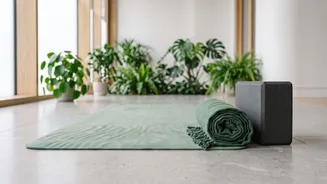
Yoga should always meet you where you are, and Cat-Cow is easily adaptable. If you experience wrist pain, several modifications can provide relief. Instead of placing your palms flat, you can make fists and rest on your knuckles, keeping the wrists straight. Alternatively, placing yoga blocks or your forearms on the mat removes pressure from the wrists entirely. For those with sensitive knees, a folded blanket or towel placed under them provides welcome cushioning. If getting on the floor is a challenge, you can perform Cat-Cow while seated in a chair, placing your hands on your knees and moving through the same spinal motions.