






Taming the Data Tsunami
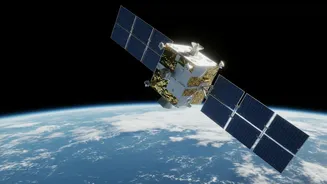
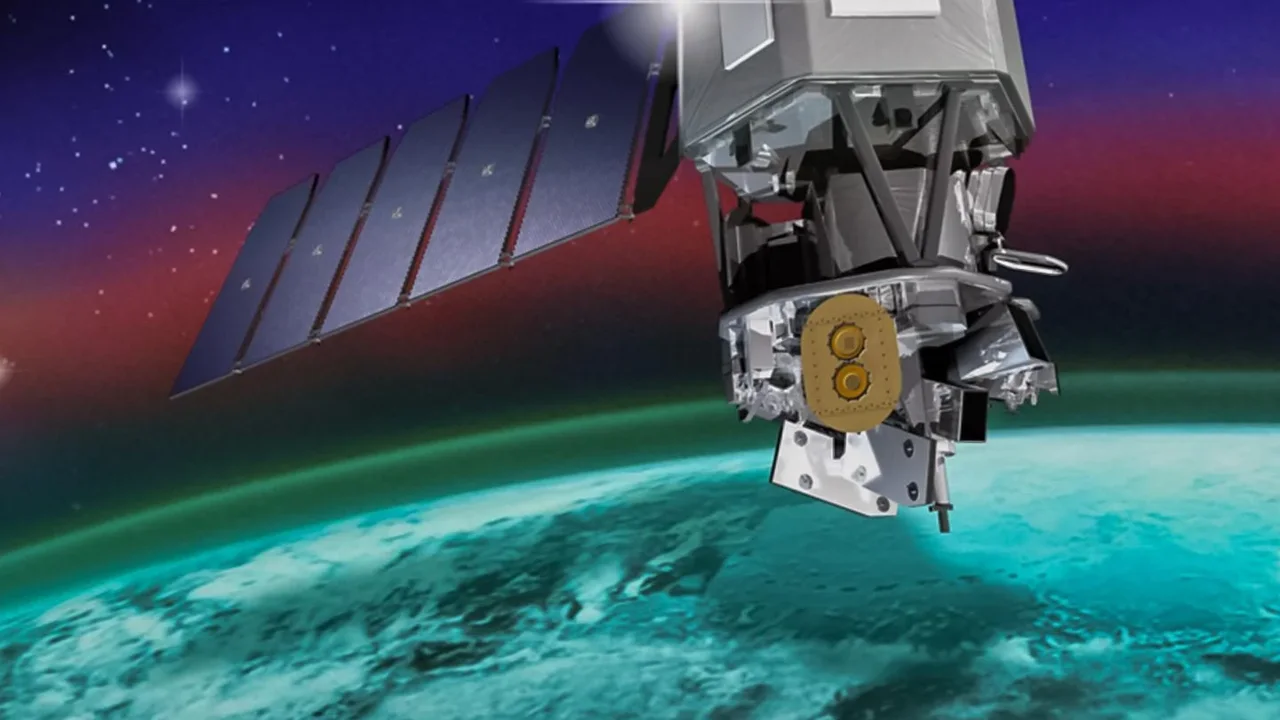
Climate science is drowning in data. Information pours in from satellites, ocean buoys, weather stations, and complex computer simulations. For human researchers, manually sifting through this deluge to find meaningful patterns is a near-impossible task.
This is where Artificial Intelligence steps in. AI, particularly machine learning, thrives on massive datasets. It can identify subtle correlations and anomalies across petabytes of information that would take humans years to uncover. The core challenge for climate science is no longer just about gathering more data, but making sense of it quickly enough to inform critical decisions. AI provides the computational horsepower to turn this overwhelming flood of information into actionable insights.
Smarter, Faster Climate Models
At the heart of climate research are global climate models—incredibly complex simulations of the Earth's systems. Traditionally, running these models requires enormous supercomputers and can take weeks or months for a single projection. AI is revolutionising this field by making models both faster and more accurate. Some new AI-driven models can project 100 years of climate patterns in just 25 hours on a standard GPU cluster, a task that would otherwise require a supercomputer for weeks. In India, AI is being integrated with physics-based models to improve predictions of complex phenomena like monsoon variability and cyclone paths. The Indian Meteorological Department (IMD) uses AI tools to enhance cyclone forecasting, and new systems like BharatFS provide hyper-local weather forecasts at a 6km resolution, a significant improvement for farmers and disaster managers.
Predicting the Unpredictable
One of AI’s most promising applications is in forecasting extreme weather events, which are becoming more frequent and intense due to climate change. AI algorithms can analyse historical data and real-time satellite imagery to provide earlier and more accurate warnings for everything from cyclones to heatwaves. In India, researchers have used AI to successfully predict the delayed onset of the monsoon, giving millions of farmers crucial advance notice to adjust their planting schedules. Beyond forecasting, AI helps monitor environmental changes in real-time. It can track deforestation in the Amazon, monitor the health of coral reefs, and even pinpoint the sources of methane leaks from space with remarkable precision.
More Than a Machine
Despite its power, AI is not a silver bullet. Experts consistently frame it as a 'research assistant' because it enhances, rather than replaces, human ingenuity. The role of the climate scientist remains critical. They are the ones who design the experiments, interpret the AI's findings, and ask the crucial 'why' questions. An AI might identify a correlation between sea surface temperature and rainfall intensity, but it's the human expert who contextualises that finding within the broader climate system and determines its policy implications. This partnership—combining the computational speed and pattern-recognition of machines with the curiosity, intuition, and ethical judgment of humans—is where the real breakthrough lies.
An Imperfect Assistant
The rise of AI in climate science is not without its challenges. A significant concern is the environmental cost of AI itself. Training large AI models requires immense computational power, which consumes substantial amounts of energy and water, often from data centres powered by fossil fuels. There are also issues of data quality and bias; an AI is only as good as the data it's trained on. In regions with sparse data, like the Himalayas, the effectiveness of AI models can be limited. Furthermore, the 'black box' nature of some complex AI models can make their conclusions difficult to interpret, raising concerns about transparency and accountability in scientific research.