





The Immediate Financial Hit: A Hefty Fine
The most immediate consequence of not having a valid PUC certificate is a significant financial penalty. Under the Motor Vehicles Act, authorities in Delhi can impose a fine of ₹10,000 for this violation. This isn't a minor traffic ticket; it's a substantial
penalty designed to ensure compliance with pollution norms. With intensified enforcement drives, especially during the high-pollution winter months, the chances of being caught have increased. These checks are conducted by both the transport department and traffic police.
Beyond the Fine: Potential Imprisonment
While the ₹10,000 fine is the most common penalty, the law allows for even stricter measures. For a first-time offence, you could face imprisonment for up to three months, either in addition to or instead of the fine. For repeat offenders, the potential jail term can extend to six months. This highlights the seriousness with which the authorities view non-compliance, treating it not just as a procedural lapse but as a significant environmental offence.
Suspension of Your Driving Licence
One of the most impactful consequences is the potential suspension of your driving licence. For failing to produce a valid PUC certificate, authorities have the power to suspend your licence for a period of three months. This measure can be applied even for a first offence and can severely disrupt your daily life. Ignoring the PUC rule is therefore not just a risk to your wallet, but also to your legal ability to drive on the road.
Vehicle Impoundment and Registration Issues
In certain situations, your vehicle itself could be at risk. Authorities have the power to impound vehicles for various violations, including failing to meet pollution standards. While more common for repeat or severe offences, it remains a possible outcome. Furthermore, ignoring challans, including those for PUC violations, can lead to your vehicle being blacklisted on the Parivahan portal. This can block crucial services like the renewal of your Registration Certificate (RC), transfer of ownership, or even obtaining a new fitness certificate, effectively making it impossible to legally use or sell your vehicle.
The 'No PUC, No Fuel' Rule
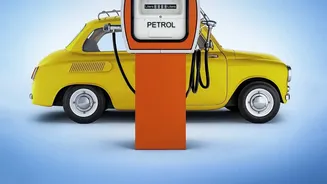
To tighten the net on polluting vehicles, Delhi has enforced a 'No PUC, No Fuel' rule. This means petrol pumps can refuse to sell you petrol, diesel, or CNG if your vehicle does not have a valid pollution certificate. This policy is designed to make it practically impossible to operate a non-compliant vehicle in the city, forcing owners to get their emissions tested and certified. Automated systems are increasingly being used to flag vehicles without a valid PUC at fuel stations.
How to Stay Compliant
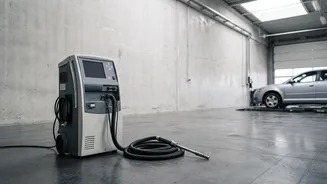
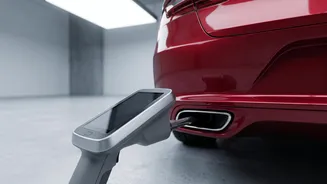
The good news is that avoiding these penalties is simple and inexpensive. PUC tests are conducted at authorised centres, many of which are located at petrol pumps and workshops across Delhi-NCR. The process is quick, and the cost is nominal, typically ranging from ₹50 to ₹150 depending on the vehicle type. For new vehicles, a PUC certificate is required one year after the initial registration. The validity of the certificate varies based on the vehicle's emission standard (BS-III, BS-IV, etc.), so it's crucial to check and renew it on time.