


A Glimpse into Distant Worlds
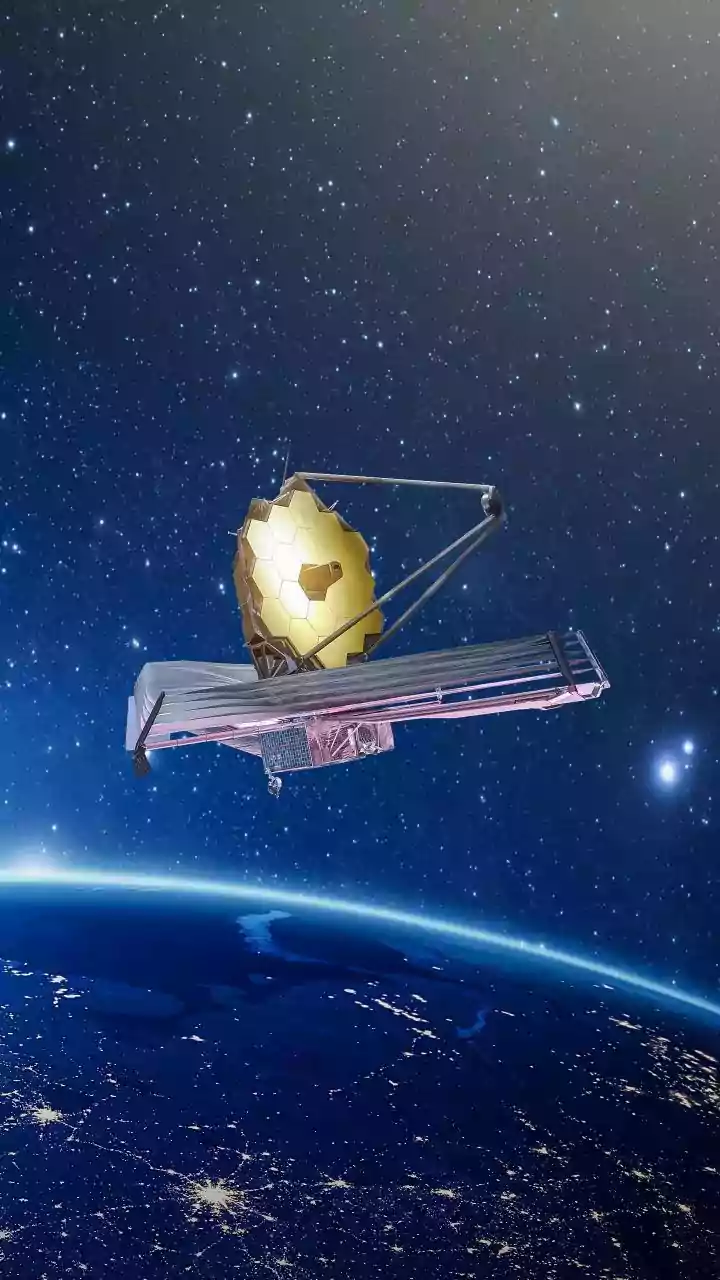
The James Webb Space Telescope is making incredible strides in a field that didn't even exist a few decades ago: the study of exoplanets, or planets outside our solar system. Recently, it has not only detected the chemical signature of water on these
worlds but has begun to map its presence. For example, on the 'ultra-hot Jupiter' known as WASP-18 b, located 400 light-years away, astronomers have successfully created a temperature map of the planet's atmosphere. This was achieved by observing the planet as it passed behind its star, an event called a secondary eclipse. By measuring the subtle changes in light, scientists can distinguish the planet's own glow from its star's, allowing them to chart temperature variations across its surface. This technique represents a monumental leap, moving us from merely detecting ingredients to understanding the atmospheric dynamics of these alien worlds.
The Telescope's Secret Weapon
So, how does JWST actually 'see' water hundreds of light-years away? The primary method is called transmission spectroscopy. As an exoplanet passes in front of its host star from our point of view, a tiny fraction of the starlight filters through the planet's atmosphere. Different molecules in that atmosphere absorb light at specific, known wavelengths. Water, for instance, has a unique absorption signature in the infrared part of the spectrum, which is precisely where Webb is designed to look. By capturing a spectrum—a rainbow of light—Webb's sensitive instruments can identify these missing slivers of light and tell us which molecules are present. It's like reading a chemical barcode from across the galaxy. This capability has allowed Webb to confirm water on multiple worlds, from gas giants to smaller, rockier planets, with a level of detail that was previously impossible.
Mapping an Atmosphere in 3D
The term 'mapping' is not just a figure of speech. For a planet like WASP-18 b, researchers used a new technique called 3D eclipse mapping to create the first three-dimensional view of an exoplanet's atmosphere. By observing the planet over time as it orbited its star, they could measure how the light changed, linking those changes to specific longitudes on the planet. The resulting map revealed a planet of extremes, with a dayside so hot—reaching up to 1,000 degrees warmer than its twilight zone—that water molecules are literally torn apart. The detection of lower-than-expected water vapor in this scorching region provided direct evidence of this high-temperature chemistry in action. This 3D view shows that heat isn't distributed evenly, offering clues about atmospheric winds and weather patterns on a world completely alien to our own.
Why Water Matters
The focus on water is for one simple, profound reason: life as we know it depends on it. While finding water vapour in the atmosphere of a scorching gas giant doesn't mean we've found life, it's a critical step. These observations help scientists refine their theories about how planets form and how water is distributed throughout the galaxy. One surprising discovery came from the PDS 70 system, where Webb found water vapor in the inner, rocky-planet-forming zone of a young star's disk. This implies that planets like Earth might have access to water from the very beginning of their formation. Webb is also examining so-called 'sub-Neptunes', a common type of planet with no solar system equivalent, some of which appear to be 'steam worlds' with atmospheres dominated by water vapor. Each detection helps build a bigger picture of which planets might be truly habitable.