







Understanding Muscle Asymmetry
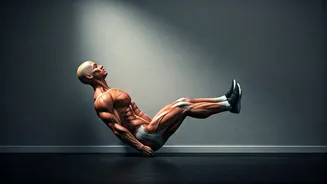
Muscle asymmetry is when one side of your body, or a specific muscle on one side, is stronger, larger, or more developed than its counterpart. While perfect symmetry is rare and often unnecessary, significant imbalances can affect your posture, performance,
and even increase your risk of injury. These imbalances often develop from our daily lives. Think about always carrying a bag on the same shoulder, a sport that heavily favours one side like tennis or golf, or even unconsciously leaning on one leg while standing. Over time, these seemingly minor habits teach your body to rely on its dominant side, letting the non-dominant side lag behind.
The Power of Unilateral Training
The solution lies in unilateral training—working one limb at a time. When you perform a standard bilateral exercise like a barbell squat or bench press, your stronger side can unconsciously compensate for the weaker one. This masks the problem and can even make it worse. Unilateral exercises isolate one side, forcing the weaker muscles to do all the work without any help. This direct stimulation is the fastest way to encourage growth and build strength where it's needed most. Resistance bands are the perfect tool for this. They are portable, affordable, and provide accommodating resistance, meaning the tension increases as you move through the range of motion, which is excellent for joint health and muscle activation.
The Golden Rule: Weaker Side First
Before you begin, there is one crucial rule to follow for correcting imbalances: always start your unilateral exercises with your weaker side. Then, perform the same number of repetitions on your stronger side, and no more. For example, if your left arm can only manage 10 reps of a single-arm row, you stop at 10 reps on your right arm as well, even if you feel you could do more. This strategy prevents the strong side from getting even stronger and gives the weak side a chance to catch up over time. Consistency here is key.
Unilateral Workout: Single-Arm Band Row
This exercise targets your back and biceps. Secure a resistance band to a stable anchor point (like a doorknob or a pole) at chest height. Stand facing the anchor, holding the band with one hand, arm extended. Keep your core tight and your shoulders down. Pull the band towards your torso, squeezing your shoulder blade. Keep your elbow close to your body. Pause for a moment at the peak of the contraction, then slowly return to the starting position. Complete all reps on your weaker side first.
Unilateral Workout: Single-Arm Band Press
Ideal for your chest, shoulders, and triceps. Anchor the band behind you at chest height. Step forward to create tension, standing in a stable, staggered stance. Hold the band handle with your palm facing down, elbow bent at 90 degrees. Press the band forward, fully extending your arm without locking your elbow. Your core should be engaged to prevent your torso from twisting. Slowly return to the starting position with control. This mimics a dumbbell press but with the added benefit of core stabilisation.
Unilateral Workout: Banded Single-Leg RDL
This is a fantastic move for your hamstrings, glutes, and balance. Stand on one leg and place the middle of a resistance band under that foot. Hold the ends of the band in both hands. Keeping your standing leg slightly bent and your back straight, hinge at your hips. Allow your non-standing leg to extend straight behind you for balance. Lower your torso until you feel a good stretch in your hamstring. Use your glutes and hamstring to pull yourself back up to the starting position. The band adds resistance to the upward phase of the movement, increasing the challenge.