



Hours spent hunched over a desk can leave your shoulders rounded and your breathing shallow. This default 'desk slouch' not only causes stiffness but can also compress your diaphragm, restricting how much air your lungs can take in.
The Real Cost of Poor Desk Posture
That familiar forward
hunch does more than just cause neck and shoulder pain; it directly impacts your respiratory system. When you slouch, your rib cage collapses inward, giving your lungs less room to expand. This can lead to shallow breathing, which in turn may cause fatigue, headaches, and difficulty concentrating. Studies have shown that a slumped sitting posture can reduce lung capacity by a significant amount, meaning your body has to work harder for the oxygen it needs. Over time, this inefficient breathing pattern becomes a habit. The good news is that you can counteract these effects with simple, intentional movements that don't even require you to leave your workspace.
1. The Classic Overhead Reach
This fundamental stretch is perfect for a quick reset. You can do it while sitting or standing. Start by interlacing your fingers. With your palms facing the ceiling, extend your arms straight up over your head. Keep your elbows as straight as possible and gently push your arms up and slightly back until you feel a good stretch through your shoulders, upper back, and sides. Focus on lengthening your spine and opening your rib cage. Hold this position for 15 to 30 seconds while breathing deeply and normally; never hold your breath. Repeat this 2-3 times whenever you feel yourself starting to slump.
2. The Standing Chest Opener
This stretch specifically targets the tight pectoral muscles at the front of your chest, which become shortened from rounding forward. Stand up and clasp your hands behind your back. If you can't clasp your hands, hold a small towel or scarf. Straighten your arms and gently lift them away from your body, puffing your chest forward and raising your chin slightly. You should feel a stretch across the front of your chest and shoulders. This movement directly counteracts the hunched posture, encouraging your shoulders to roll back and down. Hold for 15 to 20 seconds, release, and repeat. For a variation, you can also place your forearms on either side of a doorway and gently step forward.
3. Seated Side Body Stretch
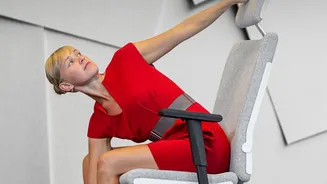
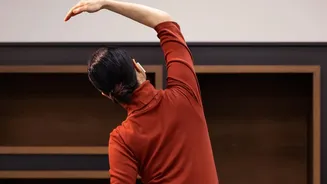
Your sides, which house the intercostal muscles between your ribs, also get compressed from sitting. To open them up, sit tall in your chair with your feet flat on the floor. Extend your right arm straight up toward the ceiling. Gently lean to your left side, feeling a stretch all the way down your right side from your armpit to your hip. Use your left hand to hold onto your chair for stability. Be careful not to twist your torso; the goal is to create a long, clean arc. Hold for 10 to 30 seconds, breathing into the stretch, then slowly return to the center and repeat on the other side.
Making It a Daily Habit
The key to seeing real benefits from these stretches is consistency. The goal isn't one long stretching session, but rather frequent, short movement breaks throughout the day. Health experts recommend taking a 1–2 minute break to move or stretch for every 30 minutes you spend sitting. Set a timer on your phone or computer as a reminder. Pairing these stretches with a short walk around the office can further boost circulation and combat the negative effects of a sedentary day. By making these small movements a regular part of your workday, you can actively improve your posture, reduce muscle stiffness, and support healthier, more efficient breathing.