



The World on a Banana Leaf
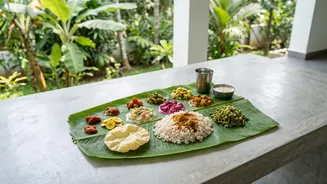
The Sadya is a perfect introduction to Kerala's culinary philosophy. Meaning 'banquet' in Malayalam, it's a meticulously arranged vegetarian meal that can feature over 25 dishes. Served during festivals like Onam and at weddings, it offers a symphony
of flavours: the tangy Avial (mixed vegetables in coconut and yogurt), the mild Olan (pumpkin in coconut milk), and the fiery ginger pickle, all culminating in the sweet, jaggery-infused Payasam. More than just food, the Sadya is an experience of community and generosity, where each dish has its place and purpose, creating a balanced and harmonious meal. It’s the state’s most famous culinary ambassador for a reason.
A Tale of Coasts, Cultures, and Cuisines
To truly understand Kerala's food, one must travel beyond the Sadya and explore its distinct regional cuisines, shaped by history, trade, and religion. The state’s culinary landscape can be broadly divided, each with its own identity. In the north, there's the spice-laden Malabar or Mappila cuisine, heavily influenced by Arab traders. Central Kerala is the heartland of Syrian Christian (Nasrani) food, a unique fusion of local tastes and Western techniques. The southern region of Travancore, meanwhile, has its own distinct culinary traditions, often favouring vegetarian preparations.
The Spice Route of Malabar
Northern Kerala's Malabar Coast has been a global spice hub for millennia, and its food reflects this legacy. The Mappila (Muslim) community's cuisine is legendary, known for dishes that are rich, aromatic, and complex. The star is the Thalassery Biryani, which uses a unique, short-grain kaima rice and a gentle 'dum' cooking method that sets it apart. Beyond biryani, the region offers delicacies like Kallumakkaya (mussels) fried or in a curry, soft rice-flour pancakes called Pathiri, and the lasagna-like Chatti Pathiri, made with layers of pastry and savoury or sweet fillings. It's a cuisine where the warmth of black pepper, cardamom, and cloves tells a story of ancient trade routes.
The Rich Fusion of Central Kerala
The food of Kerala's Syrian Christian community is a masterclass in fusion cooking, blending local ingredients like coconut and tapioca with culinary concepts brought by Portuguese, Dutch, and British settlers. This is where you'll find the iconic combination of Appam—lacy, soft-centered rice hoppers—served with a fragrant stew, often made with chicken or mutton simmered in coconut milk. Other beloved dishes include Meen Moilee, a delicately spiced fish curry with a creamy coconut base, and rich meat preparations like Erachi Ularthiyathu (a dry beef fry) and duck roast, which are staples during festivals and family gatherings.
Everyday Delights and Street-Side Staples
Kerala’s food story isn't just about elaborate meals; it's also found in its humble, everyday dishes and vibrant street food culture. Breakfast is a celebration in itself, with staples like Puttu—steamed cylinders of rice flour and coconut—served with a hearty Kadala (black chickpea) curry. Come evening, roadside stalls, known as 'thattukadas', come alive, serving everything from flaky Malabar Parottas with beef fry to crispy Pazham Pori (banana fritters). These simple, accessible dishes are the lifeblood of Kerala’s cuisine, enjoyed by everyone from office workers to fishermen and forming a delicious, ever-present backdrop to daily life.