




A New Artery for Nature Lovers
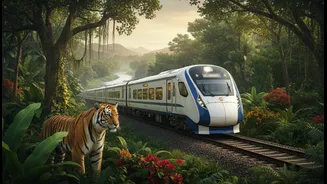
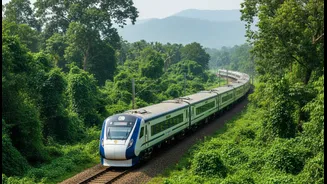
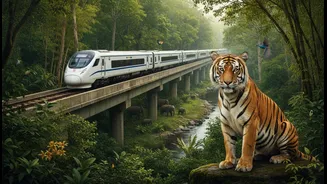
The promise is simple and alluring: world-class train travel connecting major cities to the gateways of India's most cherished wildlife sanctuaries. The expanding Vande Bharat network now places destinations like Ranthambore in Rajasthan, Gir in Gujarat,
and Bandipur in Karnataka within easier reach. For instance, the train to Sawai Madhopur Junction significantly cuts down the travel time to Ranthambore National Park, a premier tiger reserve. Similarly, the service to Veraval makes the sole home of the Asiatic lion, Gir National Park, more accessible. For parks like Jim Corbett in Uttarakhand or Kaziranga in Assam, Vande Bharat trains connect to the nearest major hubs like Dehradun and Guwahati, from where a shorter road journey completes the trip. This enhanced connectivity is being hailed as a game-changer for domestic and international tourists who can now plan weekend getaways without the hassle of flights or long, arduous road trips.
The Economic Ripple Effect
For the towns and villages bordering these national parks, improved access can be an economic lifeline. The influx of tourists promises a significant boost for local hotels, safari operators, guides, and artisans. The creation of new 'tourist circuits', such as the one linking Agra’s Taj Mahal with Ranthambore's tigers, is projected to stimulate local economies and create new opportunities for residents. This model is built on the idea that as travel becomes more efficient, visitor numbers will rise, translating directly into increased revenue for the regions. Ranthambore, for example, has already seen record-breaking tourism revenue, a trend that better connectivity is likely to accelerate. This economic incentive is often presented as a win-win, where tourism funds conservation efforts and provides sustainable livelihoods, encouraging communities to become stakeholders in protecting their natural heritage.
The Unseen Environmental Toll
However, the surge in accessibility brings with it a host of environmental concerns. The primary worry is over-tourism—the risk of overwhelming fragile ecosystems with a volume of visitors they cannot sustain. Increased footfall puts immense pressure on a park's resources, from water and waste management to the tranquility of animal habitats. While not solely due to the new trains, areas like Kashmir have already reported significant traffic congestion linked to a tourism boom partly fuelled by new rail links. Furthermore, the infrastructure development required for high-speed rail can be invasive. Across India, railway projects have often come into conflict with environmental protection, involving the clearing of forests and disruption of sensitive ecological zones. The convenience of reaching a pristine forest is diminished if the very infrastructure that takes you there contributes to its degradation through increased pollution, waste, and resource depletion.
A Collision Course with Wildlife
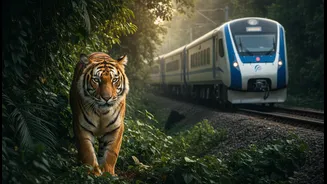
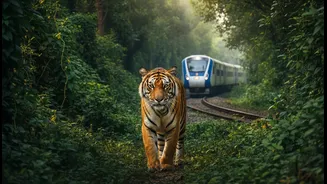
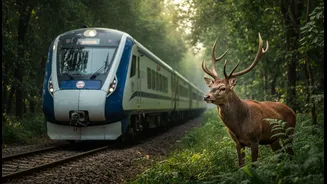
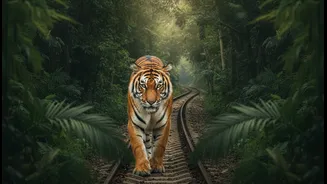
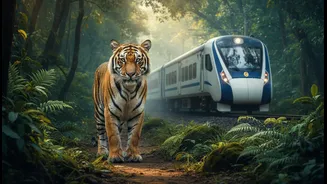
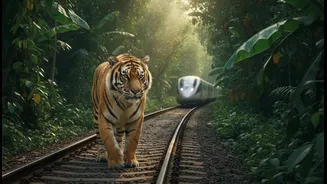
Perhaps the most direct and alarming impact is the increased risk of animal-train collisions. The Vande Bharat trains, designed for semi-high-speed travel, move significantly faster than conventional trains. While many reported incidents involve cattle, they highlight a critical vulnerability. There were 68 recorded instances of Vande Bharat trains hitting animals in a six-month period in 2022 alone. This issue is so prevalent that Railways has acknowledged it by designing the trains to withstand such impacts and planning mitigation measures like fencing along certain high-risk routes. The concern naturally extends to wild animals, especially where tracks cut across or run near wildlife corridors. Indian Railways has previously implemented innovative solutions like 'Plan Bee', which uses the sound of honeybees to deter elephants from crossing tracks, proving that the threat to wildlife is a known and serious issue. As these faster trains bisect landscapes, the danger to roaming animals, from deer to elephants, inevitably grows.
The Path to Sustainable Exploration
The challenge, then, is not to halt progress but to steer it towards sustainability. The integration of Vande Bharat with wildlife tourism necessitates a more conscious approach from all sides. Government initiatives like Swadesh Darshan 2.0 and the Travel for LiFE program are already aimed at promoting responsible, eco-friendly tourism. For these to be effective on the ground, they must translate into concrete policies for destinations now experiencing higher tourist traffic. This could include stricter caps on the number of daily visitors, mandatory eco-tourism briefings, and ensuring a larger portion of tourism revenue is funnelled directly into conservation and community benefit schemes. Ultimately, the responsibility also lies with the traveller. Opting for certified eco-lodges, respecting park rules, minimizing waste, and choosing tour operators with proven conservation ethics can help balance the scales. The convenience of the journey should be matched by a commitment to preserving the destination.