


Gautam Gambhir
A big-match player with a fierce competitive streak, Gautam Gambhir was the unsung hero of two World Cup final victories for India. His flawless captaincy record in the six ODIs he led is a testament to his tactical acumen. He also led the Kolkata Knight
Riders to two IPL titles, proving his leadership credentials in a high-stakes environment. However, his time at the top coincided with the peak of MS Dhoni's captaincy era. Following the 2011 World Cup, Dhoni was firmly entrenched as the leader across all formats. Later, a dip in form and the emergence of other opening batsmen made his return to the national side sporadic, closing the window on any captaincy aspirations.
Yuvraj Singh
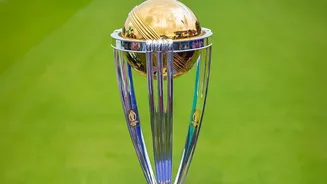
Player of the Tournament in two World Cup triumphs (2007 T20 World Cup and 2011 ODI World Cup), Yuvraj Singh was a generational talent and a natural leader. At his peak, he was a destructive batsman, a wily bowler, and a brilliant fielder. He was appointed vice-captain in 2007 and seemed destined for the top job. However, a combination of factors went against him. Yuvraj himself has spoken about how his support for a teammate during the turbulent Greg Chappell era may have displeased some board officials. Ultimately, the selectors chose MS Dhoni to lead a young side for the inaugural T20 World Cup, a decision that ushered in one of India's most successful cricketing eras and left Yuvraj as one of the greatest players to never lead the country.
VVS Laxman
Known for his elegant, wristy strokeplay and calm demeanour, VVS Laxman was the backbone of India's Test middle order for over a decade. Respected by everyone in the dressing room, he was a trusted lieutenant to captains like Sourav Ganguly and Rahul Dravid. His ability to perform under extreme pressure, especially in the fourth innings of a Test match, earned him the nickname 'Very Very Special'. Despite a 15-year international career and even a stint as vice-captain, the opportunity to lead India never arose, not even on a temporary basis. The presence of established leaders in a golden generation of Indian cricket meant that Laxman's quiet, thoughtful leadership style was never put to the ultimate test on the international stage.
Zaheer Khan
For years, Zaheer Khan was the leader of India's pace attack. A master of both conventional and reverse swing, he was the captain's go-to man whenever a breakthrough was needed. His cricketing intelligence was evident in how he would set up batsmen and mentor younger bowlers on the field. This tactical brain was on full display when he captained Delhi Daredevils in the IPL. However, fast bowlers are rarely considered for captaincy in India, often due to concerns about workload and injuries. While Zaheer served as the unofficial bowling captain for much of his career, the formal leadership role remained elusive as India's batting stalwarts were consistently preferred for the position.
Ravichandran Ashwin
Undoubtedly one of the most intelligent and analytical cricketers of his generation, Ravichandran Ashwin has a deep understanding of the game's nuances. His record as a bowler is monumental, and he has proven his leadership by captaining Kings XI Punjab (now Punjab Kings) in the IPL. Ashwin himself has suggested that his analytical nature was sometimes perceived as 'overthinking', a label that may have worked against him when leadership roles were discussed. When Virat Kohli stepped down from the Test captaincy, several names were considered, but Ashwin was largely overlooked. Being a spinner and not always a guaranteed starter in overseas Tests likely played a role, denying India the chance to be led by one of its sharpest cricketing minds.